
Reviewed · WALKING TOURS
Khiva Walking Tour
Khiva rewards slow looking. This private walking tour makes its UNESCO-listed old city easier to understand, linking grand palaces, mosques, schools, and fortress walls in one focused route. I especially like the chance to see the city’s tallest minaret and the old clay-oven bread tradition if the timing is lucky. The main catch is that the $90 price covers the guide only, while entrance tickets and climbing minarets cost extra.
I also like the private format for a place packed with details. You get a guide in English, Russian, French, or German, and the starting time can be adjusted by request. The four-and-a-half-hour walk is fairly long, though, so comfortable shoes are essential. A French-language guide named Izzat received especially warm praise for a visit that ran from 9:30 a.m. to 3 p.m.
In This Review
- Key points at a glance
- Why Khiva works best on foot
- Meeting at Ata Darvaza
- Muhammad Amin Khan Madrasa and Kalta Minor
- Kunya Ark, Khiva’s old citadel
- Muhammad Rahimkhan II Madrasa
- Djuma Mosque and its carved columns
- Tosh Hovli Palace and the harem
- Museums, schools, and the eastern gates
- Islamkhudja, Khiva’s tallest minaret
- Pahlavan Makhmud, the final major stop
- The clay-oven bread opportunity
- Is $90 a fair price?
- Who should book this walk?
- Should you book the Khiva Walking Tour?
- FAQ
- Where does the Khiva Walking Tour begin?
- How long does the tour last?
- What time does the tour start?
- How much does the private tour cost?
- What is included in the price?
- Are entrance tickets included?
- Is climbing a minaret included?
- Which languages are available?
- Is this a private tour?
- Can I cancel for a refund?
Key points at a glance
- Kalta Minor and Islamkhudja Minaret: See two of Khiva’s most striking towers, including the tallest minaret in the region.
- Private four-and-a-half-hour route: The $90 rate covers a group of up to two people, giving couples or friends a personal pace.
- Palaces with royal details: Visit Tosh Hovli’s harem, reception rooms, secret corridor, and the gift car associated with Tsar Alexander III.
- Kunya Ark viewpoint: Enter Khiva’s old citadel and reach its panoramic view tower, with extra entry charges applying.
- More than monuments: The route includes a columned mosque, schools, museums, fortress gates, and a possible look at bread made in a clay oven.
- Ticket costs are separate: Budget for multiple admission fees, and remember that going upstairs in the minarets is not included.
Why Khiva works best on foot
Khiva is one of those rare historic cities where the old center is the main event. Its enclosed heart, known as Itchan Kala, brings major sights close together, so a walking tour can move from a madrasa to a palace, then from a mosque to a fortress without wasting time in traffic.
That compact setting also explains the tour’s appeal. You are not simply ticking off isolated buildings. You are following the shape of a former khanate capital, where religious schools, royal quarters, markets, defensive gates, and neighborhood mosques all occupied the same walled city.
I would choose this tour if I wanted a strong first introduction to Khiva. The guide supplies the connections that buildings alone cannot provide: why one palace was built after another, how a school differed from a madrasa, and why the minarets are such powerful markers in the city’s skyline.
The route lasts about 4.5 hours, with the stated range running from four to five hours. That is enough time for a serious overview, but it is not a casual stroll. You will spend much of the morning or afternoon walking, listening, and entering several sites.
More Walking Tours in Khiva
- Khiva: Historical City Highlights Guided Walking Tour
★ 4.8 · 156 reviews - Khiva Historical City Highlights Guided Walking Tour
★ 5.0 · 30 reviews - Khiva Walking Tour
★ 4.5 · 15 reviews
Meeting at Ata Darvaza
The tour begins at the ticket office by Ata Darvaza, the western gate of the city. This is a useful meeting point because the gate gives you an immediate sense of Khiva’s fortified character before the sightseeing begins.
Your start time is set when you book, but it can be changed by request. I would ask for an earlier start in summer. Khiva’s open streets and stone surfaces can feel demanding later in the day, and an early beginning leaves more time for the palace interiors and museums without rushing.
The tour is offered as a private group for up to two people at $90. For a couple, that works out to $45 each before entrance fees. For one person, it is less of a bargain, but you are paying for a private guide rather than joining an unknown group.
The guide is the main included service. Entrance tickets are not part of the price, and the route includes several separate monuments. Ask your guide at the beginning how the tickets will be handled and what the total admission cost is likely to be.
Muhammad Amin Khan Madrasa and Kalta Minor
The first major sights are the Muhammad Amin Khan Madrasa and Kalta Minor. The madrasa is described as the largest in this part of Khiva, so it sets a fitting scale for the tour.
A madrasa was a religious school, but in Khiva these buildings also helped define the city’s public identity. Look beyond the size of the facade. The real value of a guide here is knowing what to notice in the layout, decoration, and relationship between the school and the nearby minaret.
Kalta Minor is the visual star of this opening section. Its broad, turquoise-colored form is one of the images most closely linked with Khiva. The tower was intended to be much taller, but it remains unfinished, which gives it a distinctive shape compared with the slimmer minarets you will see later.
You can admire the tower from ground level as part of the standard route. Going upstairs in the minarets is not included, so do not assume the tour price covers a climb. The supplied information does not state the additional fee or availability, so ask locally if reaching a minaret viewpoint matters to you.
Kunya Ark, Khiva’s old citadel
Kunya Ark is the ancient citadel and one of the most useful stops for understanding how Khiva’s rulers lived and governed. The complex includes a panoramic view tower, a coinage yard, and both summer and winter reception areas.
The coinage yard is an especially helpful reminder that this was not simply a residence. The citadel gathered political, financial, and ceremonial functions behind its walls. A guide can turn a collection of courtyards into a picture of daily administration.
The summer and winter receptions also show how practical royal architecture could be. Different seasons called for different rooms, layouts, and degrees of openness. These details are easy to miss if you are moving through the citadel alone.
The panoramic tower is one of the strongest reasons to include Kunya Ark. Khiva is famous for its vertical monuments, but a high viewpoint lets you understand the city as a whole. You can see how tightly the old center is packed and how the minarets help you orient yourself.
Admission to Kunya Ark is extra, like the other listed sights. If you are watching your budget, ask the guide which sites are essential to your interests before buying every available ticket.
Same stretch of the Silk Road, a different sort of day:
- Transfer: Bukhara – Khiva via Ancient Fortresses
★ 4.5 · 101 reviews - Daytrip From Khiva To Ancient Fortresses
★ 4.6 · 60 reviews - Aral Sea Adventures (2 day)
★ 5.0 · 30 reviews - Guided Tour To Old Fortresses
★ 5.0 · 25 reviews
Muhammad Rahimkhan II Madrasa
The route continues to the Muhammad Rahimkhan II Madrasa. By this point, the repeated appearance of large religious schools can begin to blur together, especially if you are visiting several Central Asian cities.
That is where the guide’s explanations matter most. Instead of treating each madrasa as another decorated facade, you can compare its place in Khiva’s royal and religious life with the earlier Muhammad Amin Khan Madrasa.
I would keep your attention on the differences in scale, placement, and decoration rather than trying to remember every name. The tour includes many monuments, and the guide can help you sort the important landmarks from the smaller details.
Djuma Mosque and its carved columns
Djuma Mosque offers a change of mood. Rather than presenting a highly visible exterior, it is known for its forest of more than 120 carved wooden columns.
The columns are the reason to slow down here. Their repeated forms create a quiet interior with a strong sense of rhythm. You may find that this mosque leaves a more lasting impression than some of the larger palace rooms because its character comes from texture and spacing rather than size.
This is also a good stop for travelers who prefer atmosphere to grand ceremony. The mosque shows how a religious building can feel personal and intimate even within a major historic city.
The number of columns makes the site memorable, but do not expect the visit to be a complete religious study. The tour’s purpose is to give you a broad understanding of Khiva, so the guide will likely balance this mosque with the many other stops still ahead.
Tosh Hovli Palace and the harem
Tosh Hovli Palace, also called the Stone Palace, is the second khan’s palace on the route. It includes a harem, summer and winter reception rooms, a secret corridor, and a special reception area.
This is one of the tour’s most appealing sections because the palace offers a clearer sense of court life than a bare fortress wall can. You can look at how the royal household was divided and how formal rooms differed from private areas.
The secret corridor is the kind of small architectural detail that gives a palace a human scale. It also reminds you that grand courtyards were designed for movement, privacy, and control, not just display.
Another unusual detail is the gift car associated with Tsar Alexander III. It is a memorable link between Khiva’s local rulers and the wider political world beyond Central Asia. The car is not simply a curiosity. It helps place the palace in a period when khanates were dealing with powerful empires and changing diplomatic relationships.
The palace has several distinct areas, so allow yourself time to look up, across courtyards, and into side rooms. If you are tired by this point, the harem and reception rooms can begin to feel like a long sequence of similar spaces. The guide’s commentary will help keep the visit focused.
Museums, schools, and the eastern gates
The route then moves through several smaller but worthwhile sites. Kutlug Murad Madrasa contains a museum of surrealist paintings, an unexpected addition in a city better known for Islamic architecture and royal history.
That museum gives the walk some variety. After several historic structures, contemporary or surrealist art can reset your attention. I would not choose this tour solely for the paintings, but they make the madrasa visit more than another stop for photographs.
Allakulikhan Madrasa continues the pattern of schools and civic buildings that shaped the old city. Again, the key is comparison. Khiva becomes easier to read when you understand that its identity was built from many institutions, not just one palace or minaret.
At the eastern gates, the route includes Said Niyaz Mosque and Madrasa. Gates are practical places to pause because they show how the old city opened outward while keeping its defensive edge. The western and eastern approaches also give the walk a useful sense of direction instead of making it feel like a loop of unrelated sights.
Islamkhudja, Khiva’s tallest minaret
The Islamkhudja complex is described as the symbol of Khiva. It includes a madrasa, a museum of applied art, the Islamkhudja Minaret, and the first modern secular school in the city.
The minaret is the major draw. It is identified as the tallest minaret in the region and, in the tour description, as the tallest in Uzbekistan. Its height makes it one of the clearest visual markers in Khiva, while its slender form contrasts sharply with the wide Kalta Minor.
The nearby museum of applied art adds another layer to the visit. Decorative arts can tell you about local taste, craft, and daily objects in a way that monumental architecture cannot. The museum is included in the route, but its admission is not included in the guide price.
The Islamkhudja school is also important because it represents a move toward modern and secular education. That gives the tour a useful final chapter. Khiva was not frozen in a fairy-tale past. Its rulers and residents were responding to new ideas, institutions, and political pressures.
You cannot assume that climbing this minaret is part of the standard experience. Upstairs access is specifically excluded, and any extra ticket or local restriction should be checked before you plan around the view.
Pahlavan Makhmud, the final major stop
The Pahlavan Makhmud complex is presented as the cherry in the cake of the visit, and it makes sense as a closing sight. It is a major spiritual and architectural destination within Khiva, giving the route an ending with emotional weight rather than simply finishing at the next gate.
The complex lets you see how devotion, art, and local memory come together in one place. Your guide can explain why Pahlavan Makhmud matters to Khiva and help you read the complex as more than another decorated building.
After a long run of palaces, schools, and fortifications, this stop changes the tone. I would save a little energy for it rather than treating the final hour as a formality.
The clay-oven bread opportunity
Along the way, you may get to see local bread being prepared in a clay oven. It is not guaranteed, since the opportunity depends on luck and timing.
That uncertainty is part of its charm. The bread-making moment is not a staged feature promised to every group. If the work happens to be underway, you get a brief look at an everyday tradition amid the monumental sights.
Do not be disappointed if it does not happen. The tour’s core value is the historic city route, not this extra observation. Still, it is worth asking the guide to point it out if the chance appears.
Is $90 a fair price?
At $90 for up to two people, the tour is reasonably priced for a private four-and-a-half-hour guide service, particularly if you value a personal pace and clear explanations. The price is less attractive if you are traveling alone or plan to enter only a few buildings.
The key calculation is that tickets are extra. The route includes many specified objects, and several may require separate admission. You should treat the $90 as the cost of guiding, not as the total cost of the day.
The value improves if you want to visit most of the listed sites. A guide can save you from wandering between the Muhammad Amin Khan Madrasa, Kunya Ark, Tosh Hovli, Djuma Mosque, Islamkhudja, and Pahlavan Makhmud without knowing what each place contributes.
The private format also matters. You can request a different start time, ask for explanations in your preferred language, and keep the focus on architecture, royal life, religious practice, or local customs. English, Russian, French, and German are available.
Who should book this walk?
I would recommend it to a first-time visitor who wants a full introduction to Khiva in one half-day. It suits couples especially well because the $90 rate covers two people and the private arrangement avoids a large-group schedule.
It is also a strong choice for anyone who wants French, German, Russian, or English guidance. The positive experience with Izzat, who guided a French-language visit from 9:30 a.m. to 3 p.m., suggests that language choice can make a real difference in how much you take from the city.
You should be ready to walk for four to five hours. Wear comfortable shoes and clothes, and start early in summer if you can. The activity is listed as wheelchair accessible, but because the route enters old historic buildings and includes multiple sites, confirm the exact access needs before booking.
This is not the right pick if you want a short photo stop, a food-focused outing, or a tour with all admission costs included. It is also not ideal if you dislike structured sightseeing. The route covers a lot, and the schedule may feel full.
Should you book the Khiva Walking Tour?
Book it if you want one well-organized introduction to Khiva’s main monuments, with a private guide and flexible timing. The strongest reasons are the broad route, the palace interiors, the two famous minarets, Kunya Ark’s viewpoint, and the chance to understand how the city’s religious and royal buildings fit together.
Before you pay, confirm the expected entrance fees and ask whether any minaret access is available. If you do that, the $90 price becomes easier to judge. For two people who want context instead of simply walking from facade to facade, this is a practical and worthwhile way to meet Khiva.
FAQ
Where does the Khiva Walking Tour begin?
The meeting point is at the ticket office of Ata Darvaza, the western gate of the city.
How long does the tour last?
The stated duration is 4.5 hours, with the walking program described as lasting about four to five hours.
What time does the tour start?
The start time is selected when booking. It can be changed by request, and an earlier start is recommended in summer.
How much does the private tour cost?
The price is $90 per group of up to two people.
What is included in the price?
A professional guide is included.
Are entrance tickets included?
No. Entrance tickets for the listed monuments are not included, and several sites may require separate admission.
Is climbing a minaret included?
No. Going upstairs in the minarets is specifically excluded from the tour price.
Which languages are available?
The guide service is available in English, Russian, French, and German.
Is this a private tour?
Yes. The activity is offered for a private group, with a maximum of two people at the stated group price.
Can I cancel for a refund?
You can cancel up to 24 hours in advance for a full refund. The tour also offers a reserve-now, pay-later option.
Freshly added in Khiva
- Traditional Khiva Cooking Class with Market Visit & Lunch★ 5.0 · 4 reviews
- Day Trip Top 3 Fortresses departure from Khiva Self-Guided Tour★ 5.0 · 2 reviews
- Transfer From Khiva To Bukhara★ 5.0 · 2 reviews
- Master Class – Uzbek Bread (Khiva)★ 3.5 · 4 reviews
- A Night In The Kyzylkum Desert [2] From Khiva★ 4.5 · 3 reviews
- Old Khiva Stories with Your Local Guide★ 5.0 · 5 reviews
- Khiva City Tour★ 4.0 · 2 reviews
- Daytrip From Khiva To Ancient Fortresses★ 5.0 · 2 reviews
Walking Tours, compared.
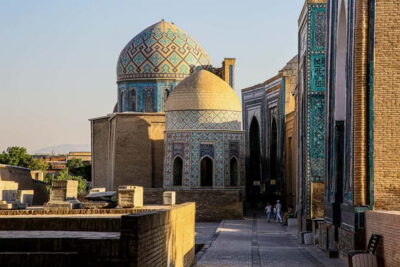
Samarkand: Historical Monuments Guided Walking Tour
Read our review →Khiva: Historical City Highlights Guided Walking Tour
Read our review →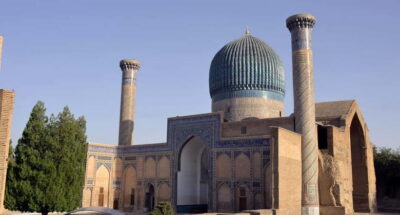
Samarkand One Day Tour: one day walking & group tour
Read our review →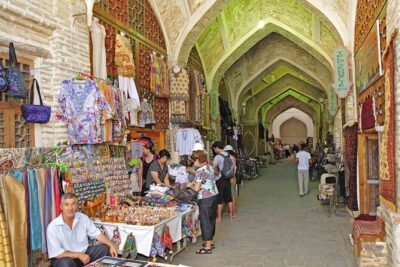
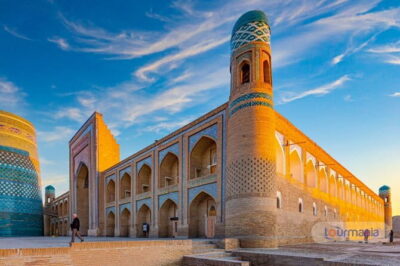
Khiva Historical City Highlights Guided Walking Tour
Read our review →
Samarkand: Historical Monuments Group Walking Tour
Read our review →
Tashkent Walking Tour with Local Lady / Gentleman
Read our review →
Samarkand Historical City Highlights Guided Walking Tour
Read our review →Browse the lists this tour appears in