
Reviewed · KHIVA TOURS
Old Khiva Stories with Your Local Guide
Khiva rewards slow footsteps. This three-hour walk through Itchan Kala combines famous Silk Road landmarks with local stories, personal advice, and a few less obvious corners of the old city. I especially like the chance to explore with Sarvar, a Khiva-born guide, and the way the route links grand monuments with wood carving, scholarship, shopping, and everyday culture. The main drawback is that entrance fees are extra, and the schedule may feel brisk if you want long visits inside every building.
The tour costs $22 per person, which is a fair price for an English-speaking guide and a focused introduction to Khiva. You meet at the west gate, visit ten listed stops, and return to the same point. Just remember to budget 250,000 Uzbek sum per person for the museum entry ticket, which covers 10 to 13 museums.
In This Review
- Key points at a glance
- Starting at Ata Darwaza, Khiva’s western gate
- Muhammad Amin Khan Madrassah and the Kalta Minor
- Inside Kunya Ark, home of the Khans
- Khiva wood carving and local craft
- The Scholars Museum and Central Asian thinkers
- Tash Khauli, the Stone Palace
- Allakuli Khan Tim Market and caravanserai
- Juma Mosque and its forest of columns
- Islam Khodja Madrassah and Khiva’s tallest minaret
- What the $22 price really gets you
- The guide factor: Sarvar’s local perspective
- Timing, group size, and practical planning
- Who should book this Khiva walk
- Should you book Old Khiva Stories?
- FAQ
- How long does the Old Khiva Stories tour last?
- Where does the tour begin?
- Where does the tour end?
- Is an English-speaking guide included?
- Are entrance tickets included?
- What is the maximum group size?
- Can I cancel for a full refund?
Key points at a glance
- Local guide Sarvar: A Khiva native who shares personal stories, practical advice, and clear English.
- Ten central stops: The route covers Kalta Minor, Kunya Ark, Tash Khauli, Juma Mosque, and the Islam Khodja complex.
- A strong mix of sights: You see palaces and minarets, but also a wood-carving workshop, scholars museum, and caravanserai market.
- Three hours on foot: The route gives you a useful first look at Itchan Kala without taking up an entire day.
- Museum tickets cost extra: The 250,000 sum ticket is separate from the tour price and can be paid in cash or by card.
- Small group format: The maximum group size is 15 people, giving you a better chance to hear the guide in Khiva’s narrow lanes.
Starting at Ata Darwaza, Khiva’s western gate
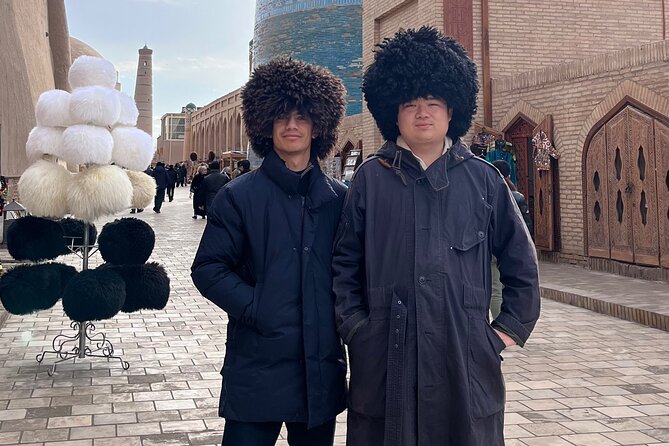
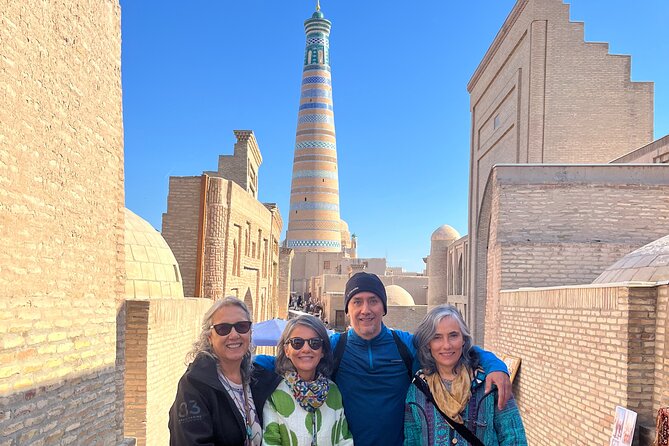
The walk begins at Ata Darwaza, the main entrance to Itchan Kala. This is a sensible meeting point because it puts you directly inside Khiva’s walled old city, where many of the most important sights sit within walking distance of one another.
Your guide introduces the role of the gate in Khiva’s Silk Road past. Caravans and traders once passed through entrances like this while moving goods and ideas across Central Asia. The opening stop lasts about ten minutes, so you get useful orientation without spending too long on the first monument.
I like beginning here because a local guide can help you understand the old city as more than a collection of photogenic buildings. Sarvar was born and raised in Khiva, and his explanations include local culture and personal stories as well as dates and names. His English has been praised as clear, and he is described as friendly, helpful, and easy to work with during trip planning.
Other Khiva trips travellers line up with this one:
- Khiva: Historical City Highlights Guided Walking Tour
★ 4.8 · 156 reviews - Transfer: Bukhara – Khiva via Ancient Fortresses
★ 4.5 · 101 reviews - Daytrip From Khiva To Ancient Fortresses
★ 4.6 · 60 reviews
Muhammad Amin Khan Madrassah and the Kalta Minor
The next stop is the Muhammad Amin Khan Madrassah, built in 1851 by one of Khiva’s most influential rulers. It once had room for more than 250 students and was the largest Islamic school in the region at the time.
The visit lasts about 15 minutes. That is enough for an explanation of the building’s purpose and the ruler behind it, though it may feel short if you want to inspect every architectural detail. The madrasah is especially useful early in the tour because it gives you a picture of Khiva as a center of religious study, not only a fortified royal city.
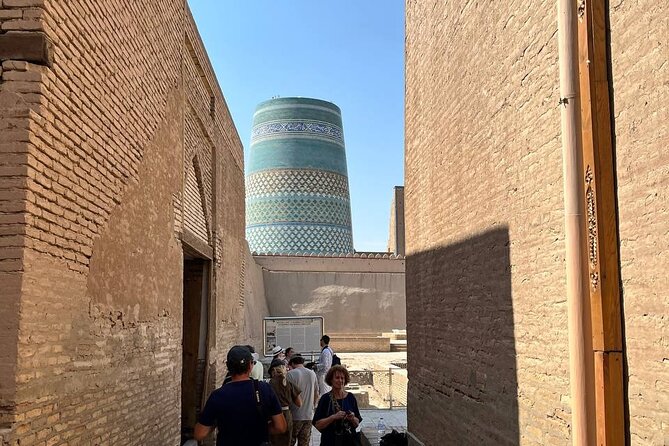
Right beside it is the Kalta Minor Minaret, visited for about ten minutes. Its turquoise tilework and unusually broad, short shape make it one of Khiva’s easiest landmarks to recognize. Muhammad Amin Khan intended it to be much taller, but the project was never completed.
This paired stop works well. You see a major school and an unfinished monument linked to the same ruler, then hear how ambition, architecture, and political power came together in 19th-century Khiva.
Inside Kunya Ark, home of the Khans
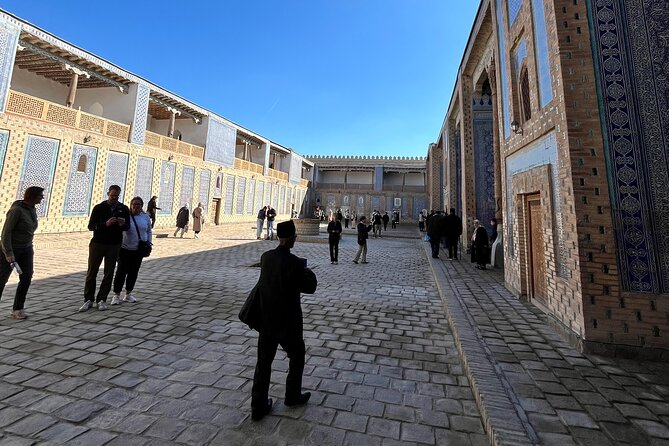
Kunya Ark was the fortress and residence of Khiva’s khans. Its complex included a throne room, harem, mint, mosque, and reception areas, so this is one of the most important stops for understanding how the city was governed.
The planned visit takes about 25 minutes, making it one of the longer stops. I would pay close attention here, because the fortress helps connect the city’s grand facades with the machinery of royal life. You are not only looking at tile and brick. You are seeing the former setting for court business, worship, money production, and private life.
The tour information lists the stop without a separate admission charge, but the overall museum ticket is not included in the $22 price. Since the ticket covers multiple museums, you should expect to buy the required pass rather than assume each building is free.
Khiva wood carving and local craft
The route then turns toward Khiva’s wood-carving tradition. At a local workshop, you can watch artisans make carved columns, doors, and souvenirs.
This 15-minute visit adds welcome variety after several large historic buildings. Khiva is famous for detailed woodwork, and seeing the craft in progress gives you a better sense of the labor behind the old city’s decorated interiors. It also gives you a chance to buy a locally made item rather than a generic souvenir, although the information does not specify prices or whether purchases are expected.
I like this part because it brings the tour closer to present-day Khiva. The old city is not only preserved architecture. It is also a place where traditional skills continue to support local makers.
Same stretch of the Silk Road, a different sort of day:
- Aral Sea Adventures (2 day)
★ 5.0 · 30 reviews - Khiva Historical City Highlights Guided Walking Tour
★ 5.0 · 30 reviews - Guided Tour To Old Fortresses
★ 5.0 · 25 reviews - Private Daytrip to 7 Ancient Fortresses of Khorezm
★ 5.0 · 25 reviews
The Scholars Museum and Central Asian thinkers
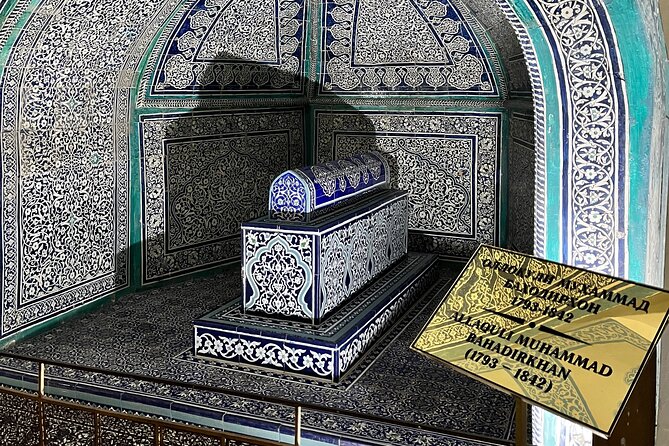
At the Scholars Museum, the guide discusses major figures connected with Uzbekistan and world civilization. The names listed include Al-Khwarizmi, Al-Biruni, Zamakhshari, and Avicenna, also known as Abu Ali Ibn Sina.
The stop lasts around 15 minutes. It is a compact introduction rather than a full museum study, but it broadens the tour beyond Khiva’s rulers and monuments. These scholars represent the region’s contributions to mathematics, astronomy, language, medicine, and philosophy.
This is a good moment to ask questions if you want more context about Uzbekistan’s intellectual past. Sarvar’s approach is described as informative and entertaining, which should help keep this short museum visit from becoming a dry list of names.
Tash Khauli, the Stone Palace
Tash Khauli, also called Tosh Khovli or the Allakuli Khan Palace, was built in the 19th century as a residence for the khan and his court. The planned visit is about 15 minutes.
The palace offers a useful contrast with Kunya Ark. Instead of seeing one royal fortress complex, you get another setting connected with court life and power. The name Stone Palace points to its solid construction, while the tour description highlights its architectural detail and use by the khan and his court.
Admission is not included at this stop. That matters because you may need to show or purchase the general museum ticket during the walk. Keep your ticket available and ask Sarvar which sites require it, since individual entry arrangements can be less obvious once you are moving through the old city.
Allakuli Khan Tim Market and caravanserai
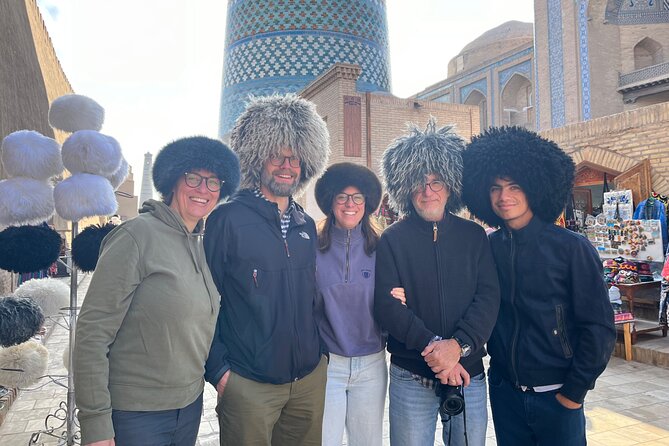
The Allakuli Khan Tim Market takes you to a former caravanserai and shopping area associated with the ancient Silk Road. The route allows about 15 minutes here.
You can look for local souvenirs and see how a place built for trade still connects with commerce today. The caravanserai was designed as a stopping point along long-distance routes, and its presence helps explain why Khiva developed into an important center for merchants and travelers crossing Central Asia.
Do not expect a long shopping session within the tour’s timing. Fifteen minutes is enough to look around and note what you may want to revisit later. One practical advantage of this stop is that Sarvar can offer advice on where to shop and eat during the rest of your stay.
Juma Mosque and its forest of columns
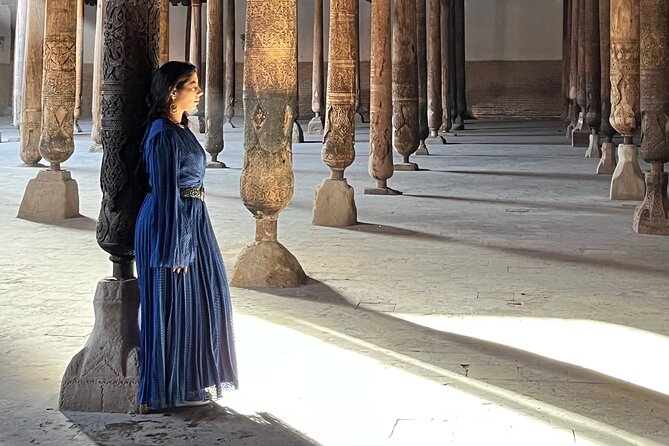
The Juma Mosque is one of Khiva’s most distinctive buildings. Its interior is known for 215 carved wooden columns, creating the effect of a forest supporting the roof.
The visit lasts about 20 minutes, so there is time to appreciate the unusual design and hear how Islamic architecture mixes with local carving traditions. This is one of the stops where a guide adds real value. Without context, you may simply see rows of wooden supports. With an explanation, you can better understand why the mosque feels so different from the tiled facades outside.
The mosque is listed as dating to the 10th century, though the building has undergone changes over time. Ask about its age and restoration if that subject interests you. A short guided explanation can help separate the original structure from later work.
Islam Khodja Madrassah and Khiva’s tallest minaret
The final listed stop is the Islam Khodja complex. The madrasah is a striking 19th-century building named after Islam Khodja, an important figure in Khiva’s later development. The complex also includes the city’s tallest minaret.
The planned stop lasts about 15 minutes. Like Tash Khauli, it has an admission fee that is not included in the tour price. The route ends back at the starting point, so you are not left on the opposite side of the old city trying to find your way back.
The minaret is the natural visual finale, even if you do not climb it. The provided details do not confirm that a climb is part of this tour, so you should not assume it is included. The guide can instead help you understand the building’s role and point out the details worth noticing from ground level.
What the $22 price really gets you
At $22 per person, this is not a bargain-basement walk, but it offers good value if you want a structured introduction to Khiva. The price covers an English-speaking guide for about three hours, with a maximum group size of 15 people.
The real value is the route design. You see major monuments, but you also visit a working craft tradition, a museum about regional scholars, and a former trading stop. That range saves you from spending your first day only taking photographs of the most famous minarets.
The separate entry fee is the main cost to plan for. The museum ticket is 250,000 sum per person and includes 10 to 13 museums. You can pay by cash or card. Because the tour includes sites where admission is specifically marked as not included, the total cost will be higher than the advertised $22.
For a private tour, the price would be especially attractive, but the information provided does not say that the experience is private. The maximum group size is 15, so ask at booking if you need a private arrangement or have a particular pace in mind.
The guide factor: Sarvar’s local perspective
The strongest reason to choose this walk is Sarvar. He is described as a local guide from Khiva with excellent English and a kind manner. His approach combines history with stories about Uzbekistan, cultural customs, and practical suggestions for the rest of your visit.
His help may begin before the tour itself. One detailed account describes him as available during trip planning and useful with suggestions, including advice connected with Khiva and an Aral Sea trip. That suggests you may be able to ask broader questions about your Uzbekistan itinerary, though the walking tour itself remains focused on Itchan Kala.
The best guide-led walks do not just move you from door to door. They help you decide what deserves a second look, where to eat, where to shop, and how to use the rest of your time. This experience promises that kind of local orientation.
Timing, group size, and practical planning
The tour lasts approximately three hours and finishes at the west gate where it begins. It is near public transportation, and most people can participate.
You should expect a fair amount of walking on uneven historic streets, although the supplied details do not provide a formal accessibility description. Wear comfortable shoes, carry water, and keep your museum ticket handy. Those are simple precautions for a route through narrow lanes and old courtyards.
The ten stops are tightly timed, ranging from ten to 25 minutes. That format suits you if you want to cover the main sights in one organized sweep. It is less suitable if you prefer to linger inside every palace or take a long series of photographs at each monument.
Confirmation is provided when you book, and free cancellation is available up to 24 hours before the start time. Cancellations or changes within 24 hours are not refunded or accepted.
Who should book this Khiva walk
I would choose this tour if you have limited time in Khiva, want a local introduction, or prefer stories and context to a purely self-guided visit. It is also a good fit if you want help identifying places to return to later for photographs, shopping, or a slower look.
Families and first-time visitors may appreciate the varied route. You move from gates and madrasahs to a fortress, palace, mosque, museum, workshop, and market, so the experience does not depend on one type of sight.
Independent explorers may find the schedule too fixed. If you already know Khiva well or want to spend an hour studying one building, a self-guided day may suit you better. The extra museum fee also means you should compare the full cost with your own plans.
Should you book Old Khiva Stories?
Book it if you want a friendly, local-led introduction to the old city and value a guide who can connect famous monuments with local craft, scholarship, trade, and daily life. Sarvar’s Khiva background and strong English are important advantages.
Skip it only if you want complete freedom to set your own pace or do not want to pay the separate 250,000 sum museum fee. For most first visits, the $22 guide price is reasonable, especially because the route covers the essential landmarks and several useful side stops in three hours.
FAQ
How long does the Old Khiva Stories tour last?
The walking tour lasts approximately three hours.
Where does the tour begin?
It begins at Ata Darwaza, the west gate of Ichan Kala in Khiva.
Where does the tour end?
The activity ends back at the meeting point at the west gate.
Is an English-speaking guide included?
Yes. An English-speaking guide is included in the tour price.
Are entrance tickets included?
No. Entrance tickets are not included. The stated fee is 250,000 Uzbek sum per person for access to 10 to 13 museums, payable by cash or card.
What is the maximum group size?
The tour can include up to 15 people.
Can I cancel for a full refund?
Yes, if you cancel at least 24 hours before the experience start time. Cancellations within 24 hours are not refunded, and changes within that period are not accepted.
Freshly added in Khiva
- Traditional Khiva Cooking Class with Market Visit & Lunch★ 5.0 · 4 reviews
- Day Trip Top 3 Fortresses departure from Khiva Self-Guided Tour★ 5.0 · 2 reviews
- Transfer From Khiva To Bukhara★ 5.0 · 2 reviews
- Master Class – Uzbek Bread (Khiva)★ 3.5 · 4 reviews
- A Night In The Kyzylkum Desert [2] From Khiva★ 4.5 · 3 reviews
- Daytrip From Khiva To Ancient Fortresses★ 5.0 · 2 reviews
- Khiva City Tour★ 4.0 · 2 reviews
- Aral Sea – Extended trip (3 days)★ 5.0 · 5 reviews
Khiva Tours, compared.
Khiva: Historical City Highlights Guided Walking Tour
Read our review →
Transfer: Bukhara – Khiva via Ancient Fortresses
Read our review →
Khiva Historical City Highlights Guided Walking Tour
Read our review →
Private Daytrip to 7 Ancient Fortresses of Khorezm
Read our review →
Browse the lists this tour appears in