
Reviewed · ANCIENT FORTRESS TOURS
Private Daytrip to 7 Ancient Fortresses of Khorezm
Ancient walls rise from the Khorezm desert. This private daytrip from Khiva or Urgench packs royal ruins, mud-brick fortresses, and Karakalpak food into about nine hours. I like the door-to-door transport in an air-conditioned car, and I like the chance to see several remote sites in one outing rather than arrange separate rides. The main concern is the guide service: Sarvar has been praised for making a solo visitor feel safe, but his English and knowledge of individual monuments may be limited.
The price is $199 per group of up to three, not per person, so it can be good value for a small party. Still, the schedule is brisk, lunch costs extra, two fortress admissions are not included, and one previous booking involved another group traveling in a separate car with the same guide. Confirm how private your guiding will be before you pay.
In This Review
- Key points before you book
- Why these Khorezm fortresses are worth a full day
- From Khiva or Urgench: what the private format means
- Toprak Kala: a royal center in the desert
- Guldursun Qala: walls, towers, and later occupation
- Janbas Kala: the oldest-looking defenses
- Ayaz Kala: the visual high point
- Kizil Kala: a fortress rebuilt across centuries
- Duman Kala and the missing Angka Kala question
- Akchakul Lake and the old river channels
- The pace, food, and practical comfort
- Is $199 good value for three people?
- Who will enjoy this daytrip most?
- Should you book it?
- FAQ
- Where does the tour begin?
- What time does the tour start?
- How long does the experience last?
- How many people can join the private tour?
- Is lunch included?
- Are entrance tickets included?
- Can I cancel for a full refund?
Key points before you book
- Eight names appear in the route description: Duman Kala, Guldursun Kala, Angka Kala, Janbas Kala, Ayaz Kala, Akchakul Lake, Toprak Kala, and Kizil Kala. The timed itinerary lists seven stops and leaves Angka Kala out, so confirm the exact route.
- Ayaz Kala gets the longest visit: You have about one hour there, compared with 30 minutes at most other stops.
- The price covers a private car and hotel transfers: For three people, the cost works out to about $66 per person before lunch and entrance fees.
- Toprak Kala and Kizil Kala may charge admission: The other listed stops show free entry, but tickets for these two are not included.
- A lake-side food stop adds local character: Akchakul Lake is linked to the old Amu Darya river channels, and local fish is a featured part of the experience.
- Expect a moderate physical outing: These are open ruins, not polished museum sites, and the tour requires moving around ancient fortifications.
Why these Khorezm fortresses are worth a full day
Khorezm’s old fortresses give you a very different view of Uzbekistan. In Khiva, carved wood, tiled mosques, and restored lanes tell the story of an urban khanate. Out here, the story is written in battered walls, wide horizons, and traces of settlements that once guarded farms, roads, rivers, and royal compounds.
The sites belong to different periods. Some began in the early antique era or even earlier, while Toprak Kala and Kizil Kala show links to the Kushan and later medieval periods. You are not visiting one tidy archaeological complex. You are moving between separate ruins, each with its own shape and purpose.
That variety is the strength of the day. You see massive defensive walls at Janbas Kala, a royal center at Toprak Kala, hilltop fortresses at Ayaz Kala, and a lake area tied to old river channels. The sites are spread across the Khorezm region, so a private car saves you from solving difficult transport connections on your own.
The trade-off is time. Nine hours sounds generous, but seven or eight stops leave little room for long walks, detailed explanations, or lingering at every wall. I would treat this as a broad introduction to the fortresses, not a slow archaeological study.
Other desert fortress runs out of Khiva:
- Transfer: Bukhara – Khiva via Ancient Fortresses
★ 4.5 · 101 reviews - Daytrip From Khiva To Ancient Fortresses
★ 4.6 · 60 reviews - Guided Tour To Old Fortresses
★ 5.0 · 25 reviews
From Khiva or Urgench: what the private format means
Pickup and drop-off are included from Khiva or Urgench. That matters here because the fortresses are not a simple walk from town, and public transport is not the practical way to link them in one day.
The vehicle is a private, air-conditioned sedan. For up to three people, this is a comfortable arrangement and a fair use of the $199 group price. Two people pay about $99.50 each, while three pay about $66.33 each. Lunch and any listed entrance fees sit outside that total.
The start time is 9:00 a.m. The tour lasts about nine hours, so you should expect to spend much of the day on the road as well as at the ruins. The car is useful not just for comfort, but also for keeping the route flexible across a wide area.
There is one important point to settle in advance. A previous booking was paired with another group traveling in a separate car while using the same guide. That arrangement did not provide the full private attention expected. Ask Oxus Travel directly if your group will have its own guide for the whole day, and ask whether the driver also provides the commentary.
Audio-guide materials are included. These can help fill gaps if live explanations are brief. One account noted that Sarvar was still learning English and had limited information about some sites, although he made the solo passenger feel completely safe. If detailed English-language archaeology is essential to you, clarify the guide’s language level before booking.
Toprak Kala: a royal center in the desert
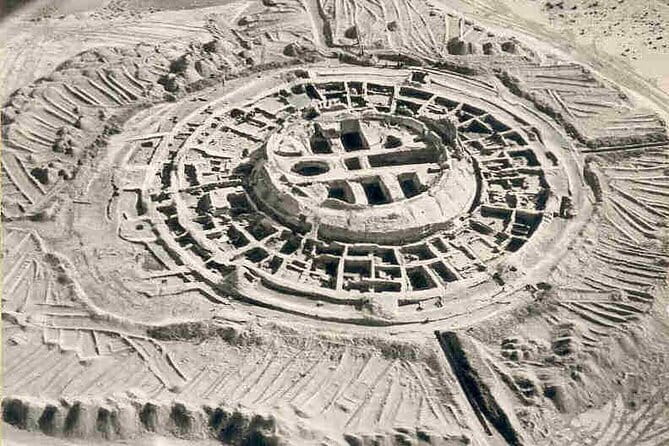
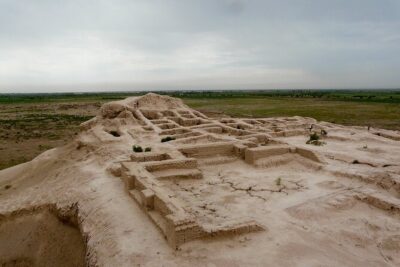
Toprak Kala is one of the most important stops on the route. It dates to the Kushan period, around the second and third centuries CE, and served as a royal residence for Khorezm’s rulers. It first functioned as a royal sanctuary and was later abandoned for a time.
The site helps you picture Khorezm as a political power, not simply a collection of isolated desert forts. Large-scale walls and the remains of royal buildings give the place a different feel from the smaller defensive sites.
The scheduled visit is 30 minutes. That is enough for a first look, photographs, and a basic explanation, but it is not a long study visit. Since admission is not included here, carry some extra money and confirm the current fee with the operator.
Wear shoes suitable for uneven ground. The ruins are exposed and open, so sun protection and water are sensible additions to your day bag. The air-conditioned car provides a welcome break between sites.
Guldursun Qala: walls, towers, and later occupation
Guldursun Kala is a fortified town whose outer walls and towers date to the 12th century CE. Archaeological work has found pottery, bronze objects, and coins within the settlement.
This stop brings the medieval period into the day. After Toprak Kala’s royal and Kushan connections, Guldursun helps show how fortress towns continued to serve communities many centuries later.
You have about 30 minutes here, and admission is listed as free. The short stop works best if you focus on the structure of the walls and towers rather than expecting a large collection of objects on display. The finds are important because they reveal daily life and trade, but the objects themselves are not presented as the main part of this visit.
Same stretch of the Silk Road, a different sort of day:
- Khiva: Historical City Highlights Guided Walking Tour
★ 4.8 · 156 reviews - Aral Sea Adventures (2 day)
★ 5.0 · 30 reviews - Khiva Historical City Highlights Guided Walking Tour
★ 5.0 · 30 reviews - Tranfer Khiva – Bukhara via Ancient Fortresses
★ 4.8 · 24 reviews
Janbas Kala: the oldest-looking defenses
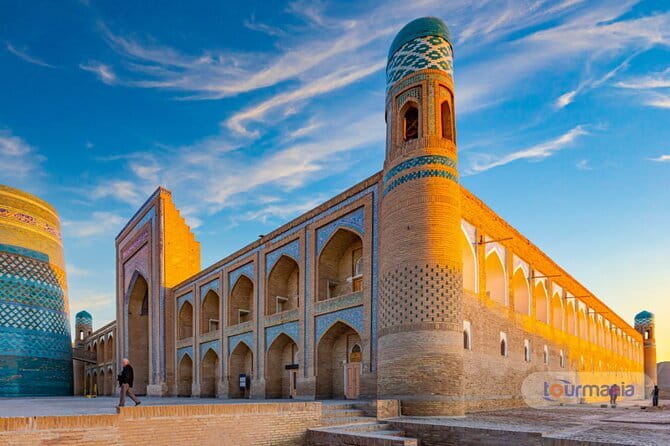
Janbas Kala has one of the most archaic fortification systems in the region. Its four outer walls remain in relatively good condition, with sections reaching up to 20 meters high.
This is the kind of place where scale does the explaining. Even without a long lecture, tall mud-brick walls make the defensive purpose clear. You can see how a settlement might have controlled access and protected the people inside.
The planned stop lasts 30 minutes and entry is free. Give yourself time to look from different angles rather than simply standing near the first wall you reach. The moderate fitness requirement matters here because the ruins are not presented as a flat, paved attraction.
Janbas Kala is also a good reminder that these sites are fragile. Do not treat the walls as climbing equipment. Keep to firm ground and follow any local restrictions.
Ayaz Kala: the visual high point
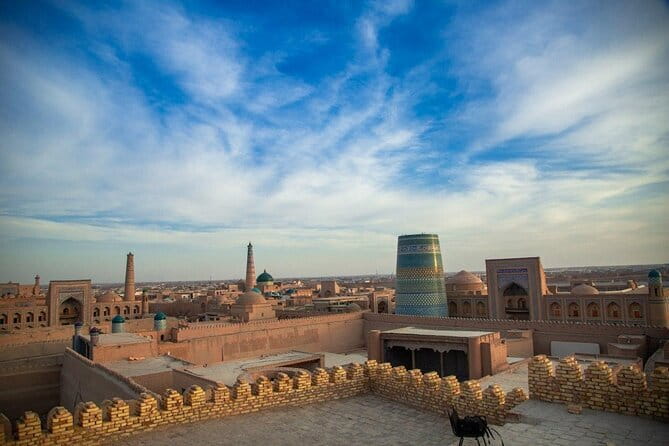
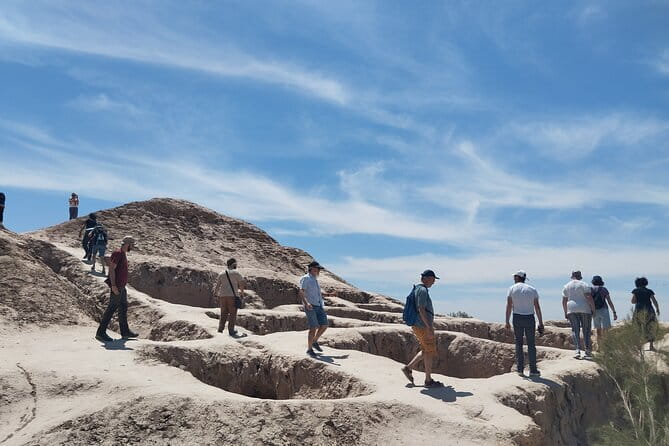
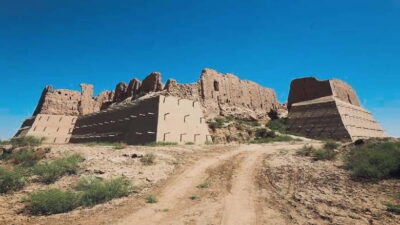
Ayaz Kala receives about one hour, the longest stop of the day. It is one of the most striking fortress groups in the area, with three separate fortresses clustered on and around a prominent hill at the eastern end of the Sultan-Uiz-dahg range.
The word group matters. You are not seeing one single ruin, but a set of fortifications arranged across different levels. The hilltop position gives the site its drama and helps you understand why elevated ground mattered for defense and visibility.
This is the stop where you will most want extra time. Use the hour to take in the different fortresses, walk carefully, and enjoy the broad views. The schedule is still limited if you want to explore every section in detail, but it is more generous than the half-hour visits elsewhere.
Ayaz Kala also creates the clearest physical demand. The tour requires a moderate fitness level, and uneven surfaces or uphill movement may be part of the visit. If you have mobility concerns, ask the operator exactly how close the car can get and how much walking is required.
Kizil Kala: a fortress rebuilt across centuries
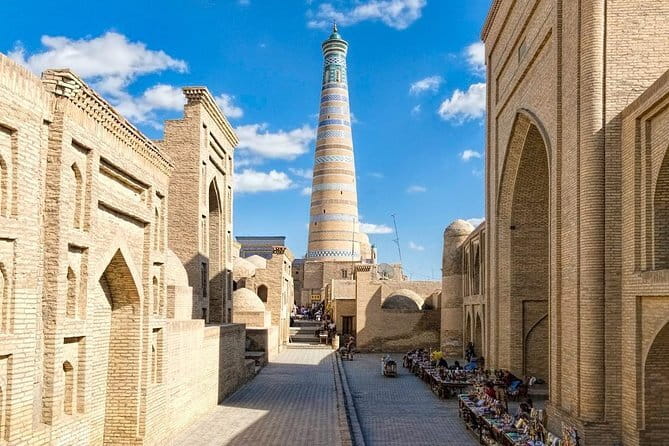
Kizil Kala, also written Qizil Qala or Kyzyl Kala, began in the Late Antique period, between the first and fourth centuries CE. It was later abandoned and rebuilt in the 12th or 13th century, shortly before the Mongol invasions.
That layered timeline makes the site especially useful for understanding how Khorezm’s defensive network changed. You are looking at a place with more than one chapter, not a ruin from a single moment.
The stop lasts about 30 minutes. Admission is not included, so check whether a local ticket is required on the day. As with the other ruins, you will get more from the visit if you focus on the shape, position, and surviving construction rather than expecting extensive signage.
Duman Kala and the missing Angka Kala question
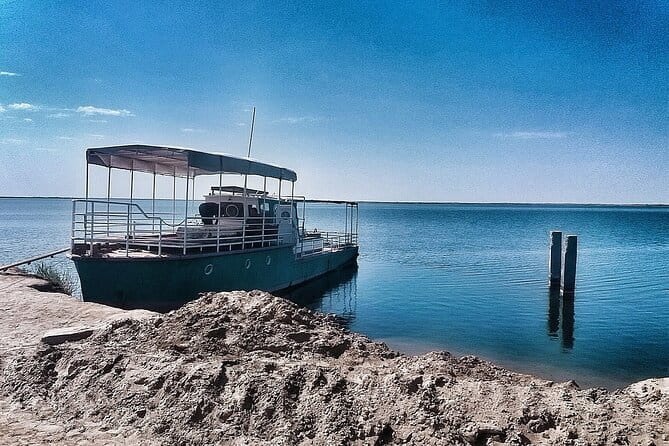
Duman Kala is described as three connected sections: a square western enclosure with corner towers, a smaller square citadel, and an irregular northern enclosure. Even in outline, that arrangement suggests a complex settlement rather than one simple fort.
The scheduled visit is 30 minutes and entry is listed as free. It is a useful stop for comparing fortress design. Look for the difference between the main enclosure, the citadel, and the northern section.
There is a route detail you should settle before departure. The overview names Duman Kala, Guldursun Kala, Angka Kala, Janbas Kala, Ayaz Kala, Akchakul Lake, Toprak Kala, and Kizil Kala. That is eight named places, while the timed schedule lists seven stops and does not include Angka Kala.
This may simply be a description error, or the route may change depending on road conditions and available time. Ask for a written stop list before the day begins. If Angka Kala matters to you, do not assume it is included.
Akchakul Lake and the old river channels
Akchakul Lake adds a welcome change from walls and ruins. The area is connected to the ancient Amu Darya, known historically as the Oxus. In the BC period, the river flowed in two directions here, through the Akcha River and the Suvyorgan River.
That river story explains why fortresses and settlements developed in this region. Water shaped movement, farming, food, and defense. The lake stop gives the day a human and environmental side that the stone and mud-brick ruins alone cannot provide.
Local fish at the Akchakul Lake complex is presented as a special food experience. Lunch is not included, so budget separately and ask how the meal is arranged. The available information does not give a fixed menu or price, so confirm whether fish is available on your date and whether the stop is optional.
I like this part of the route because it connects archaeology with living Karakalpak traditions. It also breaks up the long run of fortress visits. After several similar-looking walls, a meal by the lake can help the day feel less like a checklist.
The pace, food, and practical comfort
Nine hours is a long day, but the private car makes the schedule easier. Pickup, drop-off, and air conditioning remove several logistical headaches, especially if you are staying in Khiva and want to reach remote sites without arranging multiple drivers.
The pace remains demanding. Five or more stops are set at only 30 minutes, and the entire route includes driving between them. You should be comfortable with a day that favors coverage over long stays.
Bring:
- Water and sun protection
- Comfortable shoes for uneven ground
- Money for lunch and possible admission fees
- A phone or other device for the audio-guide materials
- A light layer if temperatures change during the day
The tour requires moderate physical fitness. No specific accessibility arrangements are provided, so ask before booking if walking on rough ground or visiting elevated fortresses may be difficult.
Is $199 good value for three people?
For three people, yes, the price can be attractive. A private air-conditioned car, hotel pickup and drop-off, and a full day across several remote sites would be difficult to reproduce easily with separate transport arrangements.
For one person, the calculation is less favorable because the price is charged per group. A solo visitor still gets the convenience of private transport, but the cost is the full $199 before lunch and possible entrance charges.
The value depends heavily on the guide arrangement. A private car is not the same as private guiding. If the same guide is splitting attention between two groups, the experience may feel less personal than the price suggests.
I would ask three questions before confirming:
- Will only my group ride and receive guiding?
- Is Angka Kala included, or is the route limited to seven listed stops?
- What are the expected entrance fees and lunch arrangements?
Clear answers make the price easier to judge.
Who will enjoy this daytrip most?
I would recommend it to you if you want to see a wide selection of Khorezm’s desert fortresses in one day and prefer a private vehicle to independent transport planning. It suits couples, families, and small groups of up to three who can share the cost.
It is also a good fit if you enjoy ruins in open settings more than polished museums. The appeal comes from scale, silence, old walls, and the feeling of seeing sites far beyond Khiva’s center.
You may want another option if you need long, detailed explanations at every monument. The short stops and reported limits in English make this better for a broad regional overview than for specialist study.
Solo visitors should weigh the price carefully, but the private format can offer reassurance. Sarvar was specifically praised for keeping a solo female passenger safe, even though conversation and site explanations were limited.
Free cancellation is available if you cancel at least 24 hours before the start time. Changes or cancellations inside that window are not refunded, and poor weather can lead to a new date or a full refund.
Should you book it?
Book this daytrip if your priority is seeing many Khorezm fortresses with private transport, simple hotel transfers, and a memorable lake stop. The combination of Toprak Kala’s royal past, Ayaz Kala’s hilltop group, Janbas Kala’s towering walls, and Akchakul’s river story gives you a strong overview of the region.
Before booking, confirm the exact number of stops and the guide setup. The apparent seven versus eight site mismatch and the possibility of a shared guide are the two details most likely to affect your satisfaction. If those points are clear, $199 is sensible for three people and the tour offers a practical way to reach places that are hard to link independently.
FAQ
Where does the tour begin?
It can begin in Khiva or Urgench, with hotel pickup and drop-off included.
What time does the tour start?
The stated start time is 9:00 a.m.
How long does the experience last?
The daytrip lasts approximately nine hours.
How many people can join the private tour?
The price covers one group of up to three people.
Is lunch included?
No. Lunch is not included in the tour price.
Are entrance tickets included?
Admission is listed as free at Guldursun Kala, Janbas Kala, Ayaz Kala, Duman Kala, and Akchakul Lake. Tickets for Toprak Kala and Kizil Kala are not included.
Can I cancel for a full refund?
Yes. You can receive a full refund if you cancel at least 24 hours before the experience start time. Cancellations or changes made within 24 hours are not refunded.
Freshly added in Khiva
- Traditional Khiva Cooking Class with Market Visit & Lunch★ 5.0 · 4 reviews
- Day Trip Top 3 Fortresses departure from Khiva Self-Guided Tour★ 5.0 · 2 reviews
- Transfer From Khiva To Bukhara★ 5.0 · 2 reviews
- Master Class – Uzbek Bread (Khiva)★ 3.5 · 4 reviews
- A Night In The Kyzylkum Desert [2] From Khiva★ 4.5 · 3 reviews
- Old Khiva Stories with Your Local Guide★ 5.0 · 5 reviews
- Daytrip From Khiva To Ancient Fortresses★ 5.0 · 2 reviews
- Khiva City Tour★ 4.0 · 2 reviews
Ancient Fortress Tours, compared.
Transfer: Bukhara – Khiva via Ancient Fortresses
Read our review →

Private Bukhara-Khiva Transfer via Ancient Fortresses
Read our review →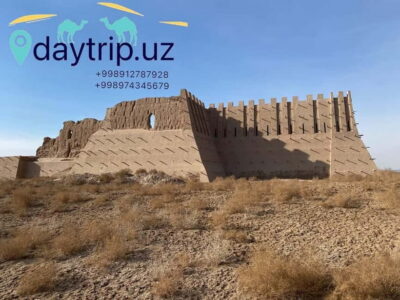
Private Transfer & Photo‑Stops: Ayaz‑Kala & Toprak‑Kala”
Read our review →Browse the lists this tour appears in