
Reviewed · ARAL SEA & YURT CAMPS
A Night In The Kyzylkum Desert [2] From Khiva
The desert tells a bigger story. This two-day private trip links the vanished Aral Sea, Nukus art, Karakalpak life, and seven ancient fortresses, with a night in a yurt near Ayaz-Kala. I love the rare mix of modern environmental tragedy and ancient archaeology, and I like that your own group travels by air-conditioned vehicle with a driver and audio guide. The main drawback is the sheer amount of road time. You cover a huge area in roughly two days, so this suits you best if you value range and variety over a slow pace.
You can start from Khiva or Nukus and finish in Khiva or Urgench, which makes the tour useful when you are moving through western Uzbekistan. The yurt stay costs an additional $50 per day, and museum or fortress tickets are extra, so the final bill will be higher than the advertised $499 group price.
In This Review
- Key points to know before you go
- Why this route is different from a standard Khiva day trip
- Day one begins at Chilpiq’s ancient Zoroastrian tower
- Nukus brings art into the desert journey
- Muynak explains what happened to the Aral Sea
- The Muynak ship cemetery is the day’s most powerful image
- The yurt night near Ayaz-Kala is the heart of the trip
- Ayaz-Kala gives you the classic desert fortress view
- Toprak-Kala was once a royal center
- Guldursun Qala and Kyzyl Kala show changing defenses
- Koi Krylgan Kala and Angka Kala reward curious visitors
- Itchan Kala closes the loop back in Khiva
- What the $499 group price really buys you
- Who should book this desert journey
- Should you book A Night in the Kyzylkum Desert?
- FAQ
- How long is the tour?
- Where can pickup and drop-off take place?
- Is the yurt accommodation included in the $499 price?
- Are museum and fortress tickets included?
- How many people can join the private tour?
- What is the youngest permitted age?
Key points to know before you go
![A Night In The Kyzylkum Desert [2] From Khiva - Key points to know before you go](https://4.uzbekistanguides.com/wp-content/uploads/a-night-in-the-kyzylkum-desert-2-from-khiva-1.jpg)
- The Aral Sea story is unavoidable: Muynak’s museum and ship cemetery show the human and environmental cost of the sea’s retreat.
- Seven fortress stops fill the second day: Ayaz-Kala, Toprak-Kala, Guldursun Qala, Kyzyl Kala, Koi Krylgan Kala, Angka Kala, and Itchan Kala each offer a different glimpse of ancient Khorezm.
- The desert night is the emotional center: You sleep near Ayaz-Kala in a yurt, with open sky, desert silence, camels, and a chance to taste camel milk from local families.
- Nukus adds an excellent cultural stop: The Savitsky Museum gives you an unexpected look at Uzbek and Karakalpak art.
- It is a private trip for up to three people: You do not share the vehicle with a large group, and the route can work well for a small family or group of friends.
- Budget for extras: The yurt, dinner, breakfast, museum tickets, and some fortress admissions are not included in the base price.
Why this route is different from a standard Khiva day trip
Khiva is famous for its walled old town, but the wider Khorezm region is much larger than Itchan Kala. This tour takes you away from the polished monuments and into the dry country around Karakalpakstan, where abandoned fortresses rise from the desert and villages still reflect local traditions.
The route also joins two very different stories. One is thousands of years old: fortified settlements, royal residences, religious monuments, and ancient desert trade routes. The other is painfully recent: the Aral Sea, once one of the world’s largest inland seas, shrinking during the Soviet period and leaving fishing towns such as Muynak far from the water.
I like that the trip does not treat the desert as mere scenery. You see archaeology, environmental damage, museum collections, and present-day rural life in one journey. That makes the experience more meaningful than simply ticking off isolated ruins.
Still, you should be ready for long stretches in the vehicle. The first day includes Chilpiq, Nukus, Muynak, and the ship cemetery before the overnight stay. The second day is packed with fortresses. This is an ambitious route, not a restful desert retreat.
More Aral Sea & Yurt Camps in Khiva
- Aral Sea Adventures (2 day)
★ 5.0 · 30 reviews - From Khiva To Aral Sea 2-Days One Night In Yurt Stay
★ 4.6 · 20 reviews - Daytrip From Khiva to Aral Sea Cemetery Of Ships . All In One
★ 4.5 · 18 reviews
Day one begins at Chilpiq’s ancient Zoroastrian tower
![A Night In The Kyzylkum Desert [2] From Khiva - Day one begins at Chilpiq’s ancient Zoroastrian tower](https://4.uzbekistanguides.com/wp-content/uploads/a-night-in-the-kyzylkum-desert-2-from-khiva-2.jpg)
The first stop is Chilpiq, also called Shilpiq or Chilpak Kala. This round, roofless structure is more than 2,200 years old and sits on raised ground above the surrounding desert. It is about 15 meters high and 65 meters across, giving you a clear sense of its scale even during a short 30-minute visit.
Chilpiq served as a dakhma, a Zoroastrian funerary monument. Its open form is part of its meaning, since Zoroastrian burial customs involved exposing the dead rather than placing them underground. Even if you are not familiar with Zoroastrianism, the site helps explain that ancient Khorezm was not a cultural backwater. It had its own religious practices, architecture, and political power.
Admission is not included, so keep small extra costs in mind. The stop is brief, and you should not expect a full museum-style explanation on site. The audio guide helps, but the value here comes mainly from the unusual shape, age, and setting.
Nukus brings art into the desert journey
The State Museum of Art named after I.V. Savitsky is one of the strongest stops on the route. You have about an hour here, which is enough for a focused visit but not enough to see every corner of the collection.
The museum is in Nukus, the capital of the autonomous Karakalpakstan region. Its collection is known for Central Asian art and works connected with the Soviet period, including art that received little official support at the time. That gives the museum a character very different from the ancient fortresses and Islamic monuments elsewhere in Uzbekistan.
I especially like this pause in the itinerary because it changes the rhythm. After road miles and archaeological ruins, you get an indoor hour with paintings and objects that show another side of the region. It also gives you a better sense of Karakalpakstan as a place with its own identity, not simply an extension of Khiva.
The museum ticket costs about $10 and is not included. If art is important to you, one hour may feel short. If you mainly want an introduction, the time is practical and keeps the day moving.
Muynak explains what happened to the Aral Sea
![A Night In The Kyzylkum Desert [2] From Khiva - Muynak explains what happened to the Aral Sea](https://4.uzbekistanguides.com/wp-content/uploads/a-night-in-the-kyzylkum-desert-2-from-khiva-4.jpg)
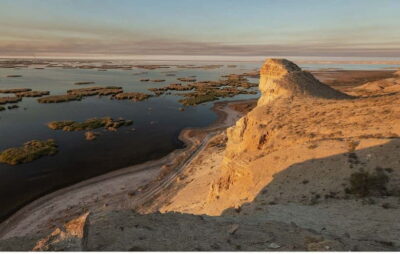
The Regional History and Aral Sea Museum in Muynak is a small museum, but its subject is enormous. You spend about 30 minutes here learning about the town, the sea, and the ecological changes that reshaped local life.
Muynak was once a port town on the Aral Sea. As the sea receded, the shoreline moved far away, fishing declined, and the town became a symbol of one of the modern era’s most serious environmental disasters. The museum gives context that the ship cemetery alone cannot provide.
The museum costs about $7. Do not judge it by the size of a major national museum. Its importance is local and direct. This is where you begin to understand how a disappearing body of water changed work, food, transport, and daily life.
The stop is also useful because it places the tragedy in a human setting. You are not just looking at a dry seabed. You are seeing the history of a community built around water that is no longer nearby.
Same stretch of the Silk Road, a different sort of day:
- Khiva: Historical City Highlights Guided Walking Tour
★ 4.8 · 156 reviews - Transfer: Bukhara – Khiva via Ancient Fortresses
★ 4.5 · 101 reviews - Daytrip From Khiva To Ancient Fortresses
★ 4.6 · 60 reviews - Khiva Historical City Highlights Guided Walking Tour
★ 5.0 · 30 reviews
The Muynak ship cemetery is the day’s most powerful image
![A Night In The Kyzylkum Desert [2] From Khiva - The Muynak ship cemetery is the day’s most powerful image](https://4.uzbekistanguides.com/wp-content/uploads/a-night-in-the-kyzylkum-desert-2-from-khiva-5.jpg)
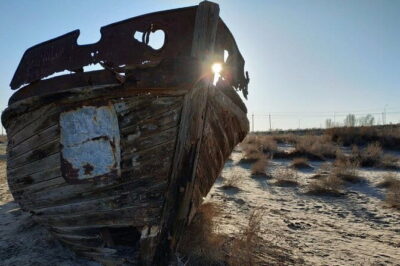
The ship cemetery is one of the most memorable places on the route. Rusting vessels sit on dry ground where the Aral Sea once reached, creating a stark picture of environmental change.
You have around 30 minutes here, and that is probably enough. The site is simple. There are no grand interiors or long museum displays. You walk among the abandoned ships, look across the open ground, and try to picture this place as an active port.
I would not rush this stop. The ships are visually striking, but the real impact comes from thinking about their original purpose. Boats built for water now rest far inland. That contrast makes the Aral Sea’s retreat easier to grasp than statistics alone.
The site itself is free. Bring water and practical clothing, since the visit is outdoors and the surrounding country is dry and exposed. The tour information calls for moderate physical fitness, and this stop is not a demanding hike, but you should still be comfortable walking outside in desert conditions.
The yurt night near Ayaz-Kala is the heart of the trip
![A Night In The Kyzylkum Desert [2] From Khiva - The yurt night near Ayaz-Kala is the heart of the trip](https://4.uzbekistanguides.com/wp-content/uploads/a-night-in-the-kyzylkum-desert-2-from-khiva-6.jpg)
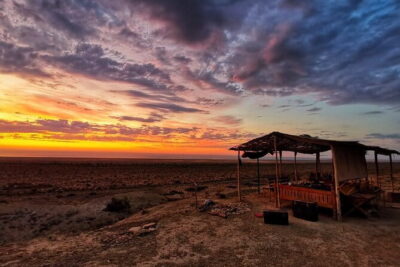
The overnight stay takes place in the Kyzylkum Desert near Ayaz-Kala. A yurt, dinner, and breakfast cost an extra $50 per day. This is not included in the $499 vehicle and tour price, so check the full total before booking.
The appeal is not luxury. It is the change of pace. After a day connected to museums, roads, and the Aral Sea, you spend the night near an ancient fortress in a traditional desert setting. Camels may walk around the camp, and you may have the chance to drink camel milk from local families.
At night, the open sky is the main event. Away from city lights, you can watch the stars above the desert. The experience offers a glimpse of local traditions and desert life, although you should keep expectations realistic. The available information does not promise a particular level of yurt comfort or private facilities, so ask the provider if bedding or bathroom arrangements matter to you.
I like this overnight because it connects the ancient sites with living culture. The fortresses are ruins, but the desert is not empty. Families, animals, food, and customs continue here.
Ayaz-Kala gives you the classic desert fortress view
![A Night In The Kyzylkum Desert [2] From Khiva - Ayaz-Kala gives you the classic desert fortress view](https://4.uzbekistanguides.com/wp-content/uploads/a-night-in-the-kyzylkum-desert-2-from-khiva-7.jpg)
The second day starts with Ayaz-Kala, an archaeological complex dating from the fourth century BCE to the seventh century CE. It sits on a hill above the Kyzylkum Desert, making it one of the most visually rewarding stops.
You have about an hour here. Expect a large fortified ruin rather than a restored palace. Walls, towers, and open spaces reveal the defensive purpose of the site, while the high position helps you understand why ancient builders chose it.
Ayaz-Kala is also the place most closely tied to the overnight stay. If you visit in the morning, the desert setting is still fresh from the night before. That gives the fortress more meaning than it would have as a quick photo stop from a distant road.
Admission is listed as free. You should wear shoes suitable for uneven ground and be ready for some walking. The tour requires moderate physical fitness, and ancient fortresses rarely come with smooth paths or much shade.
Toprak-Kala was once a royal center
![A Night In The Kyzylkum Desert [2] From Khiva - Toprak-Kala was once a royal center](https://4.uzbekistanguides.com/wp-content/uploads/a-night-in-the-kyzylkum-desert-2-from-khiva-8.jpg)
Toprak-Kala dates to the Kushan period, around the second and third centuries CE. It served as a royal residence for the kings of Khorezm and earlier had a religious role.
The visit lasts about 30 minutes. That is enough to see the main remains and understand the site’s scale, but the short time means you will rely on the audio guide and your imagination. The ruins do not present themselves like a complete palace.
This stop matters because it shifts the focus from military defense to royal power. Toprak-Kala was part of a governing center, not simply an isolated fort. It helps you picture Khorezm as an organized state with rulers, ceremonies, and religious institutions.
A small admission fee of around $2 may apply. The price is minor, but several small fees can add up across the route.
Guldursun Qala and Kyzyl Kala show changing defenses
Guldursun Qala is a fortified town with exterior walls and towers dating to the 12th century. Archaeologists found pottery, bronze objects, and coins inside, giving the site a connection to ordinary trade and daily use as well as military history.
You spend about 30 minutes there. The site is free, and its appeal is strongest if you enjoy seeing how towns were defended rather than looking for intact buildings.
Kyzyl Kala has an older foundation from the first to fourth centuries CE. It was later abandoned and rebuilt in the 12th and 13th centuries, just before the Mongol invasions. That sequence gives you a useful lesson in how important places were reused over time.
Kyzyl Kala also carries some uncertainty about its exact role, so do not expect every question to have a neat answer. Archaeology often works with partial evidence. Admission is not included, with fortress fees generally around $2.
Koi Krylgan Kala and Angka Kala reward curious visitors
Koi Krylgan Kala sits outside the village of Taza-Kel’timinar in the Ellikqala District. It is another archaeological site rather than a restored monument, and you have about 30 minutes to see it.
This is a good stop if you enjoy the pattern of the journey: each ruin adds another piece to the ancient Khorezm story. It may feel less immediately dramatic than Ayaz-Kala, so the audio guide and your own interest in archaeology matter.
Angka Kala is about 22 kilometers north of Turtkul. The settlement includes periods from the first to third centuries and from the 10th to 12th centuries. Its almost square plan and relatively well-preserved fortress form make it useful for understanding ancient town planning.
Again, expect a short outdoor visit rather than a long guided walk. The site is free, and the private vehicle keeps the route practical, but the number of stops means you will rarely have time to linger.
Itchan Kala closes the loop back in Khiva
The final listed stop is Itchan Kala, Khiva’s famous walled inner city. The description also refers to Duman Kala, with several adjoining sections, including a western enclosure, a citadel, and a northern enclosure. In practical terms, this stop brings you back to the city’s monumental core after the remote fortresses of Karakalpakstan.
You have about 20 minutes here, so think of it as a brief return or orientation stop rather than a full visit to Khiva. Itchan Kala deserves far more time on its own. If you have not already explored it, set aside a separate period before or after this trip.
The free admission listed for this stop is helpful, but the short timing is the key point. Do not book this tour expecting the final 20 minutes to cover Khiva’s mosques, madrasas, minarets, and courtyards.
What the $499 group price really buys you
The tour costs $499 per group of up to three people. That works out to about $166 per person for three people, before the yurt and admission fees. For one person, the same price is much harder to justify, since the cost does not drop with a smaller party.
The base price includes private transportation, an air-conditioned vehicle, an audio guide, and pickup from Khiva or Nukus. Drop-off is available in Khiva or Urgench. Those transfer options add real value if this trip fits between cities in your Uzbekistan itinerary.
You are paying for distance as much as sightseeing. Muynak and the fortress zone are not quick side trips from Khiva, and having one private vehicle handle the route is simpler than arranging several separate transfers.
Add about $50 for the yurt stay, dinner, and breakfast. Museum tickets are about $10 for Savitsky and $7 for the Muynak museum. Fortress admissions are generally around $2 where charged. Ask for the current total because the listed fees may vary.
Who should book this desert journey
I would recommend it to you if you want a broad western Uzbekistan experience in a short period. It works especially well for a private group of two or three people, since the per-person cost becomes more reasonable and you control the vehicle.
It also suits you if the Aral Sea is a major reason for visiting Uzbekistan. The ship cemetery alone is not enough to explain the disaster, but pairing it with the Muynak museum gives the stop more weight.
History and archaeology fans will appreciate the fortress circuit, especially if you enjoy ruins without restoration. The route is less suitable if you need detailed guided interpretation at every site or prefer a relaxed schedule with long breaks.
Families can book for children aged seven and older. I would still consider the long driving day and the outdoor conditions before bringing younger children. A moderate level of physical fitness is required, and the tour does not promise an accessible route across every ruin.
Confirmation is provided at booking, and free cancellation is available until 24 hours before the start time. Inside that window, refunds are not offered and changes are not accepted.
Should you book A Night in the Kyzylkum Desert?
Book it if you want the Aral Sea, Nukus, desert life, and ancient Khorezm in one private trip. The strongest moments are the Muynak ship cemetery, the Savitsky Museum, the night sky near Ayaz-Kala, and the sheer number of fortresses.
Skip it if you prefer slow travel, polished monuments, or a simple overnight excursion from Khiva. This is a demanding route with substantial road time and several short ruin visits.
For three people, the price can be fair because private transport and flexible pickup are built in. For one person, the cost is much less attractive. If your priority is seeing the disappearing Aral Sea and sleeping beside an ancient desert fortress, this is one of the more distinctive ways to do it.
FAQ
How long is the tour?
The experience lasts approximately two days.
Where can pickup and drop-off take place?
Pickup is offered from Khiva or Nukus. Drop-off is available in Khiva or Urgench.
Is the yurt accommodation included in the $499 price?
No. The yurt overnight stay costs $50 per day and includes dinner and breakfast.
Are museum and fortress tickets included?
No. The Savitsky Museum costs about $10, the Muynak museum costs about $7, and fortress tickets are generally around $2 where charged.
How many people can join the private tour?
The $499 price covers one private group of up to three people. Only your group participates.
What is the youngest permitted age?
The youngest age accepted is seven years old. A moderate level of physical fitness is required.
Freshly added in Khiva
- Traditional Khiva Cooking Class with Market Visit & Lunch★ 5.0 · 4 reviews
- Day Trip Top 3 Fortresses departure from Khiva Self-Guided Tour★ 5.0 · 2 reviews
- Transfer From Khiva To Bukhara★ 5.0 · 2 reviews
- Master Class – Uzbek Bread (Khiva)★ 3.5 · 4 reviews
- Old Khiva Stories with Your Local Guide★ 5.0 · 5 reviews
- Daytrip From Khiva To Ancient Fortresses★ 5.0 · 2 reviews
- Khiva City Tour★ 4.0 · 2 reviews
- Aral Sea – Extended trip (3 days)★ 5.0 · 5 reviews
Aral Sea & Yurt Camps, compared.
Daytrip from Khiva to Aral Sea Cemetery of Ships. All in one
Read our review →
Yurt stay and Hiking in the Nurata Mountains tour – 2 days
Read our review →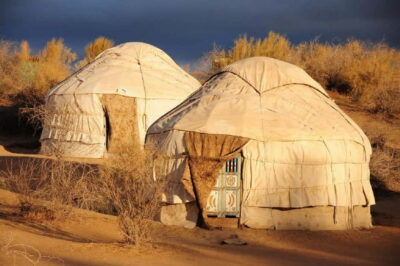
From Khiva To Aral Sea 2-Days One Night In Yurt Stay
Read our review →Daytrip From Khiva to Aral Sea Cemetery Of Ships . All In One
Read our review →
Desert Adventure from Samarkand: Yurt Camp & Aydarkul Escape
Read our review →
Browse the lists this tour appears in