
Reviewed · ANCIENT FORTRESS TOURS
Day Trip Top 3 Fortresses departure from Khiva Self-Guided Tour
The desert hides an entire lost kingdom. This private day trip from Khiva takes you to Kyzyl Qala, Toprak Qala, and Ayaz Qala, three major ruins from the Ellik Qala, or 50 Fortresses, region of Karakalpakstan. I like the efficient route and the fact that entrance tickets and an air-conditioned vehicle are included.
I also like the private format. Your group travels alone, so you are not tied to strangers or a rigid large-coach schedule. The main drawback is just as clear: there is no English guide included, and the 210-kilometer round trip involves a good deal of driving on the way to and from the ruins.
In This Review
- Key points to know before booking
- Why these ruins matter beyond a day trip from Khiva
- Kyzyl Qala: a compact red fortress in the sand
- Toprak Qala: the former city at the heart of the route
- Ayaz Qala: the largest visual payoff
- What the private vehicle changes
- Self-guided does not mean unprepared
- Is $60 good value?
- Who should book this fortress route?
- Booking and cancellation details
- Should you book the three fortresses?
- FAQ
- How long does the fortress tour take?
- Which fortresses are included?
- Is transportation included?
- Are entrance tickets included?
- Is an English-speaking guide included?
- Where does the tour start and end?
Key points to know before booking
- Three very different fortresses: Kyzyl Qala, Toprak Qala, and Ayaz Qala each offer a different scale and feel.
- A long but manageable day: The full experience lasts about seven hours, including transport from Khiva.
- Private transport: Only your own group participates, with an air-conditioned vehicle provided.
- Tickets are covered: Entrance fees to all three fortresses are included in the $60 price.
- No English guide: You receive transport, but not guided explanations in English.
- A friendly chauffeur: The available feedback specifically praises the driver’s helpful, pleasant manner.
Why these ruins matter beyond a day trip from Khiva
Khiva is famous for its walled old town, but the region around it holds an older and more scattered story. In the semi-desert east and north of Urgench, archaeologists have found the remains of more than a dozen fortified towns, palaces, and settlements. The traditional name Ellik Qala refers to 50 fortresses, though about 20 major sites are known today.
These ruins belong to ancient Khorezm, a powerful culture shaped by trade, farming, and difficult water management. Many settlements depended on canals. When those canals failed or changed course, towns that had once supported large populations were left surrounded by dry sand.
That context helps you read the sites. You are not simply looking at three old walls. You are seeing the remains of cities that once depended on an intricate system of water and power. The empty setting makes the change especially stark.
This tour covers about 210 kilometers in total. The first drive from Khiva to Kyzyl Qala takes less than an hour. The next transfer is short, around 10 minutes, while the ride from Toprak Qala to Ayaz Qala takes about 45 minutes. The return to Khiva takes roughly one hour and 40 minutes.
The timing leaves about 40 minutes at Kyzyl Qala, one hour at Toprak Qala, and one hour at Ayaz Qala. That is enough to see the main remains, but not enough for a slow archaeological study. I would think of this as a strong introduction to the fortress region, not a specialist excavation tour.
Other desert fortress runs out of Khiva:
- Transfer: Bukhara – Khiva via Ancient Fortresses
★ 4.5 · 101 reviews - Daytrip From Khiva To Ancient Fortresses
★ 4.6 · 60 reviews - Guided Tour To Old Fortresses
★ 5.0 · 25 reviews
Kyzyl Qala: a compact red fortress in the sand
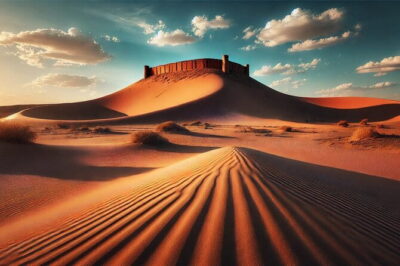
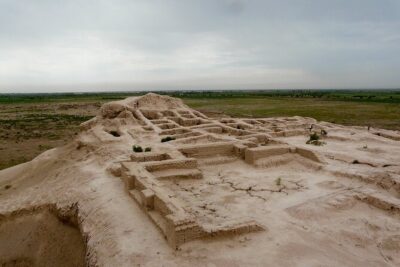
Your first stop is Kyzyl Qala, whose Uzbek name means Red Fortress. The site dates from the first to fourth centuries AD and was buried in the desert for centuries before Professor Tolstov identified it in 1938.
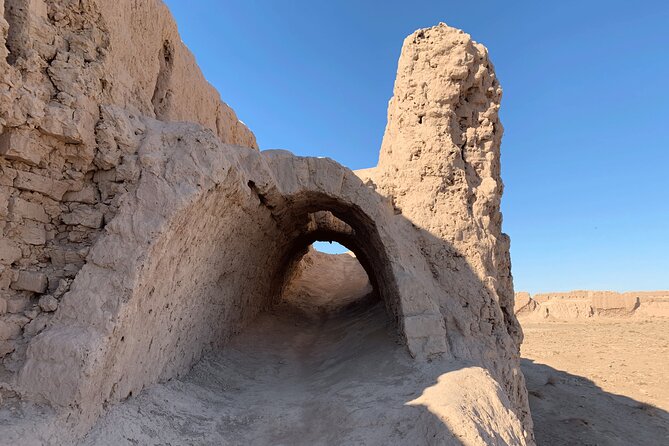
The 40-minute visit is short, but useful. Kyzyl Qala gives you an early look at the defensive style used across the region. Its weathered walls and open surroundings make the site easy to understand at a glance. You can see how much the builders relied on height, thick walls, and a commanding position.
This stop works well as an introduction because it is not as large or demanding as Toprak Qala. You can get out, walk around, take in the ruins, and begin to understand the scale of the fortress network without spending your energy too early in the day.
Still, do not expect a restored castle with rooms, roofs, or museum displays. The attraction is the remaining structure and its setting. Without an English guide, you may need to read any available information yourself or prepare in advance if you want more historical detail.
The first drive is also important to keep in mind. Although less than an hour is not excessive, you are already beginning a day with substantial time in the vehicle. An air-conditioned car matters here, especially during hot weather.
Toprak Qala: the former city at the heart of the route
Toprak Qala is the most urban of the three sites. Its name means Sand Fortress, and the settlement once measured about 350 meters by 500 meters. That is a large footprint for a desert ruin, and it helps explain why this stop receives a full hour.
Toprak Qala was once the region’s biggest city. Its canals eventually failed, leaving the settlement isolated in the sands. The Russian archaeologist Professor Tolstov excavated palace friezes here in 1938, dating them to the second and third centuries AD.
For me, this is the stop where the word city begins to make sense. At Kyzyl Qala, you mainly think of defense. At Toprak Qala, you can picture administration, residence, ceremony, and daily life spread across a much larger site. The ruined walls do not give you a complete picture, but they provide enough clues to imagine a working capital rather than a remote outpost.
The palace connection adds another layer. The friezes point to a more refined court culture than the rough desert setting might suggest. You should not expect the original decorative work to remain fully in place, but knowing it was found here makes the exposed ruins feel less empty.
An hour is a reasonable visit time for most people. You can walk through the main areas, study the remains, and pause for photographs without turning the stop into a rushed checklist. If archaeology is your main interest, you may wish the schedule allowed longer. The trip is designed to show you three sites in one day, so each stop has a firm limit.
The transfer from Kyzyl Qala takes around 10 minutes. That short ride keeps the morning moving and prevents the day from feeling like three unrelated excursions.
Ayaz Qala: the largest visual payoff
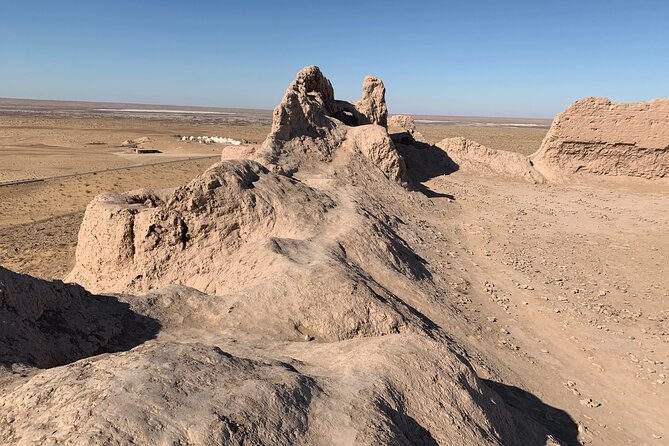
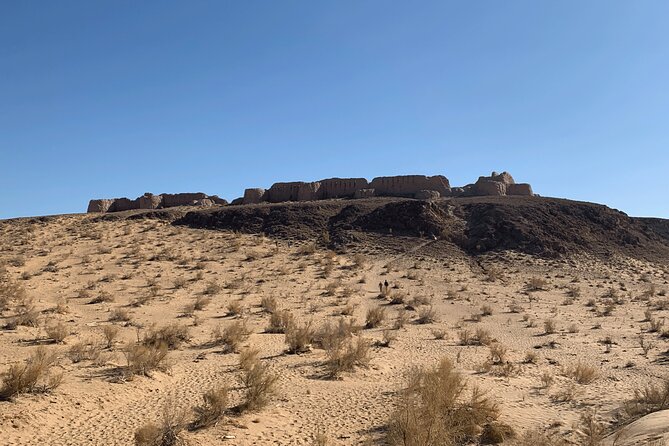
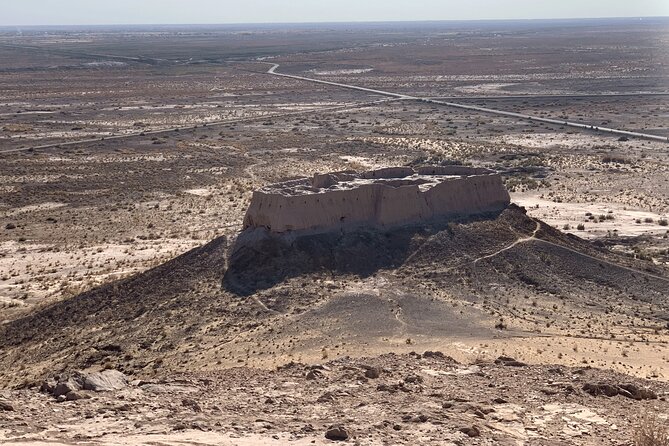
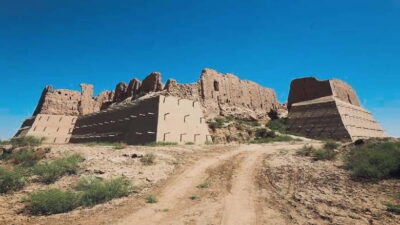
Ayaz Qala is described as the must-see fortress of the desert, and it is easy to understand why. Its outer walls sit on a flat hilltop, and sections of the wall still reach about 10 meters high. The surviving scale gives you the clearest sense of how powerful these fortifications once looked.
The site dates at least to the fourth century BC, making it older than the other two stops in this route. You get one hour here, including time to see the walls and take in the broad view across the surrounding desert.
Ayaz Qala is likely to be the most memorable stop for sheer size and position. The walls are not tucked into a modern town or protected by a roof. They sit out in the open, where the distance between the ruin and the empty ground around it becomes part of the experience.
The 45-minute drive from Toprak Qala is the longest transfer between the fortresses. That ride is a fair trade for reaching the site, but it adds to the day’s physical rhythm: car, ruins, car, ruins. If you dislike long drives, the route may feel more tiring than its seven-hour headline suggests.
You should also prepare for a basic site visit. The supplied information confirms the admission ticket, but it does not promise visitor facilities, detailed interpretation, or a staffed museum at each fortress. Bring practical supplies for the day, especially food and drinks, since lunch is not included.
Self-guided routes around Khiva:
- The Golden City of Samarkand: A Self-Guided Audio Tour
★ 4.0 · 4 reviews
What the private vehicle changes
This is a private tour, so only your group takes part. That is a meaningful advantage for a route with several long transfers. You can travel without waiting for a large party to gather, and the day has a quieter feel than a standard coach outing.
The air-conditioned vehicle is included. In Karakalpakstan’s dry desert region, that is more than a minor comfort. It gives you a cool place to recover between exposed visits and makes the return to Khiva easier after three fortress stops.
Pickup is offered, while the stated meeting point is the west gate of Ichan Kala in Khiva, listed as 99H4+CRQ, Khiva, Xorazm Region. The activity ends back at the meeting point. If you prefer to begin from your accommodation, confirm the pickup arrangement when booking rather than assuming every Khiva address is covered.
The driver appears to be a key part of the experience. The available five-star feedback praises the chauffeur as very friendly and describes the fortresses as magnificent and worth doing. No driver’s name is provided, so you should not expect a named guide or a particular chauffeur.
That praise fits the tour’s basic design. The driver handles the route and transport, while you explore the ruins on your own. It is a good match for independent visitors who like to set their own pace and do not need a running lecture at every wall.
Self-guided does not mean unprepared
The title identifies this as a self-guided tour. That means the experience depends more on your own preparation than a guided archaeological excursion would.
You will receive transport and entrance tickets, but an English guide is not included. If you want to understand dates, rulers, building plans, and the role of irrigation, spend a little time reading before you leave Khiva. Even a short primer will give the exposed walls more meaning.
The self-guided format has an upside. You can spend your hour at each site in the way that suits you. You might focus on photography at Ayaz Qala, architectural details at Kyzyl Qala, or the former city plan at Toprak Qala. You are not forced to follow a speech when you would rather walk.
The tradeoff is interpretation. At a ruined site, the difference between a pile of old brick and a former palace district is often the explanation. If historical background is your main reason for visiting, you may prefer to arrange a separate guide or choose an option that specifically includes one.
Most people can participate, and service animals are allowed. The experience is also near public transportation, though the actual fortress route is handled by the provided vehicle. The information does not give specific details about walking surfaces or facilities, so you should be ready for outdoor archaeological sites rather than polished museum paths.
Is $60 good value?
At $60 per person, the price is reasonable for a private seven-hour outing that includes an air-conditioned vehicle and admission to three fortresses. The value improves if you are sharing the day with family or friends, since the private format avoids joining a large group and group discounts may be available.
You are paying mainly for transport and access, not for a full educational service. That distinction matters. The distance from Khiva is considerable, and hiring a private vehicle independently may be less simple than arranging a set route with all three admissions included.
Lunch is not included. The tour notes that a lunch break can fit into the seven-hour schedule if needed, but it does not specify that food is provided. Plan for that cost and ask how the break will be handled.
The price is strongest for independent visitors who want to see the three headline fortresses in one day. It is less compelling for someone who wants a slow, detailed archaeological tour with expert commentary. In that case, the missing English guide is the main weakness, not the ticket price.
Who should book this fortress route?
I would recommend this outing to you if you are staying in Khiva and want to see more than the famous old town. It is especially suitable for:
- Independent visitors comfortable exploring ruins without an English guide
- Small groups who value private transport
- History and archaeology fans who want to see ancient Khorezm sites
- Photographers looking for open desert settings and high fortress walls
- Visitors with only one free day for the Ellik Qala region
You should think twice if you need constant historical explanation, dislike several hours in a car, or prefer a relaxed pace with long stops. The tour covers a lot of ground efficiently, but efficiency always means some limits on time.
The route also suits people who want a clear contrast with Ichan Kala. Khiva’s old city is preserved, enclosed, and full of restored buildings. These fortresses are exposed, scattered, and partly lost. Seeing both gives you a better sense of the region’s past than seeing either type of site alone.
Booking and cancellation details
Confirmation is provided at booking. Free cancellation is available if you cancel at least 24 hours before the experience starts. Changes or cancellations made less than 24 hours before the start time are not accepted for a refund.
The tour requires good weather. If poor weather causes cancellation, you will be offered another date or a full refund. That policy is sensible for an outdoor route with remote ruins and substantial driving.
Should you book the three fortresses?
Book it if you want the best-known fortress sites outside Khiva in a single private day. Kyzyl Qala gives you an early defensive ruin, Toprak Qala shows the scale of a former city, and Ayaz Qala provides the strongest visual finish with walls reaching about 10 meters high.
The decision comes down to the guide question. If you are happy to read ahead and explore independently, $60 is a fair price for transport, tickets, and a private vehicle. If you want every ruin explained in English, look for a version that adds a guide or arrange one separately.
For most visitors with a spare day in Khiva, this is a worthwhile extension. The friendly chauffeur feedback is encouraging, the route is well focused, and the three sites offer a useful glimpse into the ancient settlements beyond the city walls.
FAQ
How long does the fortress tour take?
The total duration is about seven hours, including the drives between Khiva and the three fortresses and a possible lunch break.
Which fortresses are included?
The route visits Kyzyl Qala, Toprak Qala, and Ayaz Qala.
Is transportation included?
Yes. An air-conditioned vehicle is included, and the tour is private for your group.
Are entrance tickets included?
Yes. Admission to all three fortresses is included in the price.
Is an English-speaking guide included?
No. English guiding is not included, so you explore the sites independently unless you arrange additional guiding separately.
Where does the tour start and end?
The stated meeting point is the west gate of Ichan Kala in Khiva, at 99H4+CRQ. The activity ends back at the meeting point.
Freshly added in Khiva
- Traditional Khiva Cooking Class with Market Visit & Lunch★ 5.0 · 4 reviews
- Transfer From Khiva To Bukhara★ 5.0 · 2 reviews
- Master Class – Uzbek Bread (Khiva)★ 3.5 · 4 reviews
- Old Khiva Stories with Your Local Guide★ 5.0 · 5 reviews
- A Night In The Kyzylkum Desert [2] From Khiva★ 4.5 · 3 reviews
- Daytrip From Khiva To Ancient Fortresses★ 5.0 · 2 reviews
- Khiva City Tour★ 4.0 · 2 reviews
- Aral Sea – Extended trip (3 days)★ 5.0 · 5 reviews
Ancient Fortress Tours, compared.
Transfer: Bukhara – Khiva via Ancient Fortresses
Read our review →
Private Daytrip to 7 Ancient Fortresses of Khorezm
Read our review →

Private Bukhara-Khiva Transfer via Ancient Fortresses
Read our review →Browse the lists this tour appears in