
Reviewed · KHIVA TOURS
Guided tour around Khiva
Khiva rewards slow walking. This 4 to 5-hour tour brings together grand palaces, quiet courtyards, old schools, working craft shops, and stories that help the city make sense. I especially like the small-group format, capped at 10 people, and the chance to shape the route around your interests. I also like that guide Makhfirat Arziyeva prepares ahead of time and can discuss subjects such as architecture, legends, and ancient coins. The main drawback is that entrance tickets and food cost extra, so your final bill will be higher than the $90 group price.
Makhfirat speaks English and has earned praise for being attentive, well organized, and willing to tailor the walk before you arrive. You should also plan for a long outing on foot, modest clothing, and a scarf, since women must cover their heads at two locations.
In This Review
- Key things to know before walking Khiva
- Why this Khiva walk is worth your time
- Starting at Deshan Kala and Ota Darvoza Gate
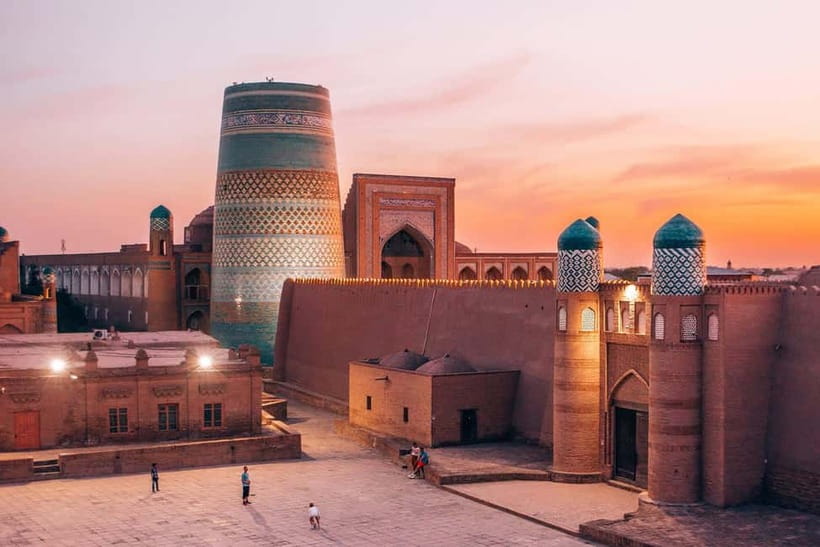
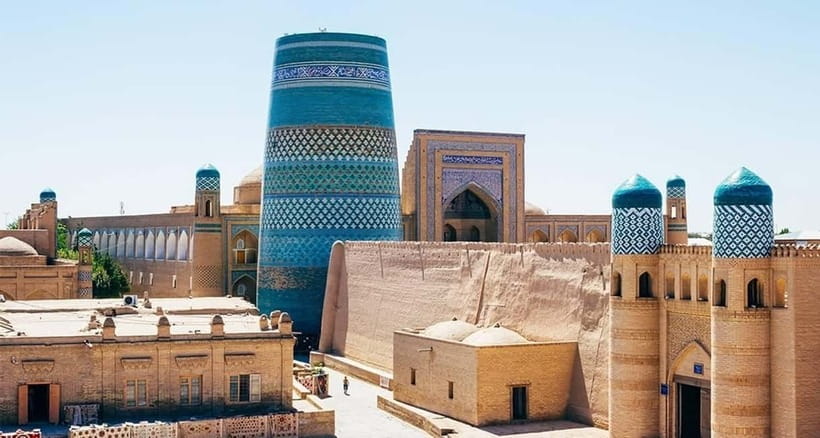
- Mukhammad Amin Khan and the blue tower
- Kunya Ark Palace and Mukhammad Rakhimkhan II
- Oq Masjid Mennonite Museum and Juma Mosque
- Madrasahs, Tosh Khovli Palace, and the harem
- Caravan Sarai and Allaqulikhan Madrasah
- Palvan Darvoza, Islam Khodja, and the new-method school
- Woodcarvers and silk carpet makers
- Is $90 good value for your group?
- Clothing, comfort, and practical planning
- Who should book this Khiva experience?
- Should you book this guided walk?
- FAQ
- How long does the Khiva walking tour last?
- How much does the tour cost?
- Are entrance tickets included?
- Is food included?
- Where does the tour start and end?
- What language is the tour offered in?
- What should I bring and wear?
Key things to know before walking Khiva
- $90 covers a group of up to 10: The price can be excellent for a full group, but less of a bargain for one or two people.
- Makhfirat Arziyeva personalizes the tour: You can ask for more attention to architecture, stories, coins, or other interests.
- The route covers both famous and lesser-known places: Expect palaces, madrasahs, mosques, gates, a caravanserai, museums, and craft workshops.
- Plan on 4 to 5 hours outside: Comfortable shoes, sun protection, water, and suitable clothing will make the walk easier.
- Tickets and food are separate: You choose which paid sites and meals suit you, but you need to budget for them.
- The tour begins and ends at the ticket office: The guide meets you beside the ticket office and brings you back there.
Why this Khiva walk is worth your time
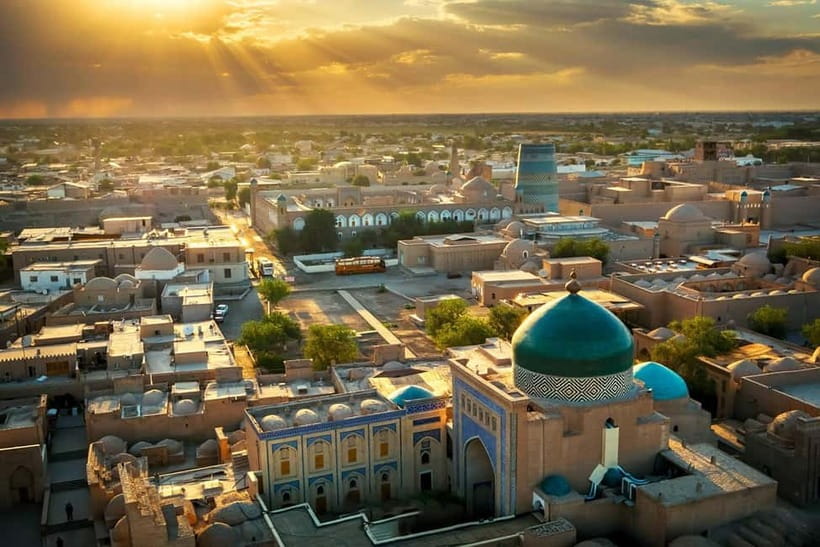
Khiva is best understood on foot. Its old streets are compact enough for a long walking tour, yet every turn brings another gate, tiled façade, carved door, or domed room. A guide gives those sights a purpose. Without one, you may admire the blue tile and mud-brick walls but miss why a palace had a separate harem, how a madrasah functioned, or why certain gates mattered.
I like the way this tour mixes major sights with places that are easy to pass without context. You see the Kunya Ark palace and the Islam Khodja Minaret, but you also visit a new-method school, a museum connected with Oq Masjid Mennonites, and workshops where woodcarvers and silk carpet makers keep older skills visible.
The route also has room for questions. That matters in Khiva, where the same building may have served religious, educational, royal, and commercial purposes at different times. Makhfirat’s preparation before the tour is another useful touch. If you care about old coins, architecture, or local legends, you can signal that before the walk rather than trying to steer the guide halfway through.
Other Khiva trips travellers line up with this one:
- Khiva: Historical City Highlights Guided Walking Tour
★ 4.8 · 156 reviews - Transfer: Bukhara – Khiva via Ancient Fortresses
★ 4.5 · 101 reviews - Daytrip From Khiva To Ancient Fortresses
★ 4.6 · 60 reviews
Starting at Deshan Kala and Ota Darvoza Gate
The meeting point is beside the ticket office. From there, the route begins with Deshan Kala and Ota Darvoza Gate, giving you an early look at Khiva’s defensive and urban layout.
Deshan Kala refers to the area outside the inner city. Starting here helps you see Khiva as more than a collection of postcard monuments. Gates were practical points of entry, control, and movement, and Ota Darvoza introduces that larger picture before the tour turns toward the principal sights.
This opening section should suit you if you like orientation before detail. You get a sense of how the city was arranged, then move toward the architectural cluster that makes Khiva so memorable. Ask Makhfirat to explain the role of the gates and the relationship between the outer and inner areas, especially if city planning interests you.
Mukhammad Amin Khan and the blue tower
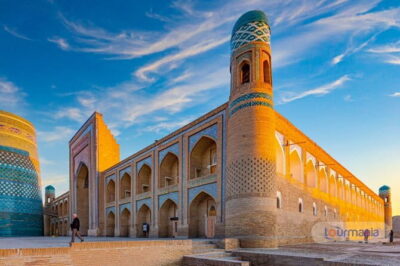
The madrasah of Mukhammad Amin Khan is one of the early architectural highlights. Madrasahs were centers of religious study, and their size and decoration also showed the ambition of the ruler who commissioned them. Here, the value of a guide is not just naming the building. You can ask about its purpose, design, and place in Khiva’s political story.
The route then includes the Blue Tower and the Palvan Qari complex. These stops add variety to the walk. Large façades make an immediate impression, but smaller complexes can reward closer attention, particularly when your guide points out details you might otherwise miss.
This is a good point to ask for a slower pace if you want photographs or architectural explanations. Four to five hours is generous, but the itinerary is full. A group that pauses at every doorway may need to balance detail with stamina.
Kunya Ark Palace and Mukhammad Rakhimkhan II
Kunya Ark palace gives you a look at the ruling center of Khiva. Palace spaces help explain how power operated, from formal public areas to more private quarters. The building is not simply a pretty stop. It puts the city’s religious schools, markets, gates, and mosques into a royal setting.
The madrasah of Mukhammad Rakhimkhan II follows that theme of education and authority. Khiva’s architecture often places rulers, scholars, merchants, and religious life close together. A thoughtful explanation can connect these buildings instead of treating each one as an isolated monument.
Entrance tickets are not included, so ask about ticket needs as you go. The tour gives you the guide and the walking route, but paid access to particular sites remains your choice. That arrangement keeps the base price clear, though you should carry extra money if you want to enter everything available.
Same stretch of the Silk Road, a different sort of day:
- Khiva Historical City Highlights Guided Walking Tour
★ 5.0 · 30 reviews - Aral Sea Adventures (2 day)
★ 5.0 · 30 reviews - Guided Tour To Old Fortresses
★ 5.0 · 25 reviews - Private Daytrip to 7 Ancient Fortresses of Khorezm
★ 5.0 · 25 reviews
Oq Masjid Mennonite Museum and Juma Mosque
The Museum of Oq Masjid Mennonites adds a different strand to Khiva’s story. It moves the tour beyond the usual palace and mosque sequence and introduces a community and cultural subject that many short city walks might skip.
This kind of stop is useful because it widens your view of the city. Khiva was not only a royal center or a set of Islamic monuments. Its past also includes different communities and changing ways of life. The available information does not specify the museum’s displays or how long you will spend inside, so ask Makhfirat to focus on the parts that interest you most.
Juma Mosque brings you back to one of Khiva’s major religious spaces. Mosques can be difficult to understand through decoration alone. Their layout, columns, prayer area, and role in community life matter just as much. Wear clothing that respects the setting, and bring a scarf. Women are required to cover their heads at two locations on the tour, although the supplied details do not identify both sites.
Madrasahs, Tosh Khovli Palace, and the harem
The madrasah of Mukhammad Amin Inoq continues the tour’s look at education, patronage, and public life. Seeing several madrasahs in one outing can be helpful because you begin to compare scale, decoration, and position within the city rather than viewing one building in isolation.
Tosh Khovli palace is another major stop, followed by the harem. These spaces offer a more personal view of court life. The palace and harem also help you consider the difference between ceremonial rooms and private areas, a distinction that is easy to miss when moving quickly through monumental architecture.
The harem may raise questions about family life, status, and the organization of the court. This is where a flexible guide matters. You can ask for a plain explanation rather than accepting a quick list of rooms and dates.
The route has a lot of architectural material, so take breaks when possible. Khiva’s surfaces may look close together on a map, but walking through stone and paved areas for several hours can be tiring, especially in strong sun.
Caravan Sarai and Allaqulikhan Madrasah
The Caravan Sarai connects Khiva to the practical side of long-distance travel. A caravanserai offered a place for merchants, animals, goods, and travelers moving along trade routes. Its presence makes the city’s markets and gates easier to understand. Trade needed protection, storage, and shelter, not just impressive monuments.
The madrasah of Allaqulikhan brings the route back to education and royal patronage. By this point, you will have seen enough different building types to notice how the city’s institutions worked together. Religious schools, palaces, mosques, markets, and gates formed one urban system.
I would use this part of the walk to ask about daily life. The tour promises local stories and cultural context, and questions about commerce, schooling, food, and household routines can make the stone buildings feel less distant.
Palvan Darvoza, Islam Khodja, and the new-method school
Palvan Darvoza Gate is another chance to examine Khiva’s entry points. Each gate can look similar at first glance, but its position and function tell you more about movement through the city. Ask Makhfirat to compare it with Ota Darvoza if that comparison is not already covered.
The Minaret of Islam Khodja is one of the route’s most striking landmarks. Its height gives the city a strong visual marker, while the nearby madrasah adds an architectural partner to the tower. The tour includes both the minaret and the madrasah of Islam Khodja, so you can consider how the two were meant to work together.
The new-method school is a particularly worthwhile inclusion. It points to changing ideas about education and reform, rather than leaving you with an image of Khiva frozen in the distant past. If modern history interests you, tell Makhfirat early so this stop receives the attention it deserves.
Woodcarvers and silk carpet makers
The final craft stops give the tour a human scale. At the workshops of woodcarvers and silk carpet makers, you can see living skills rather than only preserved buildings. These visits may be the most useful part of the day if you want to understand how Khiva’s decorative traditions continue beyond museum walls.
The information provided does not promise a demonstration, purchase, or set amount of workshop time. Think of these as cultural encounters, not guaranteed shopping stops. If you are interested in buying something, ask about prices, materials, and how to identify handmade work, but do not assume a purchase is part of the tour.
Food is also not included. The tour mentions authentic local cuisine and cultural encounters, but it does not specify a restaurant or meal. You can ask Makhfirat for food suggestions, then choose and pay for your own meal separately.
Is $90 good value for your group?
At $90 per group of up to 10, the value improves sharply as more people join. A group of 8 to 10 pays very little per person for a private-style walk with an English-speaking local guide. For two people, the per-person price is much higher, but the ability to ask questions and adjust the pace may still justify it.
The price includes Makhfirat’s guiding, preparation, storytelling, access to lesser-known places, and a flexible itinerary. It does not include entrance tickets or food. That is not necessarily a weakness. You avoid paying for admissions you may not want, but you must plan for those expenses yourself.
I would choose this tour if you want one organized introduction to Khiva rather than piecing together separate visits. I would be less enthusiastic if you prefer a short, casual walk or want every cost included upfront.
Clothing, comfort, and practical planning
Bring a scarf. Women need head coverings at two locations, and modest clothing is expected. Skirts or shorts should extend beyond the knee, and tight or ripped clothing is not suitable for this outing.
Comfortable footwear matters more than stylish footwear. The walk lasts 4 to 5 hours and includes many stops, so you will spend a long time on your feet. Smoking indoors, touching exhibits, making loud noise, feeding animals, and bringing alcohol, drugs, weapons, sharp objects, fireworks, or explosive substances are not allowed.
The rules also list insect repellent as not allowed. That is unusual, so do not pack it for the activity unless the provider gives you different instructions. Pets are not allowed, although assistance dogs are permitted.
The tour is offered in English and is not considered suitable for people over 95 years old. You can reserve now and pay later, and cancellation is free up to 24 hours before the tour.
Who should book this Khiva experience?
I would recommend it to first-time visitors who want context along with their photographs. It is also a good fit for people who enjoy asking questions, families or friends who want a private group, and anyone interested in architecture, legends, old coins, education, or craft traditions.
It may not suit you if you dislike long walks, want a fixed short route, or need admission and meals bundled into the price. The itinerary is full, so people with limited energy should ask about pacing before confirming.
Makhfirat’s strongest qualities are her preparation, organization, attention, and English communication. She contacted guests ahead of time and shaped the experience around their interests. That personal effort is the clearest reason to choose this walk over a basic monument-by-monument explanation.
Should you book this guided walk?
Book it if you want Khiva to feel connected rather than scattered. The route covers the city’s major palaces, mosques, gates, schools, and towers, then adds a museum and craft workshops for a broader view. At $90 for up to 10 people, it is particularly good value for a full group.
Before booking, accept three conditions: you will walk for 4 to 5 hours, pay entrance fees and food separately, and dress modestly with a scarf ready. If those points work for you, Makhfirat’s attentive planning and flexible storytelling make this a strong way to get your bearings and understand what you are seeing.
FAQ
How long does the Khiva walking tour last?
The tour lasts approximately 4 to 5 hours and takes place on foot.
How much does the tour cost?
The price is $90 per group of up to 10 people.
Are entrance tickets included?
No. Entrance tickets are not included, so you can choose and pay for the sites you wish to enter.
Is food included?
No. Food is not included in the tour price.
Where does the tour start and end?
The guide meets you next to the ticket office. The tour ends back at the same meeting point.
What language is the tour offered in?
The tour is offered in English.
What should I bring and wear?
Bring a scarf. Women need to cover their heads at two locations, and skirts or shorts should extend beyond the knee. Modest, comfortable clothing is recommended.
Freshly added in Khiva
- Traditional Khiva Cooking Class with Market Visit & Lunch★ 5.0 · 4 reviews
- Day Trip Top 3 Fortresses departure from Khiva Self-Guided Tour★ 5.0 · 2 reviews
- Transfer From Khiva To Bukhara★ 5.0 · 2 reviews
- Master Class – Uzbek Bread (Khiva)★ 3.5 · 4 reviews
- A Night In The Kyzylkum Desert [2] From Khiva★ 4.5 · 3 reviews
- Old Khiva Stories with Your Local Guide★ 5.0 · 5 reviews
- Khiva City Tour★ 4.0 · 2 reviews
- Daytrip From Khiva To Ancient Fortresses★ 5.0 · 2 reviews
Khiva Tours, compared.
Khiva: Historical City Highlights Guided Walking Tour
Read our review →
Transfer: Bukhara – Khiva via Ancient Fortresses
Read our review →
Khiva Historical City Highlights Guided Walking Tour
Read our review →
Private Daytrip to 7 Ancient Fortresses of Khorezm
Read our review →
Browse the lists this tour appears in