
Reviewed · WALKING TOURS
Bukhara Walking Tour
Bukhara rewards slow looking. This private walking tour packs the city’s major Islamic monuments, old trading domes, mausoleums, and a small puppet theater visit into one long half-day. I like the route’s range, especially the move from grand squares to the Jewish quarter and the unusual Central Asian puppet collection. I also like that your group has a guide to itself, with English, Spanish, French, German, and Russian available.
The main consideration is cost clarity. The $28 price covers a professional guide and listed fees and taxes, but monument admission is not included, and neither are lunch or transport. Five to six hours on foot is a lot, too, so comfortable shoes and water matter. Guides Peri and Nilufar earned especially warm praise for patience, clear English, energy, and flexibility.
In This Review
- Key points at a glance
- Why this Bukhara walk works so well
- Lyab-i-Hauz, where Bukhara gathers
- A two-minute puppet show with a local twist
- Magoki Attori Mosque and the carpet museum
- Two madrasas, two very different impressions
- Trading domes and the old commercial city
- One full hour at Poi Kalyan
- The Ark, a city inside the city
- Bolo Hauz and the illusion of forty columns
- Chashmai Ayub and Bukhara’s water story
- The Samanid Mausoleum gives the walk a strong finish
- Price, pacing, and what the $28 really covers
- Who should book this walking tour?
- Should you book the Bukhara Walking Tour?
- FAQ
- Where does the Bukhara Walking Tour start?
- Where does the tour end?
- How long does the tour last?
- Is this a group tour or a private tour?
- Which languages are available?
- Are monument entrance tickets included?
- What else is not included?
- Can I cancel for a refund?
Key points at a glance
- A private route through Bukhara’s essential sights: Your group alone takes the tour, rather than joining a large crowd.
- The unusual puppet theater stop: You can see a short two-minute performance and, if luck helps, find a puppet to take home.
- Three major madrasas in one walk: Kukeldash, Ulughbek, and Abdulaziz-Khan each show a different period and style.
- The Poi Kalyan complex gets a full hour: This gives you time to take in the minaret, mosque, and Miri Arab Madrasa.
- A strong ending at the Samanid Mausoleum: The route finishes at one of Central Asia’s earliest mausoleums.
- A good value with one important catch: The guide is included, but entry charges at the monuments are extra.
Why this Bukhara walk works so well
Bukhara is a city where the distance between major sights is often short, but the stories behind them are not. A guide helps connect the pieces. The route moves through religious schools, old mosques, trading spaces, royal compounds, waterworks, and memorial buildings, giving you a useful picture of how Bukhara functioned as a center of faith, learning, commerce, and power.
I like the fact that this is not just a parade of famous buildings. You see the social center around Lyab-i-Hauz, the remains of the old trading district, a Jewish quarter, a former pagan marketplace, and the winter residence of the emirs. Those changes in setting help you understand the city as a lived place rather than a row of photo stops.
The tour lasts about five to six hours. The scheduled stops add up to close to five hours, before allowing for walking between them, questions, photographs, and any time spent inside the sites. That makes this a serious sightseeing session, not a quick orientation walk. If you have only a day in Bukhara, the coverage is useful. If you dislike long walks or prefer unhurried museum visits, the pace may feel full.
More Walking Tours in Bukhara
- Bukhara Full Day Old City Private Tour
★ 5.0 · 46 reviews - Bukhara Historical City Highlights Guided Walking Tour
★ 4.5 · 16 reviews - Bukhara: Private Guided Walking Tour with Hotel Pickup
★ 5.0 · 11 reviews
Lyab-i-Hauz, where Bukhara gathers
The walk begins at the Lyab-i-Hauz ensemble, around the pond that has long served as a social meeting place. The area becomes especially active in the evening, but the tour places it at the start, when you can focus on the architecture and get your bearings.
Three important buildings frame this opening stop:
- Kukeldash Madrasa
- Nadir Divanbegi Madrasa
- The Nadir Divanbegi Khanaka, a residence for dervishes
The setting gives you an immediate lesson in Bukhara’s urban design. Water, shade, religious buildings, and public gathering space meet in one compact area. Your guide can explain how a madrasa differed from a khanaka, since one was tied to religious study while the other offered a place for dervishes to live and gather.
You have about an hour here, though admission is not included. That first hour is valuable because it lets you begin with context instead of rushing straight to the most photographed monument in town. I would pay close attention to the details of the façades and tilework before the day’s larger complexes start to blur together.
A two-minute puppet show with a local twist
The puppet theater stop is one of the tour’s most unusual features. It is described as the only place in Uzbekistan where you can learn about the history of Central Asian puppets and puppet theater.
You have about 20 minutes here. That is enough for a short introduction and, if available, a two-minute performance by the master himself. There may also be a chance to find a puppet for purchase, though that depends on what is available at the time.
This is a small stop, but it adds something that grand monuments cannot. You see a piece of performance culture rather than another religious building. It also gives the walking day a change of rhythm. Do not expect a full theater production. Treat it as a brief cultural encounter, with the possibility of a memorable small souvenir.
Magoki Attori Mosque and the carpet museum
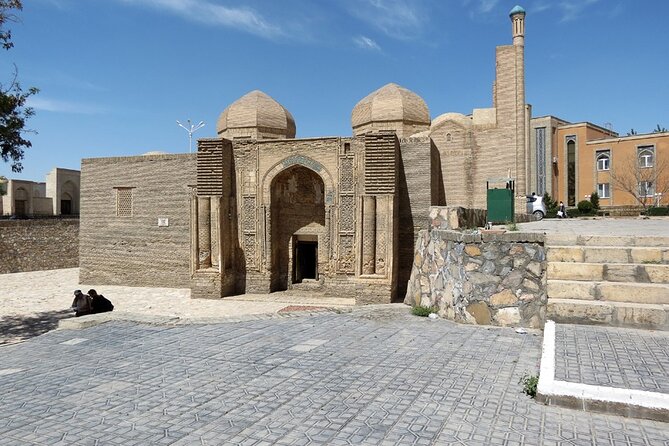
The Magoki Attori Mosque offers some of the oldest religious layers on the route. It is described as the first mosque in Bukhara and in Uzbekistan, and the site was used before Islam as a place where pagans sold idols.
That detail matters because it shows how sacred spaces can change purpose over time. The building is also identified as a pre-Mongol monument, placing it among the city’s survivors from before the Mongol invasion.
The stop lasts about 15 minutes and includes a carpet museum. Admission is extra. Since the visit is short, I would use the guide’s explanation to focus on the site’s age and changing role rather than trying to inspect every display in detail. This is a stop where a clear explanation adds much more than a quick photograph.
Same stretch of the Silk Road, a different sort of day:
- Best of Bukhara: All Day Private Old Town Tour
★ 5.0 · 66 reviews - Best of Bukhara: All Day Private Old Town Tour
★ 4.9 · 62 reviews - City Tour Around Bukhara
★ 5.0 · 55 reviews - Yurt Camp Tour with Night from Bukhara
★ 3.8 · 35 reviews
Two madrasas, two very different impressions
The next pair of stops introduces you to Bukhara’s educational monuments. The Ulughbek Madrasa is described as the oldest madrasa in the city and the only Timurid-period monument in Bukhara. Its importance is tied to Ulughbek, the Timurid ruler and scholar, and to the city’s long role as a place of study.
You have 15 minutes here. That is enough for an exterior visit and a focused explanation, but not for a slow architectural study. If you are interested in the Timurid period, this is a point where you may want to ask your guide to pause over the building’s date and design.
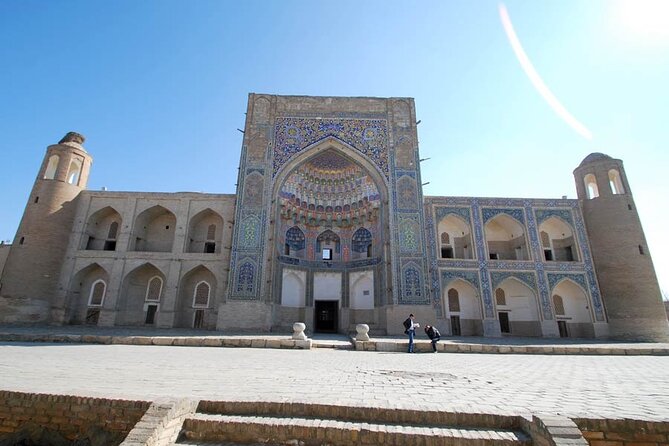
The Abdulaziz-Khan Madrasa follows with a different visual character. It is described as Bukhara’s most magnificent madrasa and the first monument in the city to use yellow color. That makes it a useful comparison with Ulughbek Madrasa. Instead of seeing two schools as interchangeable façades, you can look for changes in decoration, color, and style.
Again, the planned visit is about 15 minutes. The short timing keeps the route moving, but architecture fans may want to take extra photographs here if the group’s schedule allows. The private format helps because your guide can adjust a little more easily than a large public group.
Trading domes and the old commercial city
The route includes Bukhara’s three trading domes, even though the stop is not listed as a separate timed section. These domed markets help explain the city’s commercial side. Religious buildings often dominate the standard Bukhara photo list, but the trading domes show where goods, crafts, and daily exchange shaped the city.
The program also points out a traditional men’s bathhouse from the 16th century, viewed from the reception area only. This is a practical detail to note. You are not signing up for a bath experience, and the visit is limited to the reception space. Still, it gives you a glimpse of an old public institution and the way communal life once operated.
The Jewish quarter also appears along the route. The description does not promise an extended synagogue visit or a formal museum stop, so think of this as part of the city walk and its social history. It is useful because Bukhara was not only a center of Islamic learning. Its streets also held different religious communities and commercial traditions.
One full hour at Poi Kalyan
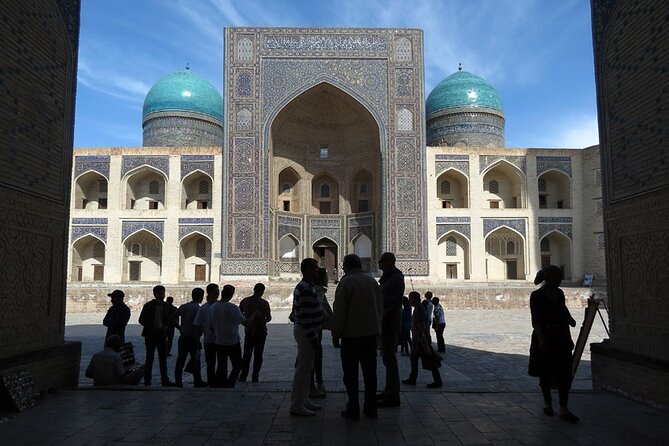
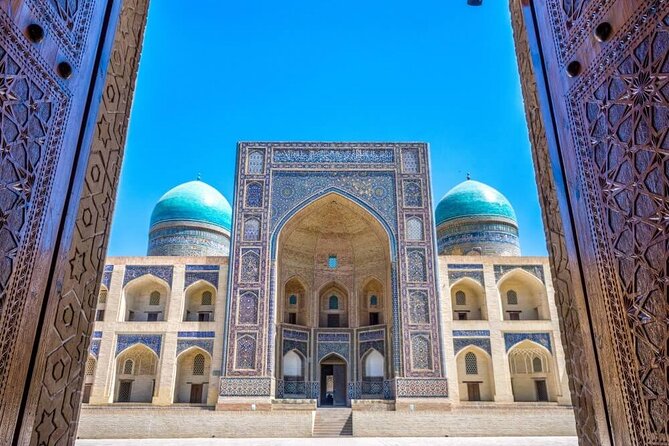
Poi Kalyan is the visual center of the tour, and the schedule gives it about an hour. That is sensible. The complex includes three major monuments:
- The Kalyan Minaret
- The Kalyan Mosque
- The Miri Arab Madrasa
The Kalyan Minaret is the highest minaret in the city and one of the three pre-Mongol monuments highlighted on the route. Its scale gives you the classic Bukhara view, but the guide’s explanation is what turns it from a tall tower into a piece of the city’s older religious and political story.
The Kalyan Mosque is described as the largest medieval mosque in Bukhara. Its broad scale contrasts with the more enclosed madrasa courtyards elsewhere in the city. You will want time to look across the space, note the repeated forms, and understand how the mosque served a wider public than a school.
Miri Arab Madrasa remains a working madrasa for male students. That makes the site especially important to approach with respect. A functioning religious school is not simply a historic shell, so follow your guide’s instructions about where you may look and photograph.
Admission is not included at the monuments, including this major complex. The extra cost is worth factoring into your total budget before you book. The guide and private format are included in the advertised $28, but the day is not an all-in entry pass.
The Ark, a city inside the city
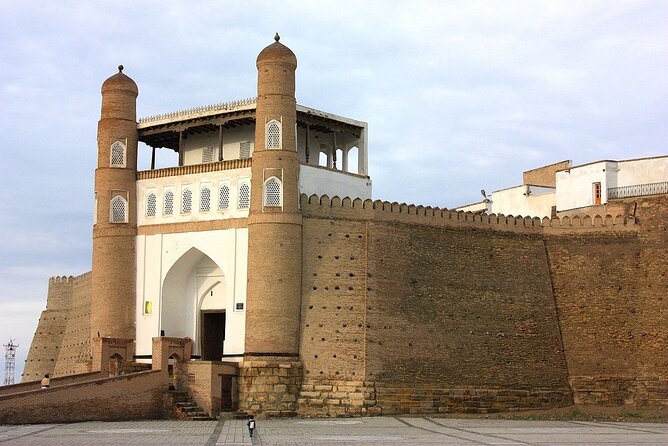
The Ark of Bukhara was the winter residence of the emirs and was regarded as a city within the city. You have about 40 minutes here, giving the stop more weight than the smaller madrasa visits.
The Ark helps shift the story from religious learning to political power. Its walls and compounds represented the authority of the Bukhara emirs, and the site makes it easier to imagine the administration, residence, and defense of a ruling household.
This is also a good moment to ask your guide to connect the Ark with the monuments you saw earlier. The madrasas and mosques show public faith and scholarship. The Ark shows who governed the city and how power occupied space. Because the tour is private, you can ask for more detail if this part interests you most.
Bolo Hauz and the illusion of forty columns
Bolo Hauz Mosque is scheduled for about 20 minutes. It has the highest columns in the city and is also called Chilustun, meaning 40 columns. The building itself has 20 columns, but their reflection in the reservoir creates the impression of 40.
That visual trick is a perfect example of why you should not rush past the water. Look at the mosque and then check the reflection. It is a small detail, but it gives the stop a clear purpose and makes it easier to remember than another generic courtyard.
The visit is short, so this is mainly an exterior and visual stop. Still, it adds a pleasant change after the massive Ark and before the final mausoleums. The route keeps presenting Bukhara through different kinds of space: pond, school, market, royal compound, mosque, and memorial.
Chashmai Ayub and Bukhara’s water story
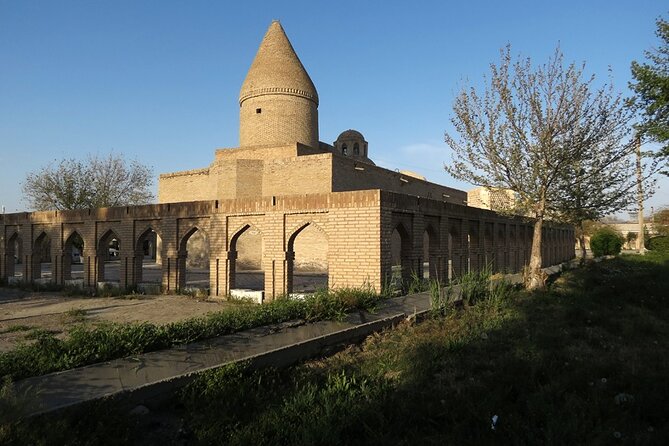
The Chashmai Ayub Mausoleum is scheduled for 20 minutes. It is also the city’s water supply museum, while serving as the mausoleum of Ayub, identified in the description as St. Jehovah.
This pairing makes the site more than a tomb. Water supply was a basic challenge in any old city, and a museum devoted to it helps explain how Bukhara supported its population. The mausoleum side of the building connects the practical need for water with religious tradition.
I would treat this as a compact museum stop rather than expecting a long visit. The guide can help you understand why the building has two roles. As with the other monuments, entry costs are not included.
The Samanid Mausoleum gives the walk a strong finish
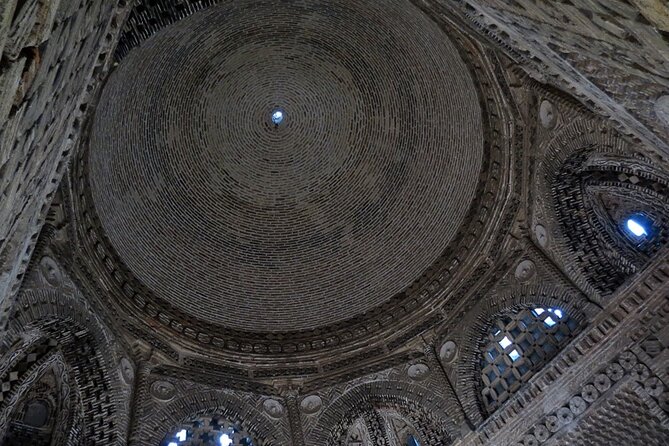
The final stop is the Ismail Samani Mausoleum, and the tour ends here. It is described as the first mausoleum in Central Asia and the second mausoleum in the Islamic world. It is also linked to the founder of the first local empire in Central Asia.
That gives the final stop considerable weight. After seeing active religious buildings, former schools, markets, royal space, and a water museum, you finish with an early memorial building tied to regional rule and Islamic architecture.
The visit lasts about 30 minutes. I like this ending because it is quieter in spirit than Poi Kalyan and more focused than the Ark. You do not finish back at the starting point, so plan your next move from the Samanid Mausoleum rather than assuming you will be returned to Lyab-i-Hauz.
Price, pacing, and what the $28 really covers
At $28, this tour offers strong value if you want a guide to organize a broad first look at Bukhara. You receive a professional guide, a private experience for your own group, and a route that covers many of the city’s key monuments in one session.
The price does not cover everything. Monument admission, lunch, personal expenses, and an air-conditioned vehicle are excluded. The description also says all fees and taxes are included, so read that as the guide service and listed charges rather than free admission to every building.
The private setup is a real advantage. Peri was praised for patience and detailed explanations, while Nilufar was praised for punctuality, energy, excellent English, and an encyclopedic understanding of her hometown. Another assessment highlighted a guide who was kind, flexible, patient, and a very good English speaker. Those comments point to the most valuable part of the tour: the quality of the person explaining Bukhara.
The route is available with English, Spanish, French, German, and Russian-speaking guides. Confirmation arrives at booking, and the experience is open to most participants. You can cancel for a full refund up to 24 hours before the start time. Inside that 24-hour window, refunds and changes are not accepted.
Who should book this walking tour?
I would choose this tour if you have limited time in Bukhara and want the main sights tied together by one narrative. It is also a good fit if you prefer a private guide, want to ask plenty of questions, or need one of the listed language options.
The tour suits first-time visitors particularly well. You see enough of the city to understand its main periods and functions, from pre-Mongol monuments and Timurid architecture to Islamic schools, royal power, trade, and water supply.
I would hesitate if you have difficulty walking for five to six hours, dislike paying entrance fees separately, or want a slow visit inside each monument. The schedule gives some stops only 15 minutes, so the day favors breadth over lengthy individual study.
Wear comfortable shoes, bring water, and keep some flexibility for the private guide. Also remember that the endpoint is the Samanid Mausoleum, not Lyab-i-Hauz. That small planning detail can save you confusion at the end of a long day.
Should you book the Bukhara Walking Tour?
Book it if you want a well-packed introduction to Bukhara with a private guide and a route that reaches far beyond the usual central square. The puppet theater, Jewish quarter, trading domes, traditional bathhouse reception, and water museum add variety to the better-known mosques and madrasas.
The $28 price is appealing, but budget separately for monument admission, food, and anything personal. With that adjustment, this is a practical choice for a first day in Bukhara, especially if you value clear explanations and an adaptable guide more than a slow, specialist tour of one building.
FAQ
Where does the Bukhara Walking Tour start?
The tour starts at the Lyabi Khause ensemble, near Divan-Beghi in Bukhara, Uzbekistan.
Where does the tour end?
The tour ends at the Ismail Samani Mausoleum.
How long does the tour last?
The walking tour lasts approximately five to six hours.
Is this a group tour or a private tour?
It is a private activity, so only your group participates.
Which languages are available?
Professional guides are available in English, Spanish, French, German, and Russian.
Are monument entrance tickets included?
No. Entrance to the monuments specified in the program is not included.
What else is not included?
Lunch, an air-conditioned vehicle, and personal expenses not listed in the program are not included.
Can I cancel for a refund?
Yes. You can cancel at least 24 hours before the start time for a full refund. Cancellations or changes made within 24 hours are not accepted and are not refunded.
Freshly added in Bukhara
- Private Tour in 3 top Places Outside of Bukhara City★ 5.0 · 2 reviews
- Full-Day Private Guided Tour to Islamic 7 Saints of Bukhara★ 4.5 · 3 reviews
- Bukhara: Tour Outside of Old Town. Guide with Transportation★ 5.0 · 2 reviews
- Bukhara in a Day History, Culture, and Local Insight Private Tour★ 5.0 · 4 reviews
- Discover Bukhara One Day Group Experience★ 4.5 · 2 reviews
- Bukhara Hammam Bathhouse with Massage★ 5.0 · 2 reviews
- A Complete Chapter To Old Bukhara★ 5.0 · 5 reviews
- Bukhara City Walking Tour★ 5.0 · 2 reviews
Walking Tours, compared.
Samarkand: Historical Monuments Guided Walking Tour
Read our review →Khiva: Historical City Highlights Guided Walking Tour
Read our review →
Samarkand One Day Tour: one day walking & group tour
Read our review →
Khiva Historical City Highlights Guided Walking Tour
Read our review →
Samarkand: Historical Monuments Group Walking Tour
Read our review →
Tashkent Walking Tour with Local Lady / Gentleman
Read our review →Browse the lists this tour appears in