
Reviewed · BUKHARA TOURS
Best of Bukhara: All Day Private Old Town Tour
Bukhara rewards curious walkers. This private Old Town tour brings together the city’s major monuments, lively trading domes, mosques, madrasahs, artisan workshops, and old Jewish quarter in one long day. I especially like the private guide format, which lets you ask questions and adjust the pace, and the broad route, which covers far more than a quick central-city stroll. The main catch is simple: the $65 price does not include entrance fees, and the day may feel packed if you want to linger at every site.
The tour is advertised at five to seven hours, though some outings run from morning into early afternoon and others last close to six hours. You meet your guide at a central hotel, then usually make your way toward the Old Town, with local taxi transport used for the initial transfer in some cases. Once there, most of the day is on foot.
Several guides receive especially warm praise, including Shakhnoza, Shaknoza, Behrouza, Malika, Nargiz, Shehnaz, Gulnaz, and Sittora. English is described as strong, and the guides are often praised for explaining history in a clear, lively way rather than simply naming buildings. That personal touch is the heart of this experience.
In This Review
- Key points to know before booking
- Why this private Bukhara walk works so well
- Lyab-i-Hauz begins the story beside the pond
- The Kalon Minaret and Poi Kalyan define Bukhara
- The Ark and Bolo Hauz show power and prayer
- Trading domes turn shopping into a history lesson
- Madrasahs reveal Bukhara’s intellectual side
- The synagogue adds a needed human dimension
- What the guide adds to the day
- Price, admissions, and walking effort
- Who should book this Bukhara tour?
- Should you book Best of Bukhara?
- FAQ
- How long does the Best of Bukhara tour last?
- Is hotel pickup included?
- Is this a private tour?
- What does the $65 price include?
- Are entrance fees included?
- Which major sights are included?
- Is the tour suitable for people with walking difficulties?
- What is the cancellation policy?
Key points to know before booking
- A full Old Town route: See the Ark, Kalon Minaret, Poi Kalyan, trading domes, several madrasahs, mosques, a synagogue, and Lyab-i-Hauz.
- Private attention: Only your group participates, so the guide can answer questions and adapt the walking pace.
- Strong local guiding: Guides such as Shakhnoza and Behrouza are praised for English, local insight, cultural context, and practical restaurant and shopping advice.
- Walking with an early taxi transfer: Pickup is offered from central hotels, but the tour itself is primarily a walking experience.
- Budget for site admissions: Museum and historical-site entrance fees are listed separately at $6 per person.
- Good for a first day: The route gives you a useful map of Bukhara’s main quarters, monuments, bazaars, and craft traditions.
Why this private Bukhara walk works so well
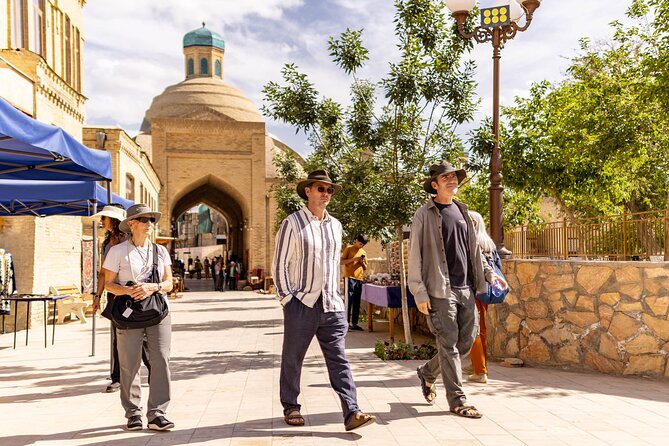
Bukhara can look easy to explore on a map. The main sights sit within the old center, and many roads are friendly to pedestrians. Yet the city’s story is spread across courtyards, domes, religious schools, fortress walls, market lanes, and quiet residential streets. A guide helps connect those pieces.
I like the way this tour mixes famous sights with ordinary city texture. You may pass hand-woven textiles, carpet sellers, Uzbek spices, metalwork, miniature paintings, and working craft shops as you move between monuments. The result is more useful than a string of photo stops. You see where trade, religion, education, and daily life met.
The private setup also matters. If you are fascinated by Silk Road commerce, you can spend more time around the trading domes. If your group prefers architecture, you can focus on tilework, domes, portals, and the differences between the madrasahs. Several outings were adjusted for walking concerns or delayed arrivals, and guides were able to keep the day relaxed while still covering the main route.
The tradeoff is pace. Thirteen listed stops create a very full program. The shorter visits, such as the 10-minute look at Bolo Hauz Mosque, are introductions rather than detailed examinations. If you want a slow photographic study of every facade, you may need to skip a stop or arrange extra time.
Other Bukhara trips travellers line up with this one:
- Best of Bukhara: All Day Private Old Town Tour
★ 4.9 · 62 reviews - City Tour Around Bukhara
★ 5.0 · 55 reviews - Bukhara Full Day Old City Private Tour
★ 5.0 · 46 reviews
Lyab-i-Hauz begins the story beside the pond
Lyab-i-Hauz translates as at the pond, and this square forms one of Bukhara’s most pleasant meeting places. The architectural group took shape in the 16th and 17th centuries, giving you an early lesson in how the city organized public life around water, shade, religion, and trade.
The planned 30-minute visit is a sensible start. You can get your bearings, study the buildings around the pool, and hear how this part of southeastern Bukhara fit into the old city. The nearby monument to Hodja Nasreddin adds a lighter note. The bronze figure was installed in 1979 and honors the comic folk character known for clever stories and practical humor.
Maghak-i Attari Mosque is also connected to the Lyab-i-Hauz complex. Its history reaches far back, and its location helps show how religious buildings were woven into the same urban center as markets and public gathering spaces. Admission is not included, so keep the separate $6 site fee in mind.
The Kalon Minaret and Poi Kalyan define Bukhara
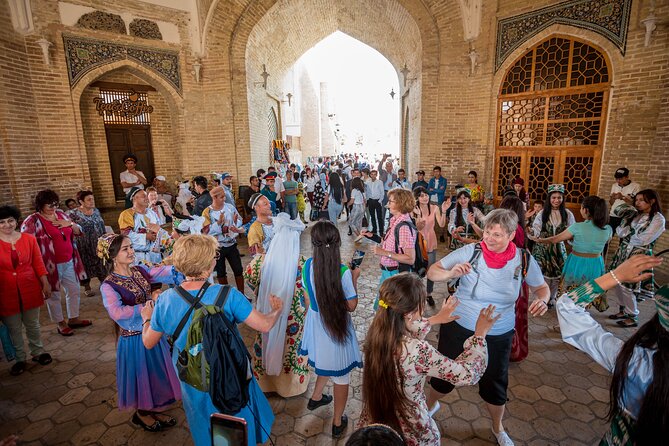
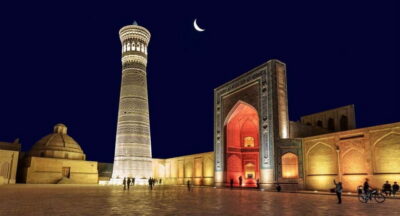
The Great Minaret of the Kalon is one of Bukhara’s unmistakable landmarks. Its tall brick form gives the Old Town a visual anchor, and the 30-minute stop should give you time to take in its scale and decoration from different angles.
The minaret belongs to the Poi Kalyan religious complex, along with the Kalyan Mosque and Mir-i-Arab Madrasa. Seeing the three together is one of the strongest parts of the day because the buildings explain each other. The minaret is not an isolated tower, the mosque is not just another courtyard, and the madrasa is part of a larger religious and educational center.
The 30-minute visit to Poi Kalyan Mosque gives you space to look at the complex as a whole. Entrance fees are separate for the listed paid sites, so ask your guide which areas are open on the day and how the local admission system works.
Mir-i-Arab Madrasa receives about 20 minutes. It is especially important for its religious role. The school was the only spiritual educational establishment in the Soviet Union that resumed operation after the Second World War, and leading imams of the period studied there. That detail gives the building meaning beyond its blue tilework and formal entrance.
The Ark and Bolo Hauz show power and prayer
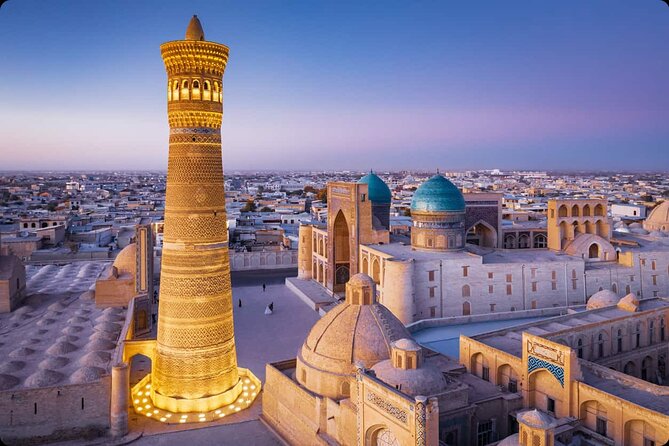
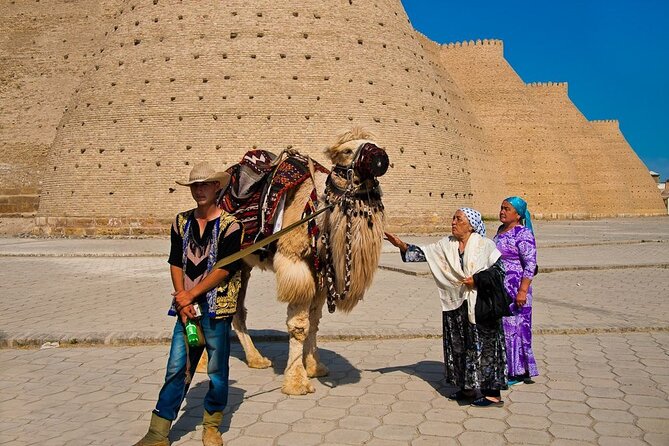
The Ark of Bukhara is the day’s major fortress stop. Built and occupied from around the fifth century AD, this massive citadel served as the seat of power for Bukhara’s rulers. Allow about an hour here, which is appropriate because the Ark is not a single monument. It is a fortified urban world with layers of government, defense, and royal life.
A guide is particularly useful inside the Ark. Bare walls and open spaces can be hard to read without context, while stories about rulers, officials, and the city’s political changes give the fortress a human scale. The terrain and stairs may also make this the point where you most appreciate a private pace.
Bolo Hauz Mosque sits opposite the Ark in the Registan district. Built in 1712, it is part of the UNESCO-listed historic center and offers a sharp contrast to the fortress across the way. The mosque is known for its historic setting and timber columns. The stop is listed at only 10 minutes, so think of it as a focused exterior or brief interior visit rather than a long architectural study.
Same stretch of the Silk Road, a different sort of day:
- Yurt Camp Tour with Night from Bukhara
★ 3.8 · 35 reviews - All You Need To Know About Bukhara. A Walk In The Town
★ 4.9 · 31 reviews - One-Day Private Tour in the Old Town of Bukhara
★ 5.0 · 24 reviews - Bukharian Bath in Ancient Hammam with Massage
★ 4.4 · 19 reviews
Trading domes turn shopping into a history lesson
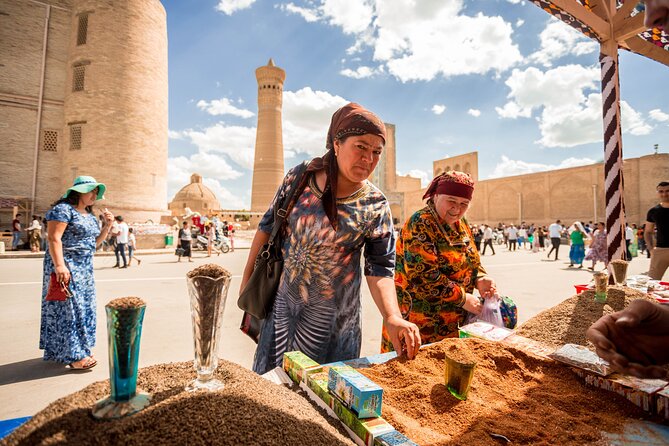
Bukhara once depended on trade routes that linked Central Asia with markets far beyond the city. Four ancient trading domes remain, arranged along a north to south route through the Old Town. The half-hour stop gives you a chance to see how commerce was sheltered and organized.
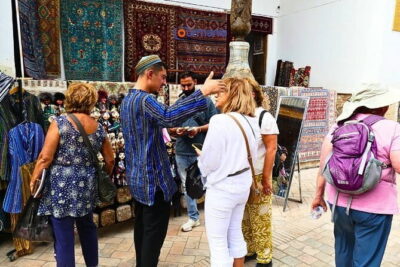
This is also where the tour becomes practical. You can browse carpets, textiles, spices, and other Uzbek goods, then compare the market atmosphere with the grand religious buildings you have already seen. The domes are not only shopping areas. They help you picture merchants, craftspeople, buyers, and caravan traffic using the same streets centuries ago.
The route may also include artisan workshops, depending on your interests and the guide’s timing. Past outings included carpet weaving, metal carving, and miniature painting. That is a worthwhile addition, particularly if you want to understand how traditional work remains part of Bukhara’s identity today.
You should feel free to say what interests you before the walk begins. If you do not want to shop, the guide can focus on the architecture and commercial history. If you hope to buy a carpet or textile, ask about quality, prices, and shipping before making a decision.
Madrasahs reveal Bukhara’s intellectual side
Nodir Devon Begi Madrasah dates from 1622 or 1623. It was first built as a caravanserai by the vizier of Imamkuli-khan and later changed into a madrasah. That change reflects the shifting needs of Bukhara’s urban institutions, where lodging, trade, study, and worship often sat close together.
The 20-minute visit works well as a compact architectural stop. Look for the grand entrance and the decorative details, but remember that interior access can vary. The tour description notes that entrance fees are not included for paid historical sites, and some madrasahs may have limited access.
Ulugbek Madrasah was completed in 1420 and is linked to Ulugbek, a ruler and scholar who supported science and education. Its exterior tiles, fluted dome, stained windows, and old tombs give you several details to look for during the 30-minute stop.
Abdulaziz-Khan Madrasah provides another architectural comparison. The listing connects it with Ulugbek’s first Bukhara madrasa, built in 1417. Seeing these schools on the same day lets you compare periods, decoration, and design rather than treating each building as a separate postcard.
The synagogue adds a needed human dimension
The Bukhara Synagogue sits in the old Jewish quarter and is scheduled for about 20 minutes. Its presence broadens the tour beyond an account centered only on Islamic monuments and Silk Road trade.
The synagogue is a place of Jewish worship, and the information provided for the tour notes that Bukharan Jews once prayed together with Muslims in the same mosque before the synagogue was built. That detail points to the city’s long pattern of communities living close together and sharing urban space.
This stop may be especially meaningful if you want to understand Bukhara as a city of different religious groups, not simply as a collection of monuments. One guide can also point out the surrounding quarter, helping you notice how residential streets differ from the major squares and market routes.
What the guide adds to the day
The strongest part of this experience is the guide’s role. The best guides do more than identify a minaret or repeat construction dates. They explain why a building mattered, how the city changed, and what you are seeing in present-day Bukhara.
Shakhnoza is repeatedly praised for excellent English, a friendly manner, and a relaxed pace. Behrouza is noted for detailed explanations of Uzbek history and for adding artisan workshops when requested. Malika is praised for clear stories about local culture, while Nargiz is described as punctual and able to cover the planned sights efficiently.
That range matters because this is a private activity, not a fixed group walk. You can ask about food, shopping, local customs, geography, or modern life. Guides also offer practical advice about places to eat and other sights to see after the tour.
There have been occasional communication problems over pickup times, including one case where a guide waited because a changed start time had not been passed on. Confirm the meeting time carefully before the day begins. Pickup is offered at central hotels, but the first transfer may involve a local taxi, so do not assume the entire experience includes private vehicle service.
Price, admissions, and walking effort
At $65 per person, this is not the cheapest way to see Bukhara, but the value is reasonable if you want a private guide for five to seven hours. The price becomes more attractive for a small group, since the attention is not shared with strangers and group discounts are offered.
Add the stated $6 per person for museum and historical-site admissions. Also budget a little for gratitude to the guide, which is suggested but not included. The tour does not include meals, so plan around the timing of your walk.
You will be on foot for most of the day. The route includes old streets, courtyards, and historical buildings, with possible stairs at fortress and religious sites. The private format is helpful if you need breaks or a slower pace. One guide adjusted the route for a guest with a walking problem, and another kept the pace comfortable for a family with older parents and young adults.
The experience is open to most participants and is near public transportation. Still, wear practical shoes, carry water, and avoid scheduling a demanding activity immediately afterward. Bukhara’s sights are close together, but thirteen stops require energy.
Who should book this Bukhara tour?
I would choose this tour for a first visit, especially if you have one full day and want a clear introduction to the Old Town. It suits history fans, architecture lovers, shoppers, families, and solo visitors who prefer asking questions without a large group around them.
It is also a good choice if you want local recommendations. Guides can point you toward crafts, food, markets, and places not covered in the main route. Solo visitors may find the private structure particularly useful because the guide can shape the day around personal interests.
I would think twice if you want a slow, unstructured day or if the separate entrance fees bother you. The itinerary is ambitious, and the $65 price does not cover every admission. You may get more from it by treating the day as an orientation, then returning later to the places that deserve extra time.
Should you book Best of Bukhara?
Yes, if you want to see the main Old Town sights with a local guide and prefer a private, adaptable walk. The route covers Bukhara’s essential monuments, while the bazaars, craft workshops, and Jewish quarter give the day more texture than a monument-only tour.
Book it with realistic expectations. You are paying for broad coverage and personal guidance, not an all-inclusive ticket or a chauffeur-driven sightseeing day. Confirm pickup details, bring comfortable shoes, allow for the $6 admission charge, and tell the guide what matters most to you. With those points clear, this is a strong way to get your bearings in Bukhara and understand why the old city deserves more than a quick stop.
FAQ
How long does the Best of Bukhara tour last?
The tour lasts approximately five to seven hours. Actual timing can vary depending on pace, questions, site access, and the interests of your private group.
Is hotel pickup included?
Pickup is offered from central hotels, and the guide meets you there. The initial transfer may use a local taxi before the walking tour begins.
Is this a private tour?
Yes. Only your group participates, so you can ask questions freely and request a pace that suits your party.
What does the $65 price include?
The price includes the private tour, a professional local guide, pickup from central hotels, and photo opportunities. Group discounts are offered.
Are entrance fees included?
No. Museum and historical-site entrance fees are listed separately at $6 per person.
Which major sights are included?
The route includes Lyab-i-Hauz, the Great Minaret of the Kalon, Mir-i-Arab Madrasa, Poi Kalyan Mosque, Bolo Hauz Mosque, the Ark of Bukhara, the trading domes, Nodir Devon Begi Madrasah, the Hodja Nasreddin monument, Maghak-i Attari Mosque, Ulugbek Madrasah, Abdulaziz-Khan Madrasah, and the Bukhara Synagogue.
Is the tour suitable for people with walking difficulties?
Most people can participate, but the experience is mainly a walking tour and may include stairs at historical sites. The private format allows the guide to adjust the pace.
What is the cancellation policy?
You receive a full refund if you cancel at least 24 hours before the start time. Cancellations or changes made within 24 hours are not accepted for a refund.
Freshly added in Bukhara
- Private Tour in 3 top Places Outside of Bukhara City★ 5.0 · 2 reviews
- Full-Day Private Guided Tour to Islamic 7 Saints of Bukhara★ 4.5 · 3 reviews
- Bukhara: Tour Outside of Old Town. Guide with Transportation★ 5.0 · 2 reviews
- Bukhara in a Day History, Culture, and Local Insight Private Tour★ 5.0 · 4 reviews
- Discover Bukhara One Day Group Experience★ 4.5 · 2 reviews
- Bukhara Walking Tour★ 5.0 · 4 reviews
- Bukhara Hammam Bathhouse with Massage★ 5.0 · 2 reviews
- A Complete Chapter To Old Bukhara★ 5.0 · 5 reviews
Bukhara Tours, compared.
All You Need To Know About Bukhara. A Walk In The Town
Read our review →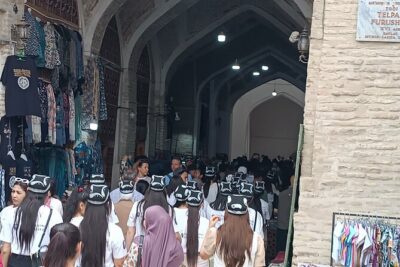
Bukhara Historical City Highlights Guided Walking Tour
Read our review →
Browse the lists this tour appears in