
Reviewed · BUKHARA TOURS
All You Need To Know About Bukhara. A Walk In The Town
Bukhara rewards curious walkers. This 4.5-hour tour brings the Old Town into focus through Silk Road history, grand Islamic architecture, trading domes, and local streets that are easy to miss alone. I especially like the clear city orientation and the chance to ask questions as you go. I also like the practical restaurant and shopping tips from guide Hamza. The main consideration is the group size, usually around 10 to 15 people, so this is not the quiet, fully private tour the wording might suggest.
The route covers Bukhara’s major sights in one well-packed morning or afternoon. You will walk from Lyabi Khauz through bazaars and religious monuments, then continue toward the Ark area and the mausoleums beyond the central Old Town. Entrance tickets, meals, and transport are extra, so the $55 price is attractive, but it does not cover every cost of the day.
In This Review
- Key points to know before you book
- Why this Bukhara walk works well as your first outing
- Starting at Nadir Divan Begi Madrasah and Lyabi Khauz
- Toqi Sarrafon Bazaar and Bukhara’s trading domes
- Magok-i-Attari Mosque and the smaller stops between monuments
- Ulugbek Madrasa and the Poi Kalan monuments
- The Ark area and Bolo Haouz Mosque
- Chashma-Ayub and the Samanid Mausoleum finish
- What $55 buys you, and what it does not
- The guide’s style and the group experience
- Who should book this walking tour?
- Should you book All You Need To Know About Bukhara?
- FAQ
- Where does the Bukhara walking tour start?
- Where does the tour finish?
- How long does the experience last?
- Is this a private tour?
- What language is the tour conducted in?
- Are entrance tickets included?
- Are meals and transport included?
- What should I bring?
Key points to know before you book
- Hamza’s history-first guiding: He explains how the buildings fit into the wider story of Central Asia, rather than simply naming monuments and dates.
- A strong first-day orientation: The route helps you understand Bukhara’s Old Town so you can return to favorite sights later.
- A walk through the city’s trading past: Toqi Sarrafon Bazaar and the other trade domes connect shopping with Bukhara’s role on the Silk Road.
- Major monuments in one route: You see the Ark Fortress area, Poi Kalan, Mir-i-Arab Madrasa, Bolo Haouz Mosque, and the Samanid Mausoleum.
- Good value for a guided visit: At $55 per person, the group format keeps the cost below a private tour.
- Useful practical advice: You receive suggestions for food and shopping, along with all-day support and assistance available around the clock.
Why this Bukhara walk works well as your first outing
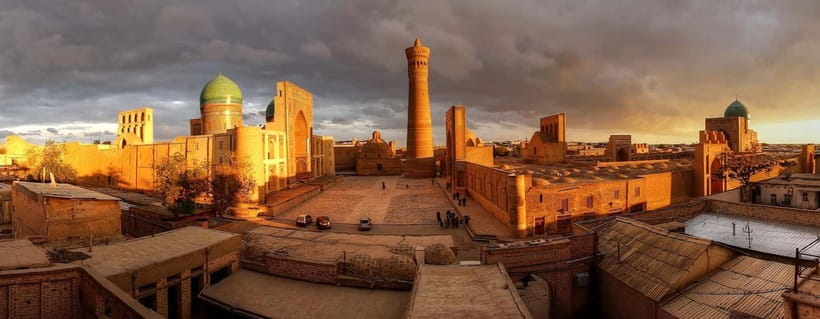
Bukhara is old, spread out, and full of buildings that can look similar until someone explains their purpose. A madrasa, mosque, mausoleum, caravan stop, and bazaar may all sit within a few minutes of one another, yet each served a different role. This tour gives you a working map of the city, both in the streets and in your head.
I like the way the route moves from the social center at Lyabi Khauz toward the great monuments of the Old Town, then finishes at the Samanid Mausoleum. You get the busy central sights first and the older memorial architecture later, with enough context to understand why Bukhara grew where it did.
The guide, Hamza, receives especially strong praise for fluent English, clear storytelling, humor, and a relaxed manner. His style is not just a parade of construction dates. He places the monuments within the story of rulers, scholars, traders, pilgrims, and changing dynasties. That makes the buildings easier to remember.
You should consider taking this walk early in your stay. One useful feature is its orientation value. After the tour, you can return to the places that interested you most, revisit a bazaar, or spend more time inside a monument if tickets and opening arrangements allow.
The route can also work well in the evening. One person found Bukhara especially beautiful at night, while another booked the walk for an evening arrival and used it to plan the following day. Check the exact start time when booking, since availability changes.
Other Bukhara trips travellers line up with this one:
- Best of Bukhara: All Day Private Old Town Tour
★ 5.0 · 66 reviews - Best of Bukhara: All Day Private Old Town Tour
★ 4.9 · 62 reviews - City Tour Around Bukhara
★ 5.0 · 55 reviews
Starting at Nadir Divan Begi Madrasah and Lyabi Khauz
The meeting point is near the donkey statue by Nadir Divan Begi Madrasah. This is a useful central starting place, but confirm the exact statue and meeting instructions before setting off, especially if you are arriving with luggage or using a local taxi.
From there, you begin at Lyabi Khauz, one of Bukhara’s best-known gathering places. The name refers to the pool area, and the setting gives you an immediate sense of how the Old Town works. Madrasas, lanes, restaurants, shops, and public spaces cluster around one another.
The formal guided stop here is brief, but Hamza uses the opening section to establish the city’s story. This is where you can ask basic questions without feeling lost later. If Central Asian history is new to you, the background is particularly useful because Bukhara’s buildings reflect many different periods.
Do not expect a long sit-down introduction. This is a walking tour, and the pace keeps moving. Wear shoes that are comfortable for several hours on historic streets and paved pedestrian areas.
Toqi Sarrafon Bazaar and Bukhara’s trading domes
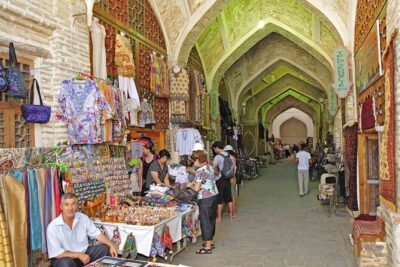
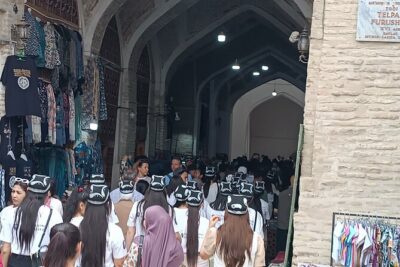
The route then heads to Toqi Sarrafon Bazaar, one of Bukhara’s traditional domed market buildings. The name is linked to money changers, a reminder that these structures were not simply shopping arcades. They formed part of the city’s commercial system, where merchants and buyers met along the Silk Road.
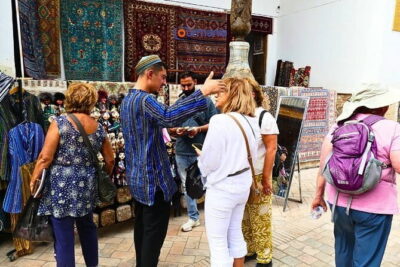
Bukhara is a fine place to shop for Uzbek crafts. You may find hand-woven textiles, carpets, spices, and other local goods among the stalls and shops. The tour does not turn into a dedicated shopping trip, which I consider a strength. You see how the market fits into the city first, then decide where you want to browse.
Allow time for questions here. A guide can help explain what is locally made, what makes a useful souvenir, and where to look for a fair purchase. Hamza also gives restaurant and shopping suggestions, which can save you from choosing at random later.
The market section is short in the printed schedule, so keep your expectations realistic. You will get an introduction rather than a long buying session. If textiles or carpets are a main reason for your visit, plan to return after the walk.
Magok-i-Attari Mosque and the smaller stops between monuments
Magok-i-Attari Mosque gives the route one of its most layered historical moments. It is among the older religious sites in Bukhara, and its position below the present street level helps show how the city has built up over centuries.
The visit here is brief, around five minutes, but the value comes from the explanation. Without a guide, you might walk past, take a photograph, and miss the clues in the structure and setting. Hamza’s history-focused approach helps connect this smaller stop with the larger monuments later in the walk.
Several short guided stops follow. The schedule identifies them only by their position rather than by name, so do not expect every pause to be a major attraction. These brief moments are best understood as links through the Old Town, where the point is to notice streets, façades, religious buildings, and the way the route fits together.
This part may feel fast if you want to study every detail. It is also where the group format matters. With 10 to 15 people, the guide needs to keep the party together, and a short explanation is easier to manage than a long stop.
Same stretch of the Silk Road, a different sort of day:
- Bukhara Full Day Old City Private Tour
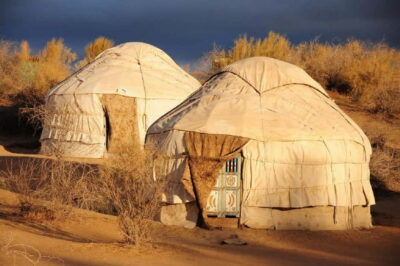
★ 5.0 · 46 reviews - Yurt Camp Tour with Night from Bukhara
★ 3.8 · 35 reviews - One-Day Private Tour in the Old Town of Bukhara
★ 5.0 · 24 reviews - Bukharian Bath in Ancient Hammam with Massage
★ 4.4 · 19 reviews
Ulugbek Madrasa and the Poi Kalan monuments
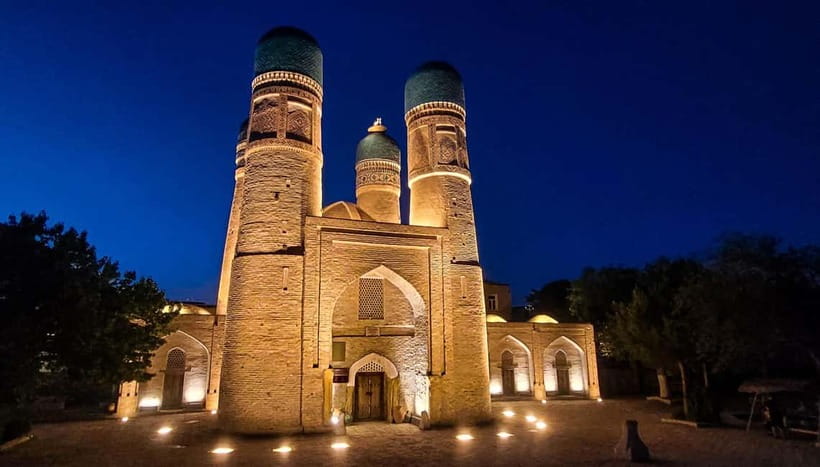
Ulugbek Madrasa is one of the most important educational buildings on the route. It offers a chance to talk about the role of madrasas as centers of teaching, not just places with impressive doorways. One useful detail from Hamza’s explanations is that a madrasa traditionally includes a lecture hall and a mosque, an insight that helps you read similar buildings elsewhere in Uzbekistan.
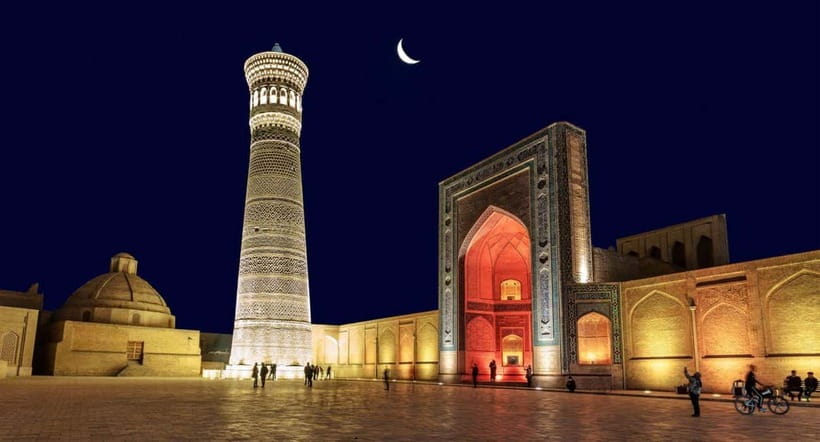
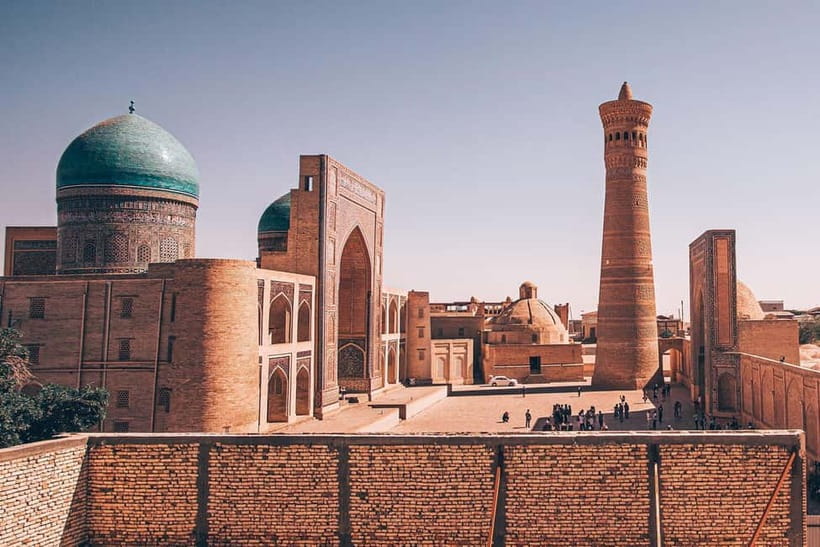
The grandest visual section comes at Poi Kalan. Here you encounter the Kalan Mosque, the Mir-i-Arab Madrasa, and the famous Kalan Minaret. The minaret is the landmark most people associate with Bukhara, and seeing it in relation to the mosque and madrasa gives the whole ensemble greater meaning.
This is where the tour’s focus on architecture pays off. You are not only looking at tilework and scale. You are learning how the buildings worked together as a religious and civic center. The Kalan Minaret also carries a powerful historical reputation, and a good guide can separate documented history from stories that have grown around the monument.
The stop at the Kalan Mosque is listed as a short guided visit, followed by more time around the complex. That longer window should give you room for photographs and questions, though the exact pace depends on the group and site conditions.
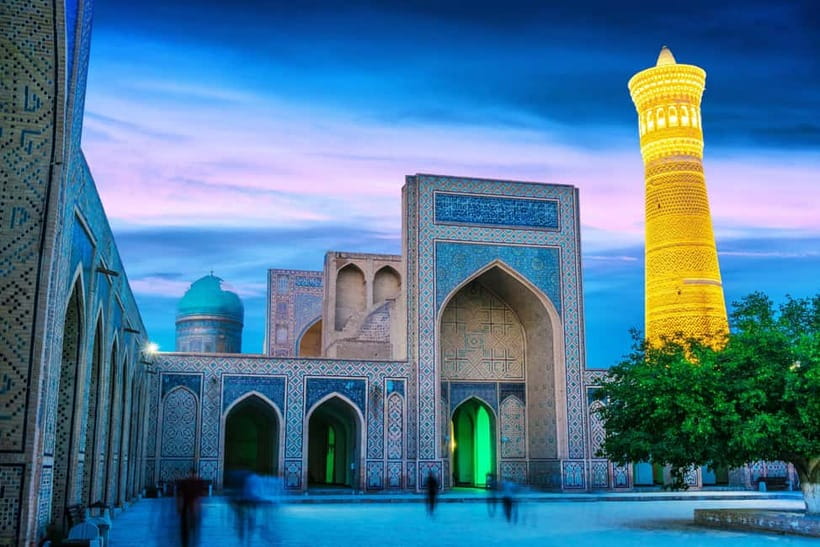
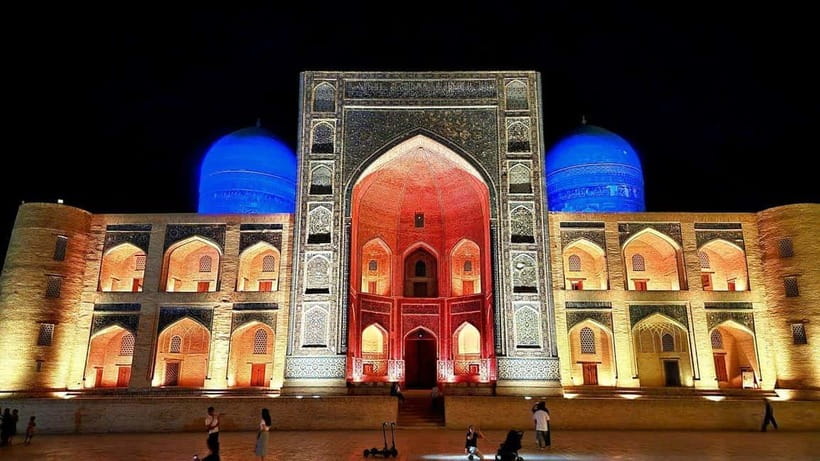
Mir-i-Arab Madrasa is another quick stop on paper. The exterior alone is striking, with its blue tile decoration and balanced façade. Do not assume that every madrasa on the route allows full access. Entrance rules and tickets can vary, and admission is not included in the tour price.
The Ark area and Bolo Haouz Mosque
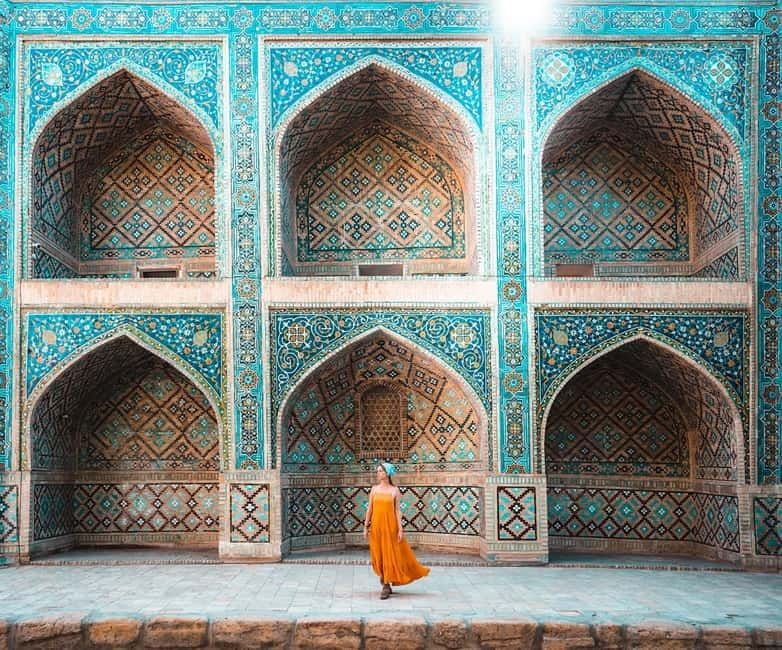
The route continues toward Bolo Haouz Mosque, near the Ark Fortress district. Bolo Haouz is known for its wooden columns and painted ceiling, giving you a different architectural experience from the brick and tile surfaces around Poi Kalan.
This contrast is one of the walk’s strengths. Bukhara is not made up of one repeated style. You move between monumental religious architecture, palace and fortress history, market buildings, and quieter memorial sites. Hamza’s explanations help you see those differences instead of treating every stop as another photo opportunity.
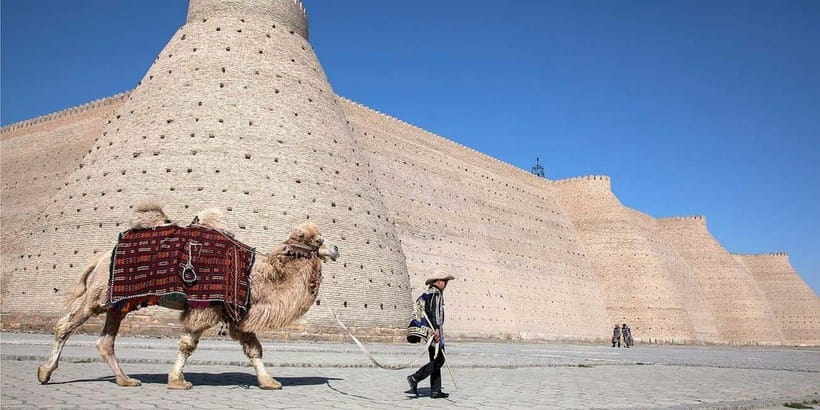
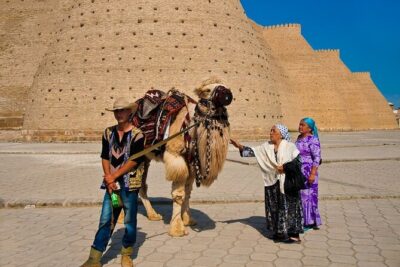
The Ark Fortress is one of the essential sights of Bukhara and is part of the city’s long political story. The tour takes you through the Ark area, although the supplied details do not promise a full interior visit. That distinction matters. If you specifically want to explore every museum and chamber inside the fortress, ask Hamza about entry and allow extra time.
The route’s 20-minute section around this part of the city is one of the longer pauses. It should give you more time to understand the setting, ask questions, and take in the scale of the old citadel area.
Chashma-Ayub and the Samanid Mausoleum finish
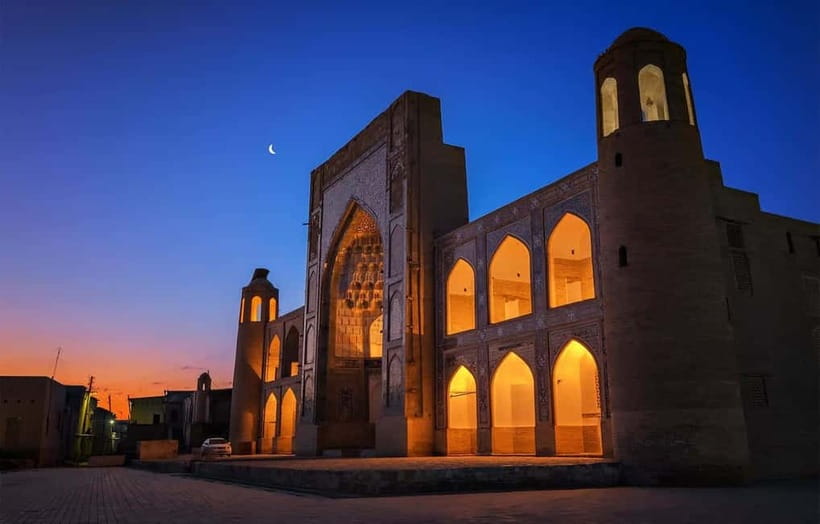
Chashma-Ayub Mausoleum offers another change of mood. Its name is associated with the spring of Job, and the building adds a more intimate stop after the large ensembles of Poi Kalan and the Ark. The guided visit is short, but it rounds out the architectural range of the tour.
The final destination is the Samanid Mausoleum, where the walk ends. This is one of Bukhara’s most important early Islamic monuments and a fitting place to finish because its brickwork rewards close attention. Instead of relying on bright tile, the design uses patterns, light, shadow, and texture in the brick itself.
Ending here also gives the route a useful chronological feel. You have moved through several periods of Bukhara’s development and can now see how architectural ideas changed over time. The finish is not in the middle of the central market area, so plan your next move and keep your phone charged for directions or a pickup.
The itinerary mentions both Samanid Mausoleum and Ismail Samani Mausoleum as the finishing point. These are two names for the same monument, so this is not an extra stop.
What $55 buys you, and what it does not
At $55 per person, the tour offers good value if you want a guide who can explain the city rather than simply lead you between buildings. You receive a professional English-speaking guide, a planned walking route, group companionship, suggestions for food and shopping, and support during the day.
The price is lower because the experience is shared. The group normally includes around 10 to 15 people, though one off-season booking ended up as a one-to-one walk. You should not count on that smaller format, but it shows that group numbers may vary.
You pay separately for entrance tickets. Lunch and dinner are also your responsibility, as are accommodation, flights, train tickets, and transport with a driver. Since the route is on foot, you should budget for any taxi you need before the start or after the finish.
The value is strongest for a first visit, a short stay, or anyone who wants to understand the city before exploring independently. It is less suitable if you already know Bukhara well or want to spend a long time inside each monument.
The tour offers free cancellation up to 24 hours before the start and allows you to reserve now and pay later. It is also described as wheelchair accessible, but the historic route may include uneven streets or access limits at individual buildings, so confirm any specific mobility needs in advance.
The guide’s style and the group experience
Hamza is the main reason this tour earns such strong marks. His English is described as fluent, and his approach combines facts with stories, legends, humor, and cultural detail. He encourages questions rather than delivering a fixed speech with no room for conversation.
I like that his advice extends beyond the official sights. He can suggest restaurants and shopping areas, and he may point out buildings you would otherwise pass without noticing. One useful outcome is leaving the tour with ideas for how to use the rest of your time in Bukhara.
The social side is another plus. You meet other people who are exploring the city, and the shared format keeps the price reasonable. The trade-off is obvious: you may wait for others, hear questions that are not your own, or have less time at a favorite monument.
The experience is offered in English. Bring water, a sun hat, a camera, and a charged smartphone. Bukhara can be hot, and the route has little reason to stop simply because you forgot water.
Who should book this walking tour?
I would choose this tour if you are visiting Bukhara for the first time and want a clear introduction to the Old Town. It suits people who prefer history, architecture, and cultural context over a simple checklist of photo stops.
It is also a good match for solo visitors who would like company without paying for a full private guide. The group setting makes it easier to meet other people, while the route remains focused on the city rather than on entertainment.
You may prefer another arrangement if you want a slow private walk, detailed shopping help, or long interior visits at every monument. Contact the guide about a private option if that matters more than the lower price.
Weather is worth considering. The walk has operated in rain, and the guide continued to make it informative and enjoyable, but you should still bring suitable clothing. For summer departures, use sun protection and carry water.
Should you book All You Need To Know About Bukhara?
Book it if you want a well-priced introduction led by an English-speaking guide who can explain how Bukhara’s monuments fit together. The strongest reasons are Hamza’s clear historical storytelling, the useful city orientation, and the route’s mix of famous sights and smaller stops.
Think twice if you expect a fully private experience because the normal group size is around 10 to 15 people. Also remember that tickets, food, and transport are not included.
My practical choice would be to take this walk on your first day or first evening in Bukhara. Then use the remaining time to return to Poi Kalan, explore the bazaars, or visit the sites where you wanted more than a few minutes. At $55, that combination gives you both context and freedom.
FAQ
Where does the Bukhara walking tour start?
The meeting point is near the donkey statue by Nadir Divan Begi Madrasah. Confirm the exact meeting details before the tour begins.
Where does the tour finish?
The walk finishes at the Samanid Mausoleum, also called the Ismail Samani Mausoleum.
How long does the experience last?
The walking tour lasts 4.5 hours. Starting times depend on availability when you book.
Is this a private tour?
The usual arrangement is a group of around 10 to 15 people. A private tour may be available by contacting the guide separately.
What language is the tour conducted in?
The live tour guide speaks English.
Are entrance tickets included?
No. Entrance tickets are not included and can be paid for on the spot.
Are meals and transport included?
No. Lunch, dinner, and transportation during the tour with a driver are not included.
What should I bring?
Bring water, a sun hat, a camera, and a charged smartphone.
Freshly added in Bukhara
- Private Tour in 3 top Places Outside of Bukhara City★ 5.0 · 2 reviews
- Full-Day Private Guided Tour to Islamic 7 Saints of Bukhara★ 4.5 · 3 reviews
- Bukhara: Tour Outside of Old Town. Guide with Transportation★ 5.0 · 2 reviews
- Bukhara in a Day History, Culture, and Local Insight Private Tour★ 5.0 · 4 reviews
- Discover Bukhara One Day Group Experience★ 4.5 · 2 reviews
- Bukhara Walking Tour★ 5.0 · 4 reviews
- Bukhara Hammam Bathhouse with Massage★ 5.0 · 2 reviews
- A Complete Chapter To Old Bukhara★ 5.0 · 5 reviews
Bukhara Tours, compared.
Bukhara Historical City Highlights Guided Walking Tour
Read our review →
Browse the lists this tour appears in