
Reviewed · BUKHARA TOURS
Full-Day Private Guided Tour to Islamic 7 Saints of Bukhara
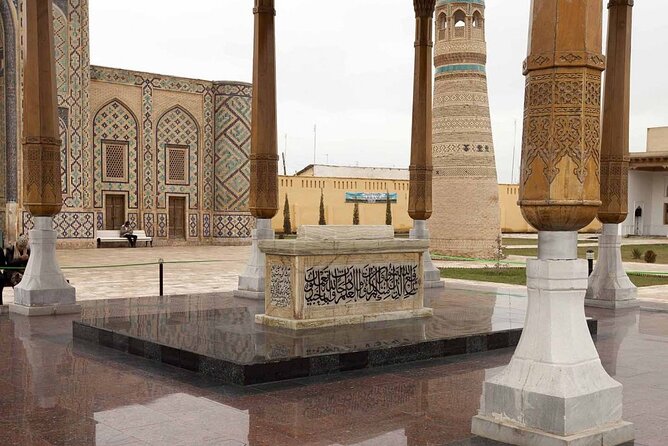
Sacred Bukhara reaches far beyond its old city walls. This full-day trip takes you into the surrounding towns and villages to visit the mausoleums of seven major Sufi teachers, tracing the spiritual line of the Naqshbandi tradition. I like the private transport, which makes a long day easier, and I like the chance to see places beyond Bukhara’s usual monuments.
The tour also includes a licensed guide, entrance tickets, and all taxes, so the $160 per-person price is easier to judge. The main drawback is the pace: seven stops in seven or eight hours leaves limited time at each site, and some visitors may find the religious focus too specialized.
In This Review
- Seven Sufi teachers, seven very different stops
- Why this tour matters in Bukhara
- Gijduvon: where the chain begins
- Safirkon and Khoja Arif Rivgariya
- Vobkent and the teachings of Mahmud Angirey Fagnaviya
- Ramitan: two saints, one important connection
- Kogon and the saint known as the potter
- Bahauddin Naqshband’s mausoleum
- What the guide and driver add
- Is $160 per person fair?
- Timing, clothing, and practical planning
- Who should book this Bukhara day trip?
- Should you book the Seven Saints tour?
- FAQ
- How long does the Seven Saints of Bukhara tour last?
- Where does the tour begin?
- Where does the tour end?
- Is hotel pickup offered?
- Is this a private tour?
- What is included in the tour price?
- Is lunch included?
- Are photo and video fees included?
- Can I cancel for a full refund?
- What happens if bad weather cancels the tour?
Seven Sufi teachers, seven very different stops
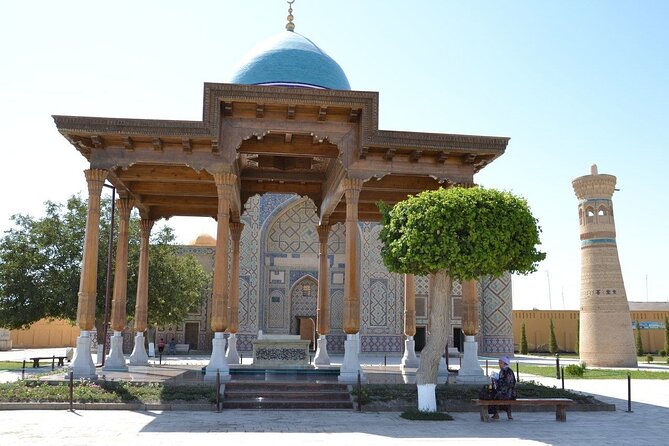
- Gijduvon begins the spiritual chain with Abdalhalik Gijduvani, founder of the Hadzhagan school.
- Safirkon honors Khoja Arif Rivgariya, an important early follower in the Sufi tradition.
- Vobkent introduces Mahmud Angirey Fagnaviya, remembered as a spiritual authority in Maverannahr.
- Ramitan contains two separate stops, for Ali Khoja Romitaniya and Muhammad Babai Sammasi.
- Kogon brings you to Mir Kulal, whose nickname reflects his work as a potter.
- Bahauddin Naqshband’s mausoleum closes the day at the most important and best-known site on the route.
- A private guide and driver make the distance manageable, especially when the weather is warm.
Why this tour matters in Bukhara
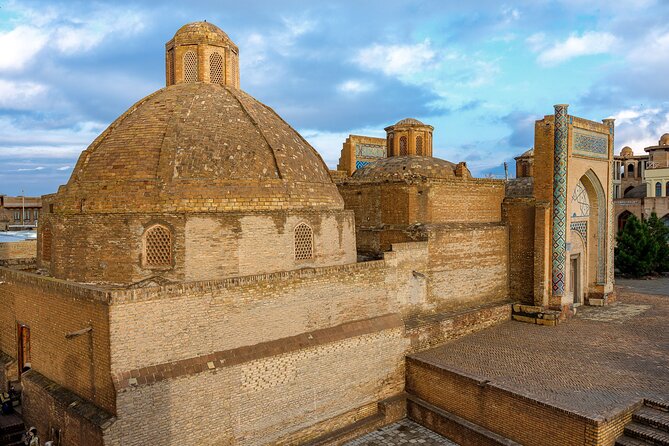
Bukhara has been established for about 2,500 years, and its religious reputation is a major part of its identity. In the Middle Ages, the city was said to have 360 mosques and 80 madrassas, earning titles such as the Star of the Islamic World and the Holy City of Central Asia.
Those grand labels can feel abstract when you are walking among the city’s familiar domes and trading streets. This trip gives them a more personal shape. Instead of seeing only buildings, you follow the teachers who helped form one of Central Asia’s most influential Sufi traditions.
Sufism is a spiritual current within Islam that places strong emphasis on inner discipline, moral conduct, remembrance, and the guidance of a teacher. The seven figures on this route belong to the Hadzhagan line, which later led into the Naqshbandi brotherhood. Your guide’s job is important here because the sites are not simply scenic monuments. Their meaning comes from the relationship between teacher, student, place, and spiritual practice.
I would choose this tour if you want religious and historical context that goes beyond Bukhara’s central sights. If your interests are mainly architecture, photography, or shopping, you may find a full day devoted to mausoleums less satisfying.
Other Bukhara trips travellers line up with this one:
- Best of Bukhara: All Day Private Old Town Tour
★ 5.0 · 66 reviews - Best of Bukhara: All Day Private Old Town Tour
★ 4.9 · 62 reviews - City Tour Around Bukhara
★ 5.0 · 55 reviews
Gijduvon: where the chain begins
The first stop is Gijduvon, the birthplace of Abdalhalik Gijduvani, who lived from 1103 to 1179. He is presented as the founder of an independent school of mysticism in Maverannahr known as Hadzhagan, or the Path of Teachers.
This is a useful opening because it gives you the starting point for the entire day. The later saints were not random names gathered around Bukhara. They form a spiritual succession, with ideas and teaching passed from one generation to the next.
You have about 40 minutes here, with admission included. That is enough for a guided explanation and a respectful visit, but not enough for an unhurried study of every detail. Keep your attention on the guide’s account of Gijduvani’s role. Without that explanation, the first mausoleum could seem like just another stop.
The town also helps set the tone for the day. You are leaving the central Bukhara circuit and entering the wider area connected to its religious life. That change is part of the value, even though the schedule does not allow for long independent wandering.
Safirkon and Khoja Arif Rivgariya
The second stop is Safirkon, where you visit the burial place of Khoja Arif Rivgariya, also known as Saint Khoja Arif Mohi Tobon. He was one of the notable Sufi figures of Central Asia and a follower of the Hadzhagan tradition.
By this point, the pattern of the tour becomes clear. Each visit connects a person to a stage in the spiritual succession. Your guide can help explain how the teachings developed rather than treating every saint as an isolated figure.
Again, the scheduled visit is about 40 minutes. The inclusion of admission tickets means you do not need to manage separate entrance payments at each site, although photography and video fees may still apply. Those charges are listed at $1 to $2 per site and are paid directly at the museum entrance when applicable.
This is one of the places where a private tour earns its keep. You can ask for clarification when names, titles, and religious terms begin to blend together. In a larger group, the day might feel like a procession of unfamiliar names. With your own guide, you can ask the questions that matter to you.
Vobkent and the teachings of Mahmud Angirey Fagnaviya
In Vobkent, the route reaches the burial place of Khoja Mahmud Angirey Fagnaviya. He was recognized as a spiritual authority of Maverannahr and is remembered as one of the famous Sufis of his time.
This stop is especially useful for understanding that the route is not only about Bahauddin Naqshband, the best-known name in the group. The earlier teachers matter because they represent the stages that came before the Naqshbandi brotherhood took its later form.
You get around 40 minutes here. The practical challenge is repetition. After several mausoleums, you may need to make notes to keep each teacher straight. I would write down one short phrase for each saint, such as founder, follower, spiritual authority, or teacher. That simple trick can make the chain easier to remember after the tour.
The value of Vobkent depends heavily on the guide’s storytelling. Hamza, if available for your departure, has been praised for his passion when explaining Uzbekistan, Sufism, and the country’s Islamic culture. That kind of enthusiasm is helpful on a subject that can otherwise feel dense.
Same stretch of the Silk Road, a different sort of day:
- Bukhara Full Day Old City Private Tour
★ 5.0 · 46 reviews - Yurt Camp Tour with Night from Bukhara
★ 3.8 · 35 reviews - All You Need To Know About Bukhara. A Walk In The Town
★ 4.9 · 31 reviews - One-Day Private Tour in the Old Town of Bukhara
★ 5.0 · 24 reviews
Ramitan: two saints, one important connection
The route makes two stops in Ramitan. The first is the burial place of Ali Khoja Romitaniya, a major spiritual authority of the Hadzhagan school. He is described as a master of wisdom with strong spiritual qualities and personal influence.
The second Ramitan stop honors Khoja Muhammad Babai Sammasi, who followed Ali Ramitani and became the fifth of the Seven Saints of Bukhara. The teacher-student connection here is one of the clearest links on the route, so pay attention to how your guide explains it.
Two 40-minute visits in the same area help reduce the feeling that you are rushing from one distant town to another. They also make Ramitan the point where the succession becomes easier to follow. One saint taught the next, and the tradition continued through a chain of spiritual guidance.
Still, you should expect a long day in a vehicle. The tour provides private transportation, but the supplied details do not specify the vehicle type, road conditions, or exact distances between stops. If you are prone to motion sickness or dislike extended road time, ask the operator for more transport details before booking.
Kogon and the saint known as the potter
The sixth stop is in Kogon, at the site connected with Saint Mir Kulal. Kulal means potter, or craftsman associated with pottery, and the name reflects his trade. He was a spiritual authority and sheikh of the Hadzhagan school, sixth in its chain of spiritual succession.
This detail gives the saint a more human outline. The day is filled with formal religious titles, but a name linked to ordinary work helps connect the spiritual tradition to daily life. It is a reminder that these teachers were not only distant figures in scholarly accounts.
The stop lasts about 40 minutes, with admission included. This is another moment when a guide can add real value by explaining the relationship between craft, discipline, teaching, and spiritual life. The tour’s subject is more than a list of tombs. It is a history of how an influential school was carried from teacher to student.
Bahauddin Naqshband’s mausoleum
The final stop is the mausoleum of Bahauddin Naqshband, the largest representative of Central Asian Sufism in the 14th century and the figure whose name gave the Naqshbandi order its title. The word Naqshband is connected with a chaser or engraver, reflecting his craft.
This is the natural climax of the route. By the time you arrive, you have visited the teachers who came before him and followed the succession toward the figure most closely tied to the later brotherhood. The site also has included admission, unlike some optional museum charges for photos or video.
You receive roughly 40 minutes here, just as at the other stops. That may feel short if the mausoleum complex is important to your trip, but the fixed schedule lets you see all seven saints in one day. If you want extended time at Bahauddin Naqshband’s site, ask before booking whether a longer stop can be arranged.
I would save a few questions for this final visit. Ask how Naqshband’s teachings differed from those of the earlier saints, why his name became so widely known, and how the Naqshbandi tradition fits into the wider history of Islam in Central Asia. A good guide can turn the final stop from a photo opportunity into a clear ending to the story.
What the guide and driver add
The tour includes a licensed guide and private transportation. That combination matters because the seven sites are spread across several places outside central Bukhara. You are not trying to coordinate local transport between Gijduvon, Safirkon, Vobkent, Ramitan, Kogon, and the final mausoleum.
The strongest personal praise has gone to Hamza for his passion and explanations. He is described as particularly good at discussing Uzbekistan’s history, Sufism, Islamic culture, and the individual khojas. If Hamza is available, requesting him could be worthwhile.
The driver also received praise for being friendly and well mannered. That may sound minor, but it matters on a seven or eight-hour outing. A calm driver and a guide who explains what you are seeing can make the road time much more comfortable.
Because this is a private activity, only your group participates. You get more control over questions and conversation than on a standard group excursion. Group discounts are offered, but the supplied information does not give the discount amount, so ask for the exact total if you are booking for several people.
Is $160 per person fair?
At $160 per person, this is not a cheap sightseeing add-on. It is a full-day private service that includes transport, a licensed guide, entrance tickets to all monuments, fees, and taxes. The price makes more sense if you are traveling with several people and can use the available group discount.
The tour also saves you from arranging a complicated series of visits outside Bukhara. You would need to identify seven sites, find transport, manage entrances, and keep track of the order of the spiritual succession. The guide’s interpretation is a major part of what you are paying for.
Lunch is not included, but it can be added for $10 per person. Photo and video fees are separate and cost $1 to $2 per site when charged at a museum entrance. I would carry small amounts of local currency or ask the operator how those payments are handled.
The value is weaker if you plan to visit only one or two of the sites, or if you prefer to explore independently. It is stronger for anyone who wants the full chain in one day without arranging the details alone.
Timing, clothing, and practical planning
The tour lasts about seven to eight hours and begins at Hotel Malika Bukhara on Gavkushon Road 25. It returns to the same meeting point. Pickup is offered, but confirm the exact pickup arrangement when you book rather than assuming every hotel transfer is automatic.
The sites are religious and commemorative places. Dress and behavior should be respectful, though the provided details do not spell out a specific dress code. Ask your guide what is appropriate for the day, especially if you plan to take photographs.
You should also be ready for changing weather. The experience requires good weather, and a poor-weather cancellation can lead to a different date or a full refund. Confirmation is provided when you book, and the activity is generally suitable for most people. It is near public transportation, though private transport is already included.
For a full refund, cancel at least 24 hours before the start time. Changes or cancellations inside that window are not accepted for a refund. The operator may also cancel if the minimum number of participants is not met, in which case you can receive another date, another experience, or a full refund.
Who should book this Bukhara day trip?
I would recommend it to you if you have a strong interest in Islamic history, Sufism, Central Asian culture, or religious architecture. It also suits visitors who want to see the region around Bukhara instead of spending every day inside the old city.
It is a good fit for couples, families, or small private groups who value a flexible conversation with a guide. The private format is especially useful if you have many questions or want explanations in more depth than a standard sightseeing ride usually provides.
I would hesitate if you have limited time in Bukhara and have not yet seen the city’s central landmarks. The Seven Saints route is specialized, and the repeated 40-minute visits may feel slow if your main interest is bazaars, fortresses, or grand architectural monuments.
Should you book the Seven Saints tour?
Book it if you want the religious story behind Bukhara, not just its famous buildings. The route covers all seven saints, includes private transport and a licensed guide, and gives you a practical way to reach sites scattered beyond the city.
The best reason to go is the explanation. Ask for Hamza if possible, take notes on each saint, and keep a little extra money for lunch and photo fees. Skip it if you would rather explore at your own pace or if a full day of mausoleums sounds too narrow.
For the right visitor, this is a thoughtful and well-organized way to understand why Bukhara became one of Central Asia’s great Islamic centers.
FAQ
How long does the Seven Saints of Bukhara tour last?
The tour lasts approximately seven to eight hours.
Where does the tour begin?
The tour begins at Hotel Malika Bukhara, Gavkushon Road 25, Bukhara, Bukhara Region, Uzbekistan.
Where does the tour end?
The activity ends back at the meeting point.
Is hotel pickup offered?
Pickup is offered. Confirm the exact arrangement with the tour provider when booking.
Is this a private tour?
Yes. Only your group participates in the activity.
What is included in the tour price?
The price includes a licensed guide, private transportation, entrance tickets to all monuments, and all fees and taxes.
Is lunch included?
Lunch is not included. It can be added for $10 per person.
Are photo and video fees included?
No. Photo and video fees may be paid directly at museum entrances and cost $1 to $2 per site.
Can I cancel for a full refund?
Yes, if you cancel at least 24 hours before the experience start time. Cancellations made less than 24 hours before the start are not refunded.
What happens if bad weather cancels the tour?
If poor weather causes cancellation, you will be offered a different date or a full refund.
Freshly added in Bukhara
- Private Tour in 3 top Places Outside of Bukhara City★ 5.0 · 2 reviews
- Bukhara: Tour Outside of Old Town. Guide with Transportation★ 5.0 · 2 reviews
- Bukhara in a Day History, Culture, and Local Insight Private Tour★ 5.0 · 4 reviews
- Discover Bukhara One Day Group Experience★ 4.5 · 2 reviews
- Bukhara Walking Tour★ 5.0 · 4 reviews
- Bukhara Hammam Bathhouse with Massage★ 5.0 · 2 reviews
- A Complete Chapter To Old Bukhara★ 5.0 · 5 reviews
- Bukhara City Walking Tour★ 5.0 · 2 reviews
Bukhara Tours, compared.
All You Need To Know About Bukhara. A Walk In The Town
Read our review →
Bukhara Historical City Highlights Guided Walking Tour
Read our review →Browse the lists this tour appears in