
Reviewed · CITY TOURS
City Tour Around Bukhara
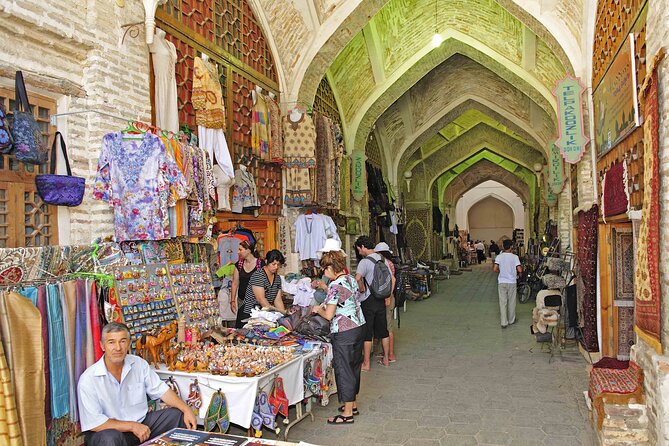
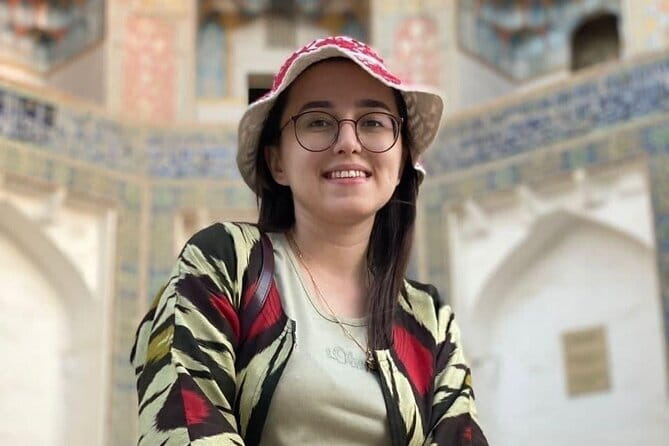
Bukhara rewards the curious walker. This private city tour brings together the city’s major monuments, working craft traditions, and everyday Uzbek culture, with guide Kamilla adding personal stories instead of burying you under dates. I especially like Kamilla’s lively storytelling and the chance to see crafts such as blacksmithing, gold embroidery, puppet-making, fabric work, and wood carving. The main consideration is pace: eleven stops in four to six hours can feel full, and several admission fees are extra.
I also like the tour’s flexibility. You can ask for a bread or traditional-food class, pause for local coffee or tea, stop for plov, or spend extra time with artisans and photographs. The handmade messages from the past give the day a playful personal touch. Since the tour starts at the Ismail Samani Mausoleum and ends at Lyabi Hauz, you should plan your day around that one-way route.
In This Review
- Key points to know before booking
- Why Kamilla’s Bukhara tour feels different
- Starting with Bukhara’s oldest brickwork
- Chashmai Ayub and the well of healing water
- The 20 pillars of Bolo Hauz Mosque
- Inside the Ark of Bukhara
- The Kalon Minaret and Poi Kalyan Mosque
- Mir-i-Arab and the madrasa tradition
- Trading domes and the business of the Silk Road
- Kosh Madrasah and two religious styles
- Magoki Attori and the carpet collection
- Ending beside the pond at Lyabi Hauz
- Crafts, food, music, and the human side of the city
- Is the $66 group price good value?
- Who should book this experience?
- FAQ
- How long does the Bukhara city tour last?
- How many people can join the private tour?
- What is the price of the tour?
- Where does the tour start?
- Where does the tour end?
- Is hotel pickup available?
- Are entrance tickets included?
- Is coffee or tea included?
- Can the tour include local food or a cooking class?
- Is free cancellation available?
- Should you book Kamilla’s Bukhara tour?
Key points to know before booking
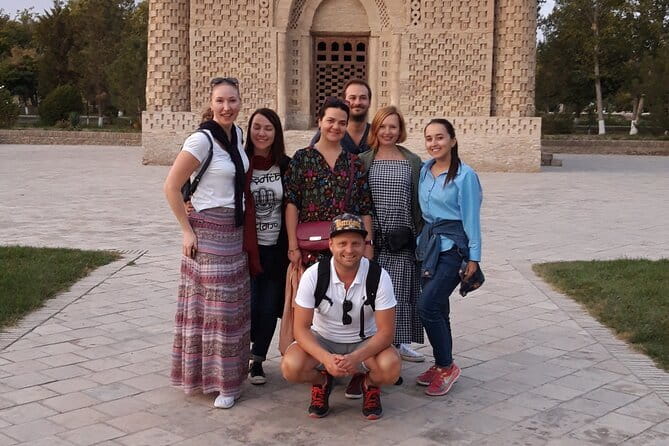
- Private group of up to six: You get Kamilla’s attention rather than sharing a large tour with strangers.
- Eleven major sights in one route: The program covers mausoleums, mosques, madrasas, trading domes, the Ark, and Lyabi Hauz.
- Culture beyond monuments: Craft demonstrations, local food suggestions, music, traditions, and folk shows may be added to the day.
- A guide with a personal style: Kamilla keeps explanations short and clear, while also answering questions about modern Uzbek life.
- $66 per group: For two to six people, the price can be very good value, though some entrance tickets and drinks cost extra.
- Flexible timing: The advertised duration is about four to six hours, with evening departures available in summer.
Why Kamilla’s Bukhara tour feels different
Bukhara is easy to admire and surprisingly easy to misunderstand. You can walk past blue tilework, brick domes, and ancient courtyards without grasping how the city worked as a religious center, trading stop, and seat of power. A good guide gives those places a human scale.
Kamilla’s approach is built around short explanations and stories. She does not aim to flood you with long lists of rulers. Instead, she connects buildings with how people used them, from education and prayer to trade, announcements, food, and craft production.
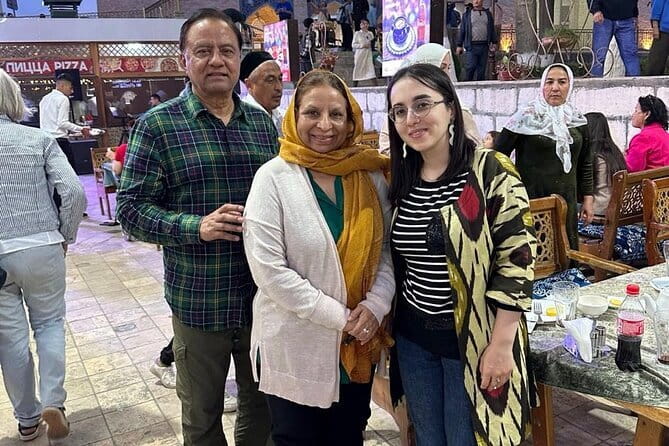
That approach earned especially strong praise for her conversational English, patience with photographs and shopping, and willingness to answer broad questions about life in Uzbekistan. She has also adjusted timing and added lunch stops for plov and visits to local artisans when requested.
The private format matters here. Your group can slow down at a detail, ask about a religious custom, or spend longer in a market without holding up twenty other people. The tradeoff is that the experience depends heavily on your interests and communication with the guide. Tell Kamilla early if food, crafts, architecture, or photography matters most to you.
More City Tours in Bukhara:
- Bukhara Full Day Old City Private Tour
★ 5.0 · 46 reviews - Bukhara Historical City Highlights Guided Walking Tour
★ 4.5 · 16 reviews - Private Tour in 3 top Places Outside of Bukhara City
★ 5.0 · 2 reviews
Starting with Bukhara’s oldest brickwork
The tour begins at the Ismail Samani Mausoleum, an excellent first stop because its beauty comes from construction rather than colorful decoration. Built in the ninth or tenth century, the mausoleum uses more than twenty brick-laying patterns.
Allow about thirty minutes here. Look closely at the walls as the light changes. The brickwork creates geometric shadows and ornamental effects without relying on glazed tiles. This makes the building a useful introduction to Bukhara: the city’s best architecture is not always the most brightly colored.
Admission is not included at this stop. The meeting point is the mausoleum itself, so make sure you know how you will reach QCG2+R64 in Bukhara. Pickup is offered, but the supplied tour details identify the mausoleum as the start point, so confirm the exact pickup arrangement when booking.
Chashmai Ayub and the well of healing water
Next comes Chashmai Ayub Mausoleum, a twenty-minute stop with religious importance for three faiths. The complex dates back to the twelfth century and is associated with the grave of the Prophet Job, as well as a natural well whose water has traditionally been linked with relief for skin illnesses.
This is a place where a guide’s context helps. You are not just looking at another domed building. You are hearing how sacred sites can carry several layers of belief over time.
Admission is extra. If you want a long visit at every religious site, the schedule may stretch beyond four hours. That is not necessarily a problem, but the full route works best when you accept that each stop receives a focused introduction rather than a slow, detailed inspection.
The 20 pillars of Bolo Hauz Mosque
Bolo Hauz Mosque takes about thirty minutes and is known for its carved wooden columns. There are twenty pillars, yet the mosque is often called the forty-pillar mosque. Kamilla explains the reason for that nickname and how the building was used to announce news about a new ruler.
This is one of the places where everyday history comes alive. The mosque was not only a place for worship. It also connected religious life with public information and political change.
Entry is free, making this a useful stop for keeping extra costs under control. The carved wood also gives you a change of texture after the brickwork of the earlier mausoleum. Bring your camera, but leave room for the guide’s explanation before rushing toward the next view.
Same stretch of the Silk Road, a different sort of day:
- Best of Bukhara: All Day Private Old Town Tour
★ 5.0 · 66 reviews - Best of Bukhara: All Day Private Old Town Tour
★ 4.9 · 62 reviews - Yurt Camp Tour with Night from Bukhara
★ 3.8 · 35 reviews - All You Need To Know About Bukhara. A Walk In The Town
★ 4.9 · 31 reviews
Inside the Ark of Bukhara
The Ark is the tour’s strongest stop for power and scale. This fortress housed Bukhara’s rulers from the fourth century BC until 1920. Much of what you see today consists of ruins, but the surviving walls and raised position still make the citadel easy to picture as the center of government.
The visit lasts about forty minutes. You can explore parts of the fortress and reach a viewpoint over the city. Kamilla also shares stories about the citadel’s secrets and its role in Bukhara’s political life.
Admission is not included. The Ark can also feel more exposed than the shaded trading areas, so your comfort may depend on the season and time of day. Summer evening tours are available, which may make this part of the route more pleasant in hot weather.
The Kalon Minaret and Poi Kalyan Mosque
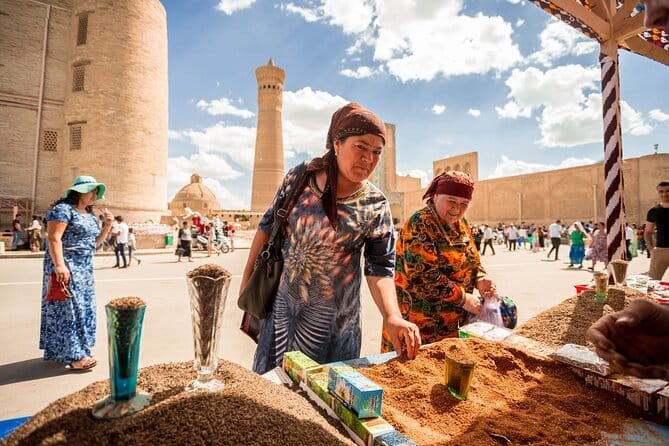
The Great Minaret of the Kalon is one of Bukhara’s defining sights. Built in the twelfth century, it has survived without falling, and the tour explains how its solid construction helped. You also learn how the tower was used before it became mainly a visual symbol of the city.
The stop lasts about twenty-five minutes and admission is free. If you take the tour in the evening during summer, the illuminated minaret gives the monument a different mood. Do not expect a long climb or an extended interior visit from the stated program. This is mainly a close look, a story, and time for photographs.
Poi Kalyan Mosque follows with another twenty-five-minute stop. The sixteenth-century mosque remains active and is described as the largest in Bukhara. Its 288 domes make it a rewarding place to study from different corners.
Admission is extra. The mosque is still used for worship, so you should follow the guide’s instructions about behavior and access. The value here is not only the size of the complex. Kamilla helps you notice how repeated domes and open space create a sense of order.
Mir-i-Arab and the madrasa tradition
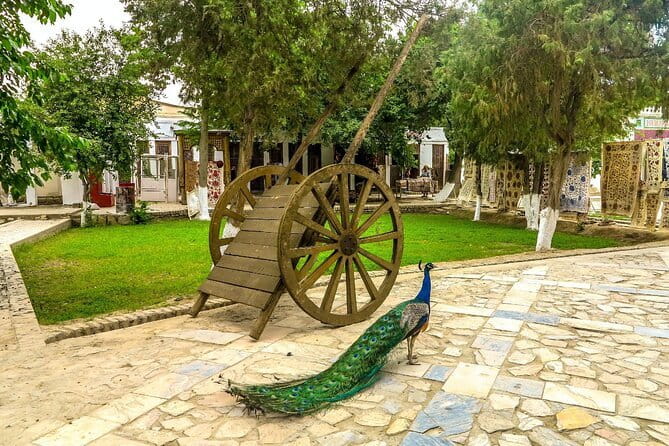
Mir-i-Arab Madrasa remains a functioning religious college dating from the sixteenth century. The visit introduces the steps and system of religious education, along with the typical layout of a madrasa.
Entry is free. The stop lasts around twenty-five minutes, so expect a clear overview rather than a full academic lecture. This is a good point to ask how religious study fits into Uzbekistan today, especially if you want more than architectural facts.
The building also helps explain why Bukhara’s historic center feels so concentrated. Places of worship, education, trade, and government sit within a walkable route. You are not visiting isolated monuments. You are tracing the structure of an old city.
Trading domes and the business of the Silk Road
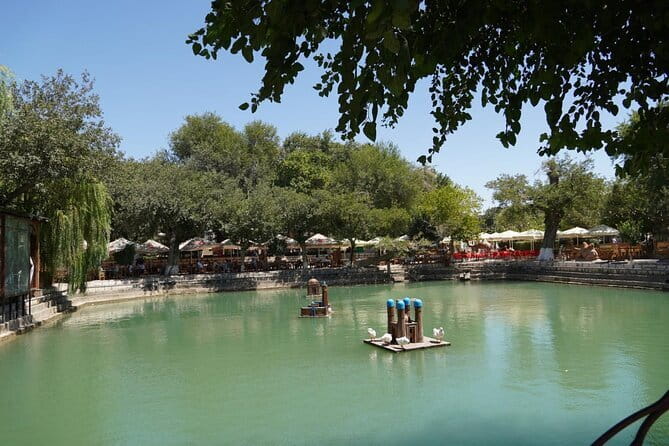
The three trading domes take about forty minutes and bring the commercial side of Bukhara into focus. Each dome served a particular trade or purpose, and crossing all three lets you picture how merchants organized their work and sought profit.
This is a valuable stop for visitors who want more than grand religious buildings. Bukhara grew through movement, buying, selling, and long-distance connections. The domes show that commerce was built into the city’s architecture.
Admission is free. You may also find crafts and souvenirs here, so allow time if you like browsing. The private format helps because you can tell Kamilla if you want to shop or simply keep moving. She has been praised for giving people time to take photographs and look for souvenirs without making them feel rushed.
Kosh Madrasah and two religious styles
Kosh Madrasah offers two schools in one square, built in different styles. The forty-minute visit includes an original seventeenth-century classroom and a mosque described as having a cave-like style.
Kamilla also explains two main streams of religious thought connected with the complex. This is a stop where a short explanation can prevent the buildings from blurring together. You begin to see differences in design, purpose, and religious tradition.
Admission is not included. If you are particularly interested in architecture, request extra time here. If you are starting to tire, this may be one of the places where a shorter explanation makes sense, since the route still has two major stops remaining.
Magoki Attori and the carpet collection
Magoki Attori Mosque is described as the oldest mosque in Bukhara, dating from the twelfth century and lying below present street level. The twenty-minute stop also includes a carpet museum.
The site carries several layers of worship. It was associated with both Judaism and Islam, a detail that gives the building wider meaning than its age alone. The lower position helps you understand how the city has changed around older religious structures.
Admission is extra. The carpet museum adds a craft and design element after the architectural stops. If you are considering buying textiles elsewhere in Bukhara, this is a useful place to look at patterns and workmanship before making a purchase.
Ending beside the pond at Lyabi Hauz
The tour finishes at Lyabi Hauz, the center of Bukhara’s old part. The thirty-minute visit covers a mosque, two distinctive madrasas, and a caravanserai, the roadside hotel once used by merchants.
This is a fitting end because it brings together worship, education, travel, and trade. The pond gives the area a social focus, while the surrounding buildings show how the city served people who lived locally and those passing through.
Your tour ends near the pond, not back at the starting mausoleum. That is practical if you want to continue walking, eat, shop, or arrange your own return from the old center. It also means you should avoid leaving luggage or transport plans tied to the first meeting point.
Crafts, food, music, and the human side of the city
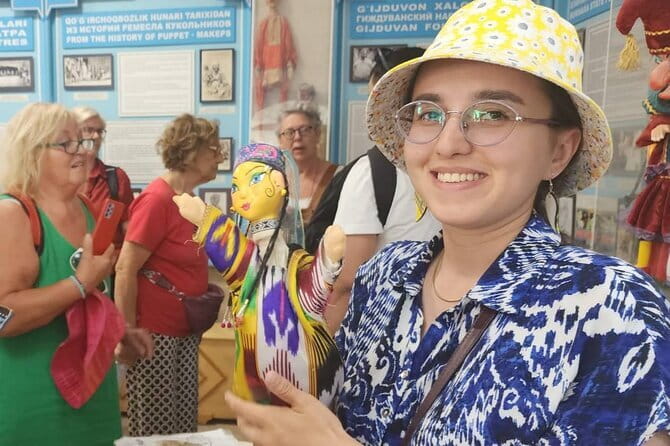
The tour is not limited to monuments. Kamilla can show you working crafts, including puppets, blacksmithing, gold embroidery, fabric-making, and wood carving. These visits help you understand that Bukhara’s culture is still made by hand, not just preserved behind walls.
A traditional-food or bread class can also be arranged if you want a more active experience. The details are not fixed in the tour outline, so treat this as an option to request rather than a guaranteed part of every departure.
The guide can point you toward local places for food and may arrange a plov stop. Music, local traditions, and folk shows are also available. Coffee and tea breaks are part of the general experience, but the drinks themselves are not included in the price.
These extras are where the private format has real value. You can shape the day around curiosity rather than simply checking off monuments. Still, tell Kamilla what you want before the tour begins. Eleven listed stops already fill a substantial half-day, and craft visits or a meal may require a longer schedule.
Is the $66 group price good value?
At $66 for up to six people, the price is strongest for a couple, family, or small group. Split between six, it is inexpensive for a private guide over four to six hours. Even for two people, the price can make sense if you want personal attention and a route covering nearly all of Bukhara’s central sights.
Some admission tickets are extra at the Ismail Samani Mausoleum, Chashmai Ayub, the Ark, Poi Kalyan Mosque, Kosh Madrasah, and Magoki Attori Mosque with its carpet museum. Coffee and tea are also separate. Free entry applies at Bolo Hauz, the Kalon Minaret, Mir-i-Arab, the trading domes, and Lyabi Hauz.
The value depends on how much you use the guide. If you only want exterior photographs, a cheaper walk may be enough. If you want explanations, help with local customs, time for questions, artisan contacts, and suggestions for food, this tour offers more than a simple sightseeing circuit.
Who should book this experience?
I would choose this tour if you have limited time in Bukhara and want the major sights explained in one private outing. It suits couples, families, and small groups who prefer a personal guide and a flexible pace.
It is also a good match if you want to connect buildings with present-day Uzbek life. Kamilla’s style has been praised for being warm, clear, patient, and willing to discuss modern society as well as the past.
You may want another plan if you dislike walking between many stops, prefer a slow single-site visit, or want every entrance fee and drink included. The route is full, and the exact balance between monuments, shopping, food, and crafts should be agreed on in advance.
You can cancel free of charge up to 24 hours before the start time for a full refund. Changes made inside that window are not accepted, and poor weather may lead to a new date or full refund. The tour operates Monday through Friday from 9:00 AM to 6:00 PM during the stated operating period, with summer evening tours also available.
FAQ
How long does the Bukhara city tour last?
The advertised duration is approximately four to six hours. The eleven stops have different visit lengths, and optional food, craft, music, or shopping activities may affect the timing.
How many people can join the private tour?
The tour is private for your group, with up to six people included in the group price.
What is the price of the tour?
The price is $66 per group of up to six people.
Where does the tour start?
The listed starting point is the Ismail Samani Mausoleum in Bukhara, at QCG2+R64.
Where does the tour end?
The tour ends at Lyabi Hauz, also called Lyabi Khause Square, in the center of Bukhara’s old part near the pond.
Is hotel pickup available?
Pickup is offered. The stated meeting point is still the Ismail Samani Mausoleum, so confirm the pickup details when booking.
Are entrance tickets included?
Some admissions are not included. Extra charges apply at the Ismail Samani Mausoleum, Chashmai Ayub Mausoleum, Ark of Bukhara, Poi Kalyan Mosque, Kosh Madrasah, and Magoki Attori Mosque and Carpet Museum.
Is coffee or tea included?
Coffee and tea breaks are part of the tour experience, but the drinks are not included in the tour price.
Can the tour include local food or a cooking class?
A masterclass for a traditional meal or bread can be organized if requested. A local food stop, including plov, may also be added.
Is free cancellation available?
Yes. You can cancel at least 24 hours before the start time for a full refund. Cancellations or changes made less than 24 hours before the start are not accepted, and poor weather may result in a different date or a full refund.
Should you book Kamilla’s Bukhara tour?
Book it if you want Bukhara explained by a personable local guide rather than reduced to a string of photographs. The route covers the city’s essential monuments, while the craft visits, food options, and handmade messages make the day feel personal.
Before you confirm, tell Kamilla how much time you want for shopping, artisans, food, and photography. If you do that, this private tour gives you a strong first look at Bukhara, with enough room for the city’s people and traditions to share the stage with its famous buildings.
Freshly added in Bukhara
- Private Tour in 3 top Places Outside of Bukhara City★ 5.0 · 2 reviews
- Full-Day Private Guided Tour to Islamic 7 Saints of Bukhara★ 4.5 · 3 reviews
- Bukhara: Tour Outside of Old Town. Guide with Transportation★ 5.0 · 2 reviews
- Bukhara in a Day History, Culture, and Local Insight Private Tour★ 5.0 · 4 reviews
- Discover Bukhara One Day Group Experience★ 4.5 · 2 reviews
- Bukhara Hammam Bathhouse with Massage★ 5.0 · 2 reviews
- Bukhara Walking Tour★ 5.0 · 4 reviews
- A Complete Chapter To Old Bukhara★ 5.0 · 5 reviews
City Tours, compared.
Khiva: Historical City Highlights Guided Walking Tour
Read our review →
Private Samarkand City Tour With Transportation
Read our review →
A City Tour Of Samarkand: The Pearl Of The East
Read our review →
Tashkent: Private Full-Day City Tour on a Premium Car
Read our review →
Khiva Historical City Highlights Guided Walking Tour
Read our review →Browse the lists this tour appears in