
Reviewed · CITY TOURS
A City Tour Of Samarkand: The Pearl Of The East
Samarkand rewards a good first walk. This $16 half-day tour links the city’s essential monuments, from Tamerlane’s tomb to the blue-tiled lanes of Shah-i-Zinda, while guides such as Fayoziddin and Sitora add stories, humor, and useful local advice. I especially like the strong historical background and the efficient route through five major sights. The main catch is that monument entrance fees are extra, and Bibi Khanym Mosque is viewed from outside.
You should treat this as an orientation rather than a complete visit to every monument. The schedule gives you a clear introduction, photo time, and suggestions for returning later, but the pace can feel brisk if you want to study every tile or museum display.
In This Review
- Key points to know before you book
- Why this is a smart first look at Samarkand
- Gur Emir: beginning with Tamerlane’s family tomb
- Registan: three madrasahs, one unforgettable square
- Bibi Khanym: a grand ambition seen from outside
- Hazrat Khizr: a smaller mosque with an older story
- Shah-i-Zinda: ending among blue-tiled memorials
- What the guides add to the experience
- Timing, group size, and the walking pace
- Is the $16 price fair?
- Who should book this Samarkand tour?
- Should you book it?
- FAQ
- How long does the Samarkand city tour last?
- Which places are included?
- Are entrance fees included in the price?
- Can I visit the inside of Bibi Khanym Mosque?
- Where does the tour start and end?
- Is the tour suitable for people with limited mobility?
Key points to know before you book
- Five major Samarkand landmarks in about three and a half hours: Gur Emir, Registan, Bibi Khanym, Hazrat Khizr, and Shah-i-Zinda.
- Guides make the difference: Fayoziddin is praised for his clear teaching style and humor, while Sitora is known for her energy and warmth.
- The $16 price is excellent for an introduction: guide service and the walking tour are included, but monument admissions cost about $6.
- The route is designed for orientation: you get background, photographs, and practical advice for deciding where to return later.
- The group can reach 20 people: some departures may be intimate, while others could feel less personal.
- Moderate walking is required: the tour is not recommended if you have serious leg problems.
Why this is a smart first look at Samarkand
Samarkand can feel scattered when you first arrive. Its major sights are not one compact square, and each monument belongs to a different chapter of the city’s story. This tour gives you a useful framework before you spend your own time exploring.
The route begins at the Gur-i-Amir, or Gur Emir, Mausoleum and ends at Shah-i-Zinda. Along the way, you see the three great madrasahs of Registan, the enormous Bibi Khanym Mosque, and the hilltop Hazrat Khizr Mosque. That sequence moves from royal burial place to school, mosque, viewpoint, and sacred memorial complex.
I like the way the tour combines grand monuments with human stories. You hear about Amir Timur, known in the West as Tamerlane, his descendants, Ulugbek, and Kusam ibn Abbas. The guide does not just point at blue domes. You get the political, religious, and personal background that helps the buildings make sense.
The strongest guides also add practical value. Fayoziddin has been praised for explaining when to return to a monument and how much time to allow. He also offers restaurant suggestions. Sitora brings a lighter, more conversational style, and Javlonbek has used old photographs to show how the monuments looked before restoration.
More City Tours in Samarkand
- Private Samarkand City Tour With Transportation
★ 5.0 · 149 reviews - Samarkand Historical City Highlights Guided Walking Tour
★ 5.0 · 22 reviews - Private Guided Tour Samarkand city history and culture
★ 5.0 · 22 reviews
Gur Emir: beginning with Tamerlane’s family tomb
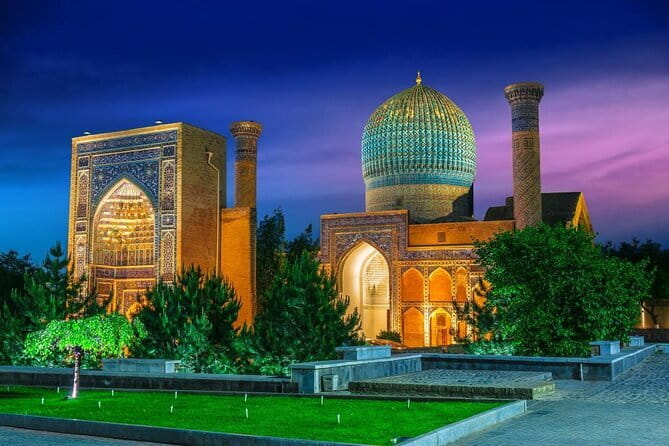
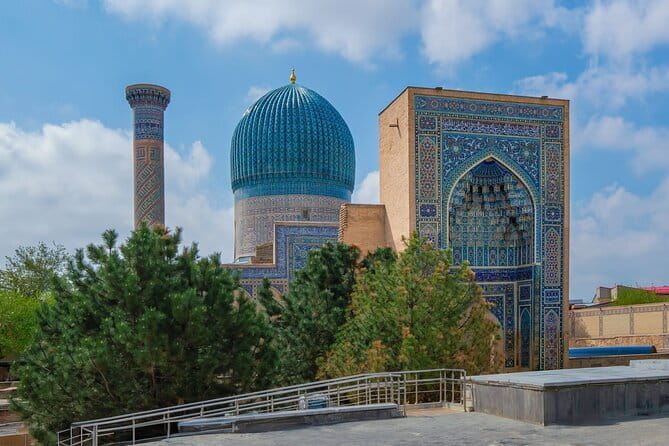
The first stop lasts about 50 minutes, and that is a sensible opening. Gur Emir is not simply another blue-domed building. It is the burial place of Amir Timur, his beloved grandson Muhammad Sultan, Ulugbek, and other members of the Timurid family.
Your guide explains the building’s architectural solutions, along with Timur’s ambitions and the fates of the people buried here. This is useful because Samarkand’s later monuments are closely tied to the Timurid period. Once you understand the dynasty, the rest of the tour has a clearer thread.
The stop is also a good test of your guide’s style. A dry list of rulers would miss the point. The best commentary connects family relationships, power, faith, and the city’s role in Central Asia. Fayoziddin is particularly well regarded for turning dates and names into memorable stories, often with a joke or two to keep the group alert.
Entrance is not included. The total monument admission is listed at about $6, though the exact amount can be paid locally in Uzbek som and may vary. Bring some flexibility for ticket costs rather than assuming the $16 covers every door.
Registan: three madrasahs, one unforgettable square
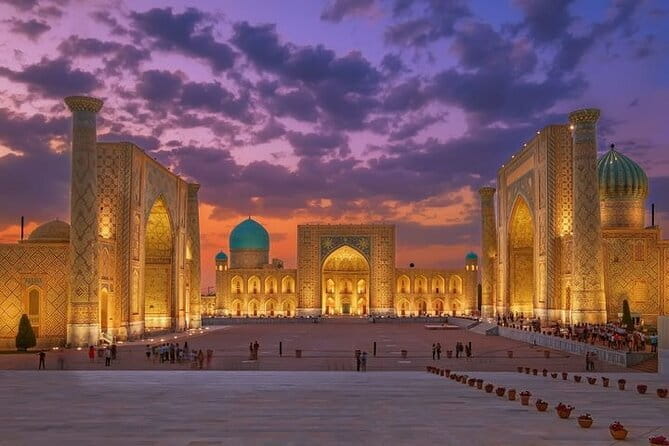
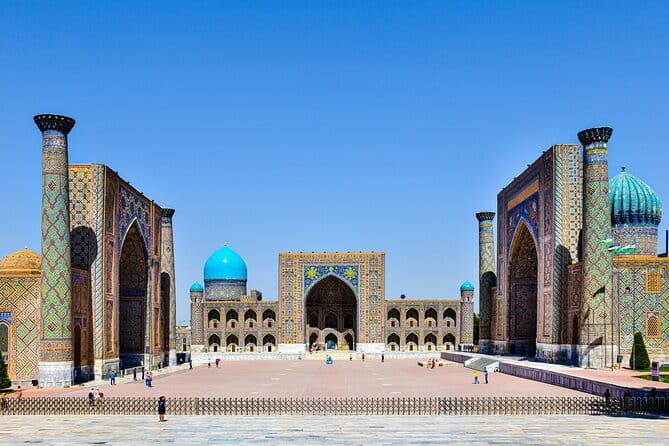
Registan receives about 45 minutes. This is the tour’s visual centerpiece, but it deserves more than a quick photograph. In the 15th through 17th centuries, the square served as an educational and spiritual center. Its three monumental madrasahs are Ulugbek, Sherdor, and Tillya-Kori.
Your guide explains how the buildings differ and points out details you might miss when looking at the square alone. The madrasahs form a powerful architectural composition, but they were built at different times and reflect changing periods of Timurid and later Central Asian life.
This is one place where the tour’s time limit matters. Forty-five minutes can give you a solid explanation and room for photographs, but it is not enough for a slow inspection of every courtyard, inscription, and display. One practical approach is to listen closely, take notes about the features that interest you, and return later with your bearings.
Several people have found this kind of introduction especially useful. You get the story first, then you can decide if Registan deserves another visit at a quieter hour. The guide can also explain the best time to return, which saves you from wandering around without a plan.
Admission is extra here as well. Since Registan is likely to be one of your main paid visits in Samarkand, check the current ticket price before the tour and keep local currency available.
Bibi Khanym: a grand ambition seen from outside
The stop at Bibi Khanym lasts about 40 minutes, but the mosque is viewed from outside. That limitation is important. If you want to examine the interior, you will need to come back independently and pay any applicable admission.
The guide connects Bibi Khanym to Amir Timur’s desire to build one of the greatest mosques in the world. That ambition helps explain the scale. You can expect discussion of the building’s history, Timur’s plans, and the legends tied to its construction.
The enormous dome and arch are the main visual draw. The tour description compares the arch’s size to the Milky Way, a wonderfully extravagant bit of local-style praise. Even from outside, the mosque gives you a strong sense of imperial scale.
I would not regard the exterior-only visit as a flaw if you understand the tour’s purpose. The stop gives you context and a chance to see the structure, but it does not replace a dedicated visit. If Bibi Khanym is high on your personal list, mark it for a later, slower stop.
Same stretch of the Silk Road, a different sort of day:
- Samarkand: Historical Monuments Guided Walking Tour
★ 4.8 · 446 reviews - Full Day Private Tour in Seven Lakes from Samarkand
★ 5.0 · 94 reviews - Samarkand One Day Tour: one day walking & group tour
★ 4.4 · 87 reviews - Samarkand: Shahrisabz Day Trip with Optional Local Guide
★ 4.9 · 81 reviews
Hazrat Khizr: a smaller mosque with an older story

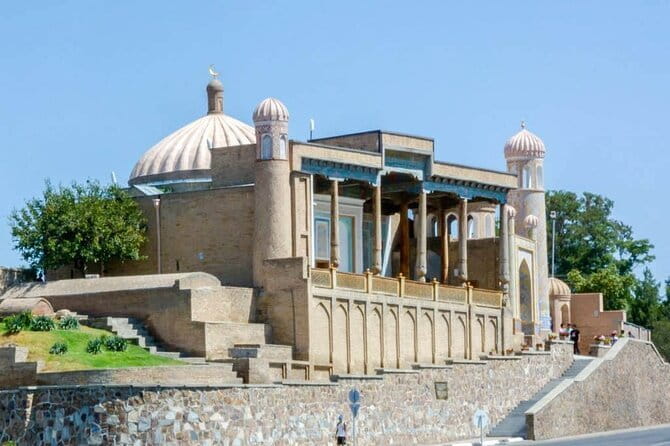
Hazrat Khizr Mosque receives about 30 minutes and is the only listed stop with admission included. The present mosque was reconstructed in the 19th century after an earlier mosque on the site was destroyed in the 13th century. The original place of worship dates back to the 8th century.
That long timeline makes this a useful contrast with the grand Timurid monuments. You are not only seeing restored imperial architecture. You are also hearing about a sacred site with roots reaching back much further.
The guide explains how the later structure replaced the earlier one and helps place it within Samarkand’s religious history. The shorter visit works here because the mosque is one part of a wider route, not the entire focus of the morning.
You should still pay attention to the walking conditions. The excursion is rated medium in difficulty, and only walking ability is required, but it is not recommended for people with serious leg problems. Comfortable shoes are a simple but important choice.
Shah-i-Zinda: ending among blue-tiled memorials
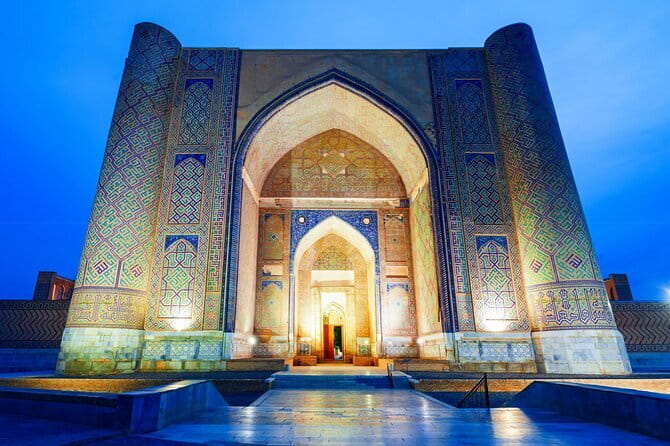
The final stop is Shah-i-Zinda, also written Shakhi-Zinda or Shoh-i-Zinda, and lasts about 45 minutes. The tour ends here, at the necropolis on Shohi Zinda Street.
This is one of Samarkand’s most atmospheric architectural groups. It is a memorial complex made up of mausoleums and sacred buildings, with a narrow route that brings you close to richly patterned tilework. The guide discusses the belief that the grave of Kusam ibn Abbas, an associate of the Prophet Muhammad, lies here.
That religious connection gives the complex a different tone from Registan or Gur Emir. You are not just looking at monumental architecture. You are entering a place linked to pilgrimage, memory, and faith. Listen carefully to the legends, but keep in mind that sacred traditions and historical certainty are not always the same thing.
Shah-i-Zinda is also where the tour’s walking demands become most noticeable. The route can require steady movement and attention to footing. Since the tour ends here, you can choose to linger afterward if you have the energy and a separate entrance ticket.
Ending at Shah-i-Zinda is convenient if you want to continue exploring this part of Samarkand. The meeting point is Gur Emir, and the stated end point is the Shah-i-Zinda necropolis. You should plan your next move in advance, since the tour does not return you to the starting point.
What the guides add to the experience
The provider, Fayoziddin, is the guide most often praised for this experience. He is described as a teacher who guides part time, and that background shows in the way the tour is structured. He explains the setting, gives historical context, allows time for photographs, and keeps the group moving.
His style seems particularly useful if you enjoy facts but do not want a lecture. He has been praised for a good sense of humor, clear English, patience, and the ability to keep everyone involved. He also speaks five languages, according to one detailed account, though you should confirm the language available for your departure when booking.
Sitora offers a different but equally appealing approach. She is described as bubbly, funny, kind, and well informed. If you prefer a guide who creates easy conversation within the group, she may be a good match.
Javlonbek has used prepared material, including photographs showing monuments before restoration. That can add an important layer to Samarkand, where restored surfaces can make ancient buildings look almost new. Seeing earlier images helps you understand that preservation is an ongoing process, not a simple return to an untouched past.
Guide assignments can change, so book this experience for the route and format rather than for one guaranteed personality. Still, the repeated praise for the guiding team is one of the tour’s strongest assets.
Timing, group size, and the walking pace
The advertised duration is about three hours and 30 minutes. The five stops add up to 210 minutes, exactly three and a half hours, before accounting for movement between them. That tells you something important: the schedule is tightly planned.
You should expect focused visits rather than long, leisurely stays. Some parts of the tour allow around 15 minutes of free time for photographs or a quick look around. Guides have also built in short coffee and restroom breaks on some departures, but do not assume every tour will follow the same pause pattern.
The maximum group size is 20 people. That is still manageable, but the experience will feel different with five people than with a full group. Small groups make it easier to ask questions and hear the guide near busy buildings. A larger group may require you to stay close and keep an eye on where the guide is standing.
The tour is described as a walking excursion, with travel time from pickup until drop-off noted separately in the description. Confirm the exact meeting instructions and how the group moves between stops when you book. The key point is that you should be ready to walk and should not plan a slow, independent exploration of every site during the scheduled time.
Is the $16 price fair?
Yes, for the right purpose. At $16 per person, this is an inexpensive way to get a guided introduction to five of Samarkand’s headline sights. You receive the guide service and walking tour, while entrance fees to most monuments are separate. The listed monument admissions total about $6.
That means the real cost is higher than the headline price, but still modest for a half-day experience. The value comes from the route, the historical explanation, and the time saved figuring out how the monuments connect.
I would not choose this tour if you want a private guide, long interior visits, or a slow photography session. I would choose it if you have limited time, want to get your bearings, or prefer to understand a site before returning on your own.
Group discounts are available, and the tour has a mobile ticket. Free cancellation is allowed up to 24 hours before the start time. Changes or cancellations within 24 hours are not refundable, so keep that deadline in mind.
Who should book this Samarkand tour?
This experience suits first-time visitors who want a clear introduction without paying for a full private day. It is also useful for anyone arriving in Samarkand with several days available, since the guide can help you decide which monuments deserve a second visit.
History fans should enjoy the focus on Amir Timur, the Timurid family, religious sites, and the changing role of Samarkand. You will also get cultural and restaurant suggestions from guides such as Fayoziddin, which can help shape the rest of your stay. One guide even took a group to a shop for Napoleon cake, a small local-style detour that added personality to the outing.
The tour may be less suitable if you want equal attention to every part of Central Asian history. The main emphasis is on Samarkand’s dynasties, architecture, and religious heritage. If you are looking for a broad social and political history of the entire region, you may want another source or a longer private tour.
The walking level is moderate. You need only the ability to walk, but serious leg problems may make the route uncomfortable. Plan for sun, uneven surfaces, and limited time to rest, using the breaks when they are offered.
Should you book it?
I would book this tour as a first-day orientation, especially at $16. It covers the monuments you most want to recognize, gives you memorable stories instead of isolated facts, and helps you plan your remaining time in Samarkand.
Go in knowing what it is: a brisk, guided introduction. Pay the extra entrance fees, wear comfortable shoes, stay near your guide, and save time later for the interiors you care about most. If you want a private, slow, deeply detailed visit, choose a different format. For a friendly and efficient starting point, this is a strong value.
FAQ
How long does the Samarkand city tour last?
The tour lasts approximately three hours and 30 minutes, including the scheduled stops and travel time from pickup until drop-off.
Which places are included?
The route visits Gur Emir Mausoleum, Registan Square, Bibi Khanym Mosque, Hazrat Khizr Mosque, and the Shah-i-Zinda memorial complex.
Are entrance fees included in the price?
No. Entrance fees to the monuments are not included, and the stated cost for monument admissions is $6. Hazrat Khizr Mosque is listed as having admission included.
Can I visit the inside of Bibi Khanym Mosque?
The Bibi Khanym stop is outside only. You would need to return separately if you want an interior visit.
Where does the tour start and end?
The tour starts at the Amir Temur Mausoleum, Gur-i-Amir Complex, on Oqsaroy 1, and ends at the Shah-i-Zinda necropolis on Shohi Zinda Street.
Is the tour suitable for people with limited mobility?
The excursion requires walking and has a medium difficulty level. It is not recommended for people with serious leg problems.
Freshly added in Samarkand
- Uzbek wedding ceremony★ 5.0 · 2 reviews
- Wine tour in Samarkand (Baguizagan) English★ 5.0 · 2 reviews
- Samarkand Capital of Amir Timur Private Tour with Transport★ 5.0 · 3 reviews
- Shakhrisabz Private Day Tour from Samarkand★ 5.0 · 4 reviews
- Seven Lakes Panjakent: One-Day Adventure from Samarkand★ 5.0 · 3 reviews
- The Golden City of Samarkand: A Self-Guided Audio Tour★ 4.0 · 4 reviews
- Tadjikistan 7 Lakes Day Trip from Samarkand with Lunch★ 5.0 · 5 reviews
- Ancient and Modern tour in Samarkand with Transport★ 5.0 · 3 reviews
City Tours, compared.
Khiva: Historical City Highlights Guided Walking Tour
Read our review →
Private Samarkand City Tour With Transportation
Read our review →
Tashkent: Private Full-Day City Tour on a Premium Car
Read our review →
Khiva Historical City Highlights Guided Walking Tour
Read our review →Browse the lists this tour appears in