
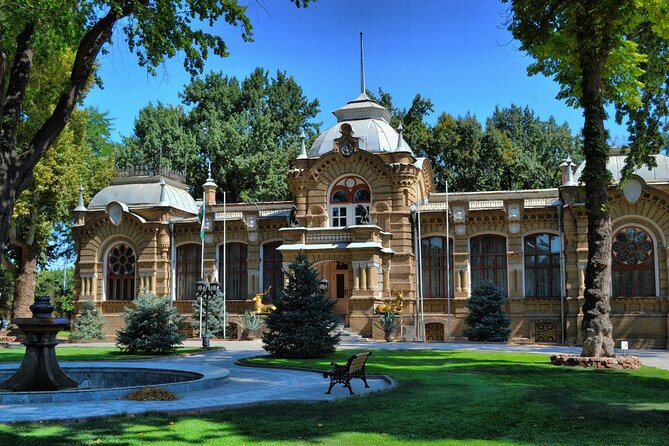
Reviewed · WALKING TOURS
Tashkent Walking Tour
Tashkent reveals itself on foot. This $35 private tour links grand Soviet-era squares, a beautiful metro, an old bazaar, and the city’s most important Islamic complex in four to five hours. I like the wide range of sights and the chance to ride the Tashkent Metro, an attraction in its own right. I also like that your group gets a guide rather than being folded into a large crowd. The main drawback is distance: the route can reach about 10 kilometers, and the long transfer from the modern center to Chorsu and Hazrati Imam may feel tiring.
The strongest part is the human touch. Guides such as Ali, Nuriddin, and Abdunazar have been praised for clear explanations, patience, strong language skills, and a willingness to pause for photographs and questions. Still, you should confirm the meeting details before setting out, since one booking ended badly when the guide failed to appear and the listed phone number was no longer valid.
In This Review
- Key points to know before booking
- Starting at Amir Timur Square in modern Tashkent
- Broadway Alley, a former swamp turned city promenade
- Inside the Alisher Navoi Opera Theater story
- Independence Square and the symbols of a new state
- Riding Tashkent Metro, the city’s underground museum
- Chorsu Bazaar, where old Tashkent feels close
- Hazrati Imam Complex and the Uthman Quran
- What the $35 price really buys you
- Guides, languages, and the pace on foot
- Who should book this Tashkent tour?
- Should you book the Tashkent Walking Tour?
- FAQ
- Where does the Tashkent Walking Tour start?
- Where does the tour finish?
- How long does the tour last?
- Is the Tashkent Metro ticket included?
- What languages are available?
- Is this a group tour or a private tour?
Key points to know before booking
- A private four-to-five-hour route: Your group has the guide to itself, which makes it easier to ask questions, adjust the pace, and stop for photos.
- The metro is part of the sightseeing: You spend about an hour visiting Tashkent stations, but the subway fare is extra.
- The route crosses two very different Tashkents: You begin among modern squares and theaters, then finish at Chorsu Bazaar and the Hazrati Imam Complex.
- The walking can be serious: One account describes a roughly 10-kilometer afternoon, so good shoes and water matter.
- Language choice is a real advantage: Guides are listed in English, Russian, Spanish, French, and German.
- The end point is fixed: The tour finishes at Hazrati Imam Mosque, not back at Hotel Uzbekistan.
Starting at Amir Timur Square in modern Tashkent
The meeting point is Hotel Uzbekistan on Mirzamakhmud Musakhanov Street, beside Amir Timur Square. This is a useful place to begin because the square gives you a quick lesson in how Tashkent has repeatedly rewritten its public identity.
Today, the square is marked by a monument to Tamerlane, the medieval ruler known locally as Amir Timur. Before that, the space held monuments to Stalin and Marx. It was also linked to the growth of the first university and bank in Central Asia. Your guide can connect those changes to the wider story of Uzbekistan, where Soviet symbols have gradually given way to national ones.
You spend about 30 minutes here, with no admission charge. That is enough time for an introduction, photographs, and a look at the broad avenues around the square. Do not expect a tight cluster of old buildings. This part of Tashkent feels planned, spacious, and official, with the scale of a capital city rather than a compact historic town.
That contrast is useful. If you arrive expecting a Central Asian old quarter from the first minute, you may wonder where the ancient city has gone. The answer comes later. Amir Timur Square shows you the newer face of Tashkent first.
More Walking Tours in Tashkent
- Tashkent Walking Tour with Local Lady / Gentleman
★ 4.5 · 29 reviews - Tashkent Walking & Food Tour: Highlights + Local Flavors
★ 5.0 · 18 reviews - Tashkent City Highlights Guided Walking Tour
★ 5.0 · 6 reviews
Broadway Alley, a former swamp turned city promenade
From the square, the route continues along Sayilgoh, known as Broadway Alley. The name sounds grander than the place may feel, but the stop gives you a pleasant look at everyday city life and public leisure.
The site was once a swamp. It was drained and turned into a recreation area for the soldiers of the tsarist period. Today, it functions as a central entertainment and walking zone for local residents. Your guide can explain how a place that began as a military-era leisure area became part of modern Tashkent’s social center.
Allow about 30 minutes. The stop is less about a single monument and more about seeing how the city uses its central space. It also breaks up the formal architecture of the opening stop. You can take photographs, watch the flow of people, and get a sense of the capital beyond its government buildings.
The limitation is simple: this is an urban promenade, not an ancient sight. If your main goal is medieval architecture, save your energy for Chorsu and Hazrati Imam. If you enjoy observing how a city lives between major monuments, Broadway Alley earns its place.
Inside the Alisher Navoi Opera Theater story
The Alisher Navoi Theater is one of the tour’s most worthwhile architectural stops. It is described as the first opera and ballet theater in Central Asia and is now one of Tashkent’s best-known buildings.
The key feature is its blend of folk art and neoclassical design. That combination matters because it reflects the way Soviet cultural institutions were often given local artistic details. The result is not simply a European-style theater transplanted into Central Asia. It carries Uzbek decorative ideas within a formal theater structure.
The itinerary allows 30 minutes, and admission is listed as free. You should treat this as an exterior and historical stop unless your guide confirms that an interior visit is available. The tour information does not promise a performance or a full backstage visit.
For you, the value lies in the explanation. A quick photograph of the facade is pleasant, but the theater becomes more interesting when you understand its place in regional culture. It is also a calmer stop before the large official spaces of Independence Square.
Independence Square and the symbols of a new state
Mustaqillik Square, or Independence Square, is the main square of Uzbekistan. Government offices, including the Cabinet and Senate, are located here, making it the country’s central administrative zone.
The square represents independence today, but it once served as an administrative center under a different political system. That shift gives your guide a chance to explain how public places acquire new meaning. Names, monuments, and ceremonies change, while the same broad urban space continues to frame national life.
You spend about 30 minutes here, with no listed admission cost. The stop is mostly visual and historical. Expect wide open space, formal planning, and government architecture rather than market stalls or intimate lanes.
This is one place where a good guide makes a large difference. Without context, a government square can seem like a broad empty plaza. With a clear explanation, it becomes a lesson in how Uzbekistan presents itself as an independent country.
Because the area has official buildings, follow your guide’s instructions about photography and where to walk. The supplied details do not state specific restrictions, so it is sensible to ask before taking close images of administrative facilities.
Same stretch of the Silk Road, a different sort of day:
- Best of Tashkent Mountains: Amirsoy, Chimgan & Charvak Trip
★ 4.8 · 567 reviews - Samarkand One Day Tour – Departure From Tashkent
★ 5.0 · 313 reviews - Tashkent City Tour
★ 5.0 · 121 reviews - Shymkent Day Tour from Tashkent
★ 4.6 · 71 reviews
Riding Tashkent Metro, the city’s underground museum
The Tashkent Metro is the tour’s most distinctive modern attraction. Opened as the first metro in Central Asia, it is often described as an underground museum because the stations do not repeat the same decorative treatment.
The itinerary gives this section about one hour. That is a generous amount of time compared with the short stops above ground, and rightly so. You are not merely using the subway to move across town. You are visiting a sequence of decorated public interiors, each with its own design.
The metro fare is not included, so bring a small amount for the ride. The tour price covers the professional guide and listed fees and taxes, but not the subway or other personal spending. Entrance tickets not specified in the program are also extra.
This part is especially useful because it turns local transport into sightseeing. You avoid treating the metro as dead time between attractions. Instead, the ride becomes a look at Tashkent’s public art and civic design.
The pace may feel different here. You will spend less time outdoors and may need to follow station rules closely. Still, the metro is one of the clearest reasons to choose this tour instead of only walking around central squares. It gives you a side of Tashkent that is hard to appreciate from the street.
Chorsu Bazaar, where old Tashkent feels close
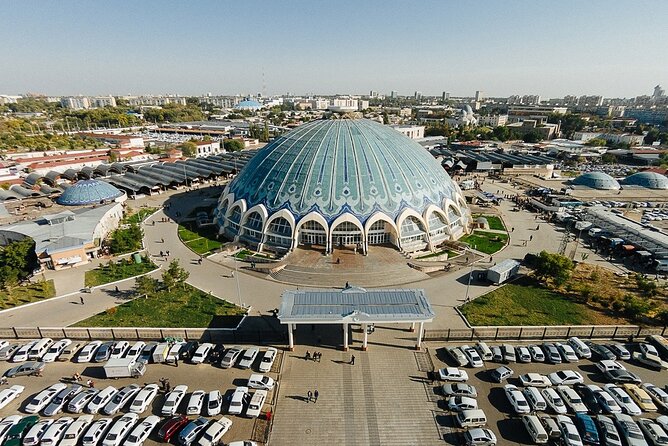
Chorsu Bazaar is described as the oldest bazaar in Uzbekistan and the heart of the old city. This is where the tour shifts most sharply from official Tashkent to a more commercial and traditional setting.
A bazaar is best understood through its details: the movement of shoppers, the arrangement of goods, the architecture of the market, and the way food and trade shape daily life. The tour allows about 40 minutes, enough for an introduction and a look around, but not necessarily enough for a slow, extended shopping trip.
Keep your expectations practical. This is a working market, not a staged cultural display. You may find noise, crowds, strong smells, and a lot to look at in a short time. Your guide can help explain what you are seeing and keep the visit focused.
If you want to buy something, remember that personal expenses are not included. The tour data does not promise tastings, shopping assistance, or a set amount of free time, so ask your guide before wandering off. Forty minutes passes quickly in a market.
Chorsu is also an important midpoint in the city’s story. The opening stops show state power, cultural institutions, and modern planning. Here, trade and ordinary urban life take over. That change is one of the tour’s best features.
Hazrati Imam Complex and the Uthman Quran
The tour ends at the Hazrati Imam Complex, also called the Hasit Imam or Khasit Imam Complex in the supplied details. The exact spelling varies, but the destination is clear: the historic and religious center around Hazrati Imam Mosque.
This is described as Tashkent’s most important pilgrimage site. The complex includes the Barakhan and Tillesheyh madrasas, mosques, and the mausoleum of one of Tashkent’s first imams. You have about an hour here, which gives the guide time to explain the buildings and their religious importance.
The most notable object is one of four surviving manuscripts of the Quran from the seventh century. That detail gives the visit unusual weight. You are not only seeing a group of historic buildings. You are visiting a place connected to one of the earliest surviving Quranic manuscripts.
Entrance tickets are not included where applicable, so carry extra money and confirm the current arrangements with your guide. The tour details do not state a fixed entry price or guarantee access to every interior. Modest clothing is a sensible choice at a major religious complex, even though a formal dress rule is not specified in the supplied information.
The tour ends here at Hazrati Imam Mosque. That is convenient if you want to continue exploring the old city, but less convenient if your hotel is back in the modern center. Plan your return before you begin, especially after several hours on foot.
What the $35 price really buys you
At $35, the tour offers good value if you want one guided sweep through Tashkent’s main contrasts. You get a private guide for your group, a route that takes about four to five hours, and interpretation at seven major stops.
The price is not an all-inclusive sightseeing pass. You still pay for the metro, entrance tickets, food, shopping, and personal expenses. Even so, the guide is doing more than leading you from one address to the next. The best value comes from the historical links between places: changing monuments at Amir Timur Square, Soviet and national symbols, the theater’s local decoration, the metro’s station art, and the religious importance of Hazrati Imam.
A group discount may improve the deal for larger parties. Since this is a private activity, the cost can also make more sense when shared among several people. Solo visitors should weigh the price against the convenience of a dedicated guide and the broad coverage in a single afternoon.
The rating is 4.4 from seven ratings, which suggests a generally positive experience but not a flawless record. The praise centers on guide quality, clear communication, language ability, patience, and a well-paced route. One serious service failure involved no guide appearing and an invalid contact number. That is not a small issue, so confirm your booking and meeting point before the start time.
Guides, languages, and the pace on foot
The available guide languages are English, Russian, Spanish, French, and German. That is valuable in Tashkent, where a guide who can explain political, religious, and architectural subjects in your preferred language can change the whole experience.
Ali has been singled out for excellent English and strong explanations that place local sights in a wider regional setting. Nuriddin was praised for polite communication and for giving an arrival update when delayed. Abdunazar provided a Spanish-language tour and was described as patient and easy to relate to.
Those details point to the main strength of this experience: the guide can make a broad itinerary feel connected rather than rushed. A patient guide may wait while you photograph an interesting building, and a private group can ask more questions than a large tour usually allows.
The route is still physically demanding. One account describes a 10-kilometer walk, while the advertised duration is four to five hours. Wear comfortable shoes, carry water, and be ready for a mixture of walking and public transport. The tour is near public transportation, and most people can participate, but the supplied information does not promise a reduced walking option.
Who should book this Tashkent tour?
I would choose this tour for a first full day or first major afternoon in Tashkent. It gives you a useful framework: modern central Tashkent, national symbols, the metro, the old bazaar, and the main Islamic complex.
It suits you especially well if:
- You want a private guide and room for questions.
- You prefer seeing major sights in one organized route.
- You enjoy architecture, public spaces, markets, and religious history.
- You need a guide in English, Russian, Spanish, French, or German.
- You are comfortable walking several kilometers.
I would hesitate if you want a slow market visit, long interior visits, or a tour focused only on medieval monuments. The first half is strongly modern and civic, and the fixed end point means you may need to arrange your own return.
You can cancel for a full refund up to 24 hours before the local start time. Cancellations or changes inside that window are not refunded or accepted.
Should you book the Tashkent Walking Tour?
Book it if you want a broad, guide-led introduction to the city and you are ready to walk. The combination of the decorated metro, Chorsu Bazaar, and Hazrati Imam Complex gives the tour more range than a standard central-city stroll.
Before paying, confirm the start time, meeting point at Hotel Uzbekistan, guide contact details, language, and the extra cost of the metro or any entrance tickets. If those details are clear, $35 is a fair price for a private half-day route that shows you both the official capital and the older heart of Tashkent.
FAQ
Where does the Tashkent Walking Tour start?
The tour starts at Hotel Uzbekistan, located at Mirzamakhmud Musakhanov Street 45 in Tashkent.
Where does the tour finish?
The tour ends at Hazrati Imam Mosque in the Khasit Imam Complex area.
How long does the tour last?
The tour lasts approximately four to five hours. The individual stops total several hours, including one hour at the Tashkent Metro and one hour at the Hazrati Imam Complex.
Is the Tashkent Metro ticket included?
No. The metro or subway fare is not included in the tour price.
What languages are available?
The professional guide is listed as available in English, Russian, Spanish, French, and German.
Is this a group tour or a private tour?
This is a private activity. Only your group participates, and group discounts are available.
Freshly added in Tashkent
- Uzbek Brews & Views: Tashkent Craft Beer Discovery Tour★ 5.0 · 2 reviews
- Uzbekistan Tour – 6 Days 5 Nights★ 5.0 · 4 reviews
- Tashkent International Airport (TAS) to Tashkent – Arrival Private Transfer★ 5.0 · 2 reviews
- 8-Day Private Tour in Uzbekistan with Pick Up★ 5.0 · 2 reviews
- Tashkent-Samarkand-Bukhara tour-3nights/4 days★ 5.0 · 5 reviews
- Tashkent Food and Metro Journey★ 5.0 · 4 reviews
- Private Intercity Transfer Tashkent – Samarkand – Tashkent★ 3.5 · 3 reviews
- Tashkent Mountain Tour Amirsoy with Transport★ 3.5 · 3 reviews
Walking Tours, compared.
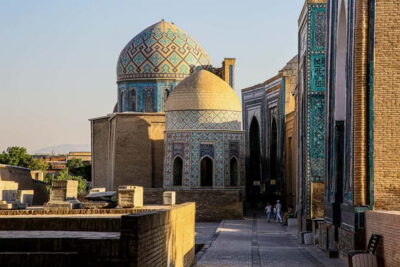
Samarkand: Historical Monuments Guided Walking Tour
Read our review →Khiva: Historical City Highlights Guided Walking Tour
Read our review →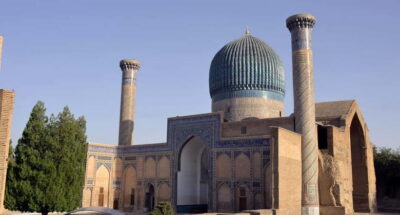
Samarkand One Day Tour: one day walking & group tour
Read our review →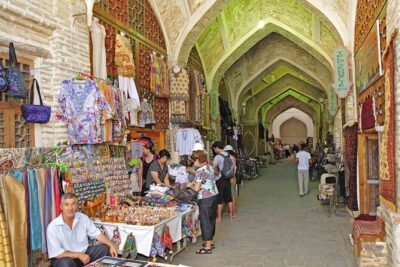
Khiva Historical City Highlights Guided Walking Tour
Read our review →
Samarkand: Historical Monuments Group Walking Tour
Read our review →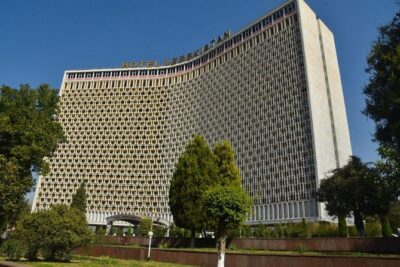
Tashkent Walking Tour with Local Lady / Gentleman
Read our review →Browse the lists this tour appears in