
Reviewed · COOKING CLASSES
Tashkent Walking & Food Tour: Highlights + Local Flavors
Tashkent rewards a curious first walk. This $25 city tour links grand Soviet-era spaces, Islamic landmarks, the artistic metro, and Chorsu Bazaar in three to four hours. I like the choice between a walking tour, a food-focused outing, or a combined experience. I also like the local angle, with guides such as Asrorbek, Golib, Muhammad, and Murodil sharing daily life alongside the major sights.
The main consideration is that the experience can vary with your guide. One guide, Murodil, was still learning the job, while Asrorbek earned strong praise for clear explanations and flexible timing. You also pay separately for the metro, and food tastings are optional rather than built into the $25 price.
In This Review
- What makes this Tashkent tour worth considering
- A useful first look at Tashkent
- Amir Temur Square and Tashkent’s modern center
- Independence Square and the public memory of Uzbekistan
- Riding the Tashkent Metro for art and history
- Hazrati Imam, Barak Khan, and Tillya Sheikh
- Chorsu Bazaar and the food side of the tour
- How the guides shape the experience
- Is $25 good value in Tashkent?
- Who should book this experience?
- Practical details before you book
- My verdict: a strong first-day city tour
- FAQ
- How much does the Tashkent Walking and Food Tour cost?
- How long does the experience last?
- Where does the tour begin?
- Where does the tour end?
- Can I choose only a walking tour or a food tour?
- Is the metro ticket included?
- Are entrance fees included?
- What can I see at Chorsu Bazaar?
- What is the maximum group size?
- What is the cancellation policy?
What makes this Tashkent tour worth considering
- Amir Temur Square sets the story: Learn how Amir Timur became a national symbol while viewing his equestrian statue and Hotel Uzbekistan.
- The metro is part of the sightseeing: Ride to stations such as Alisher Navoi and Kosmonavtlar, where underground design is as important as transportation.
- Hazrati Imam brings together major Islamic sites: See Barak Khan Madrasa, Tillya Sheikh Mosque, and the Muyi Muborak Library.
- Chorsu Bazaar adds real local flavor: Browse bread, spices, dried fruit, sweets, and crafts, with optional snacks available at your own cost.
- The group stays manageable: A maximum of 15 people gives the guide room to answer questions and adjust the pace.
- Flexible timing is a real advantage: Asrorbek accommodated a last-minute request to start one hour later and adjusted the route so the guest did not miss key stops.
A useful first look at Tashkent
I see this experience as an introduction rather than a full study of the Uzbek capital. It covers several parts of the city, and the stops show how Tashkent mixes imperial memory, Soviet planning, modern shopping streets, Islamic learning, and everyday commerce.
The route also gives you several ways to experience the city. You can focus on architecture and history, choose a food outing, or combine both. The combined option makes the best use of your first day, especially if you want an overview before exploring independently.
The tour begins and ends at Hotel Uzbekistan on Mirzamakhmud Musakhanov Street 45. That gives you a clear meeting point in a central part of the city. You should expect a fair amount of walking, standing, and moving between sights, though the metro ride breaks up the pace.
The maximum group size is 15 people. That is not a private tour, but it is small enough to keep the guide from becoming a distant voice at the back of a crowd. I would still tell the provider about any timing needs before the day begins. The flexible approach shown by Asrorbek is useful, but it should not be assumed for every departure.
More Cooking Classes in Tashkent
- Tashkent: Uzbek Culture, Food, Crafts & Pottery Masterclass
★ 5.0 · 24 reviews - Tashkent: Cultural Exploration & Pottery Masterclass
★ 5.0 · 24 reviews - Tashkent Vegan Street Food Tour
★ 5.0 · 22 reviews
Amir Temur Square and Tashkent’s modern center
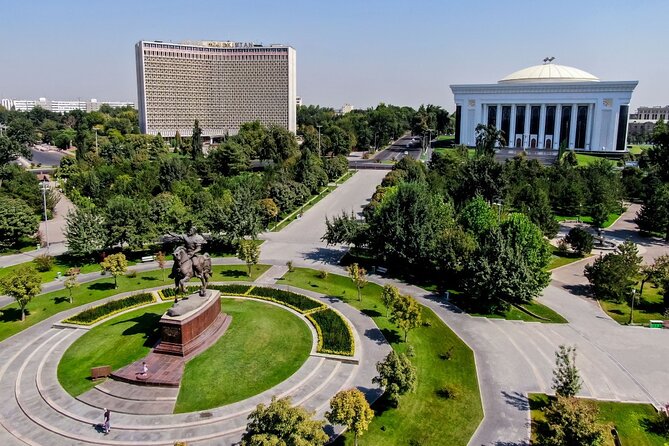
The first major stop is Amir Temur Square, usually a good place to begin understanding how Uzbekistan presents its national story. You spend about 20 to 30 minutes here, hearing about Amir Timur, also known as Tamerlane, his empire, and his place in modern Uzbek identity.
The equestrian statue gives you the obvious photo stop, while the grand Hotel Uzbekistan supplies a strong example of the city’s monumental style. This is not a quiet old-town square. It is a formal civic space, and the guide’s explanation helps connect the statue to the country’s wider public image.
I like this opening because it gives the tour a clear frame. You are not simply taking pictures of a monument. You are learning why this figure matters so much in Uzbekistan today. The stop is also short enough that it does not drain your energy early in the tour.
From here, the walk continues along a shaded boulevard described as the heartbeat of modern Tashkent. You pass cafés, designer boutiques, and fountains. This section adds a useful contrast to the historic monuments. Tashkent is not presented as a museum city frozen in the past. It is also a modern capital with polished public spaces and contemporary shopping.
The boulevard is a good spot to ask your guide about daily life, prices, food, or where to return later. Since the route includes cafés and shops but does not schedule a meal here, treat this part as a city walk rather than a shopping stop.
Independence Square and the public memory of Uzbekistan
Independence Square, also called Mustakillik Square, takes about 25 to 30 minutes. You walk through the Arch of Independence, decorated with storks that represent peace, then see the Independence Monument and the Eternal Flame for fallen soldiers.
This stop shifts the focus from one historic ruler to the modern Uzbek state. The symbols are formal and carefully arranged, so the guide’s context matters. Without explanation, you might see an arch, a monument, and a flame. With a guide, you can better understand how public spaces present independence, peace, and remembrance.
I would not expect a dense cluster of old buildings here. The value lies in the scale, symbolism, and contrast with the market later in the day. The square shows the official face of Tashkent. Chorsu Bazaar shows the city at street level.
Because the tour covers several major areas in a few hours, the time at each site is limited. If you want long photo sessions or extended discussion at every monument, this pace may feel brisk. If you want a first orientation, the short stop works well.
Riding the Tashkent Metro for art and history
The metro portion is one of the most distinctive parts of the experience. You ride between several artistic stations, including Alisher Navoi and Kosmonavtlar, and learn about Soviet influence on the designs as well as recent modernization.
This is more than a practical transfer. Tashkent’s metro stations are treated as underground public art, and the ride lets you see another side of the capital. The stations offer strong photo opportunities, though you should follow the guide’s instructions about photography and local rules.
The tour includes guidance, but the metro ticket is not included in the $25 price. Bring a small amount of local currency or be ready to purchase your own ticket. One useful detail from the experience is that Muhammad, a student guide, once used his own student pass to help a participant enter while the right fare was being sorted out. That was a kind gesture, but you should not count on a guide paying your transport costs.
This stop also breaks up the walking. You get to sit or stand on the train for part of the route, then continue with fresh visual material. For me, it is one of the strongest reasons to choose the combined city tour over a basic walk through squares and monuments.
More Food Tours in Tashkent
- With John Private Tashkent city & Food tour
★ 5.0 · 13 reviews - Food tour in Tashkent
★ 4.7 · 7 reviews - Ten Bites Adventure Food Tour in Tashkent
★ 5.0 · 6 reviews - Food tour in Tashkent
★ 5.0 · 5 reviews
Hazrati Imam, Barak Khan, and Tillya Sheikh
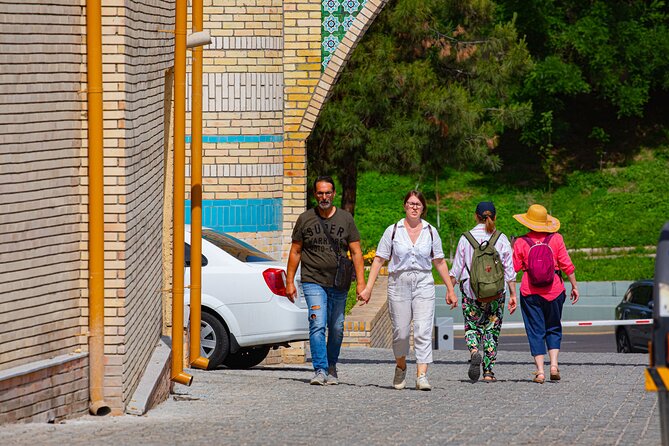
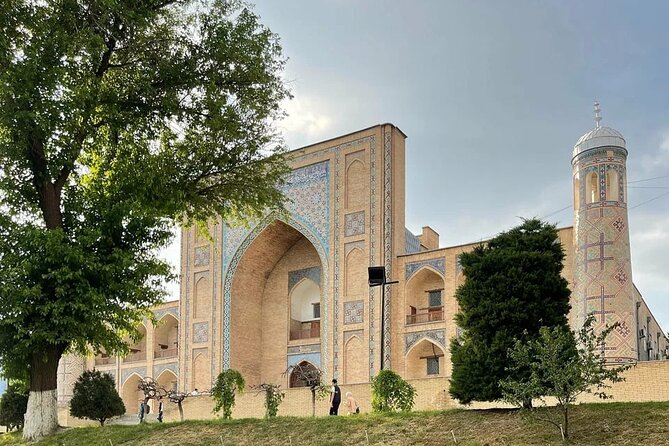
The Hazrati Imam complex takes about 30 to 40 minutes and provides the most important religious setting on the route. You visit or view the Barak Khan Madrasa, Tillya Sheikh Mosque, and Muyi Muborak Library.
The complex introduces Islamic learning traditions and the religious importance of Tashkent. The buildings have a different mood from the formal central squares, with courtyards, detailed façades, and places tied to scholarship and worship.
Barak Khan Madrasa dates from the 16th century and is known for its intricate exterior design. The stop itself is listed as a brief five-minute visit, but the larger complex receives more time. That distinction matters. You may get an overview of several buildings rather than a long, quiet examination of every courtyard.
Tillya Sheikh Mosque is presented as an important symbol of Tashkent’s Islamic tradition and historic grandeur. As with any active religious site, dress and behavior deserve care. The supplied information does not set out a dress code, so ask your guide if you are unsure about clothing or photography.
Muyi Muborak is a library museum with ancient manuscripts and the Uthman Quran, described here as the oldest known Quran manuscript in the world. Access to the Uthman Quran Museum is usually free, though entrance is marked as not included. I would confirm the current access details with the guide on the day, since the information is slightly mixed.
The Hazrati Imam section is especially valuable if you want more than modern city views. It places Tashkent within a long tradition of religious study and manuscript preservation. It also gives the tour a strong change of pace after the metro and civic squares.
Chorsu Bazaar and the food side of the tour
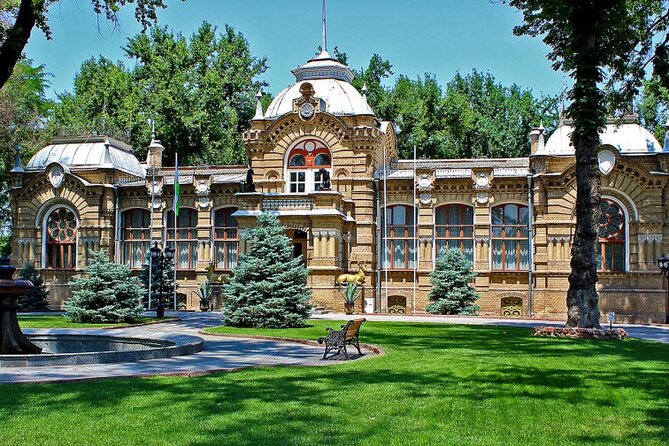
Chorsu Bazaar is where the experience becomes most sensory and informal. You spend about 30 to 40 minutes among stalls selling spices, dried fruit, sweets, bread, and crafts.
You may watch traditional bread-making and speak with local vendors. The market is a natural place to slow down, ask questions, and notice what people buy for ordinary meals and celebrations. It is also the clearest part of the route for anyone choosing the food option.
Optional local snacks are available, but they are not included in the tour price. That arrangement gives you control. You can sample something that catches your eye, skip food if you have dietary concerns, or spend only a little extra. Do not mistake the food tour option for a fixed tasting menu. The supplied details promise local spots and authentic Uzbek dishes, but they do not provide a set list of dishes or a guaranteed number of tastings.
I like that the market is not reduced to a quick photo stop. The guide can help explain ingredients, bread, and local buying habits. You should keep your expectations practical, though. Thirty to 40 minutes is enough for a first look and a few bites, not a full market study or leisurely meal.
If food is your top priority, ask in advance how the food-focused version differs from the combined route. The experience allows you to choose a local food tour, a walking tour, or both, but the exact food schedule is not specified.
How the guides shape the experience
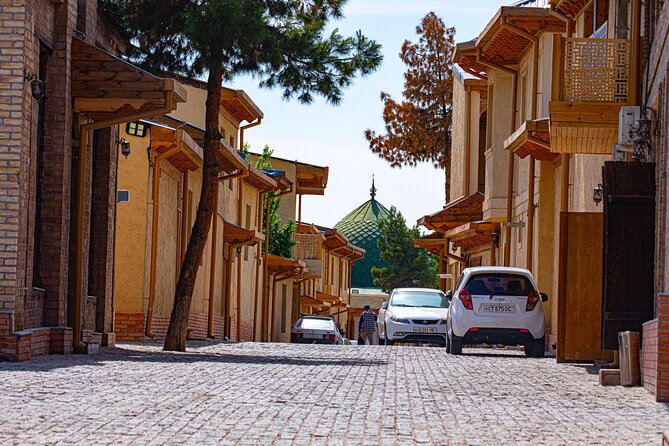
The strongest praised qualities are clear explanations, friendly service, and flexibility. Asrorbek is repeatedly singled out for presenting history in an easy-to-follow way and for adapting the start time when a guest needed to arrive one hour later. He also customized the route so the guest did not miss the main sights and included Magic City during that adjusted outing.
Golib is praised for guiding a full day of walking, which suggests a comfortable, active approach. Muhammad brought a student’s perspective and helped with a metro ticket issue. Murodil was described as new to guiding but encouraging and pleasant company.
That mix tells you something useful. The provider is not offering a single highly standardized personality. Your experience may depend on who leads the group. If you want a guide with more established experience, request a particular guide if the provider allows it, or ask who is scheduled before booking.
The overall rating is 4.9 from 18 reviews, with 100 percent recommending the experience. That is a strong signal, especially for a low-cost introductory tour, but the small number means I would still keep expectations realistic. The tour appears strongest as a friendly orientation with local explanation, not as a specialist architectural or religious study.
Is $25 good value in Tashkent?
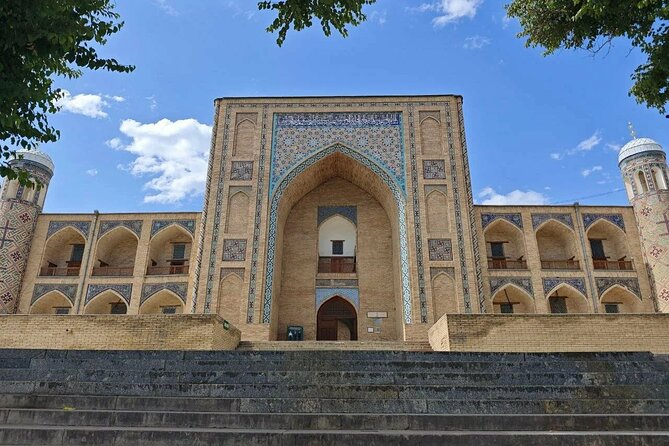
At $25 per person, the price is attractive for a three to four-hour outing that combines a guide, several major sights, a metro ride, and a market visit. You are paying for interpretation and structure, not expensive admissions or a formal meal.
The guide is included. Suggestions are also included, which can be useful when you want advice on what to eat or see next. Metro fare, any entrance fees, and optional snacks are extra. The Uthman Quran Museum is usually free, but access details should be checked locally.
For value, I would compare this with the cost of arranging separate taxis, finding the metro stations alone, and working out the historical context without help. The tour puts the city’s central spaces and religious quarter into one manageable session. That is a good deal if you are new to Tashkent or have limited time.
The value is lower if you already know the city well, want a private pace, or expect a substantial included food meal. Group discounts may be available, and the maximum group size is 15, so ask about the discount if you are booking for several people.
Who should book this experience?
I would recommend it most strongly for a first visit, a short stay, or your first hours in Uzbekistan. One participant used the walking tour at the beginning of a trip and found it a helpful introduction. That makes sense: the route quickly explains the city’s public spaces, metro, religious center, and market culture.
It also suits you if you like mixing walking with public transport and want a guide who can explain context rather than simply point out buildings. Families and most generally active participants should be able to take part, according to the supplied participation information.
You may want a different arrangement if you need a private guide, a slow photography schedule, a confirmed meal, or extensive time inside each religious building. The route is broad, and broad routes always involve some short stops.
The experience is also a sensible choice for curious solo visitors. A maximum of 15 people offers some company without the scale of a large coach outing. Group discounts may help if you are traveling with friends or family.
Practical details before you book
Confirmation is provided at booking, and the meeting point is Hotel Uzbekistan at Mirzamakhmud Musakhanov Street 45. The activity returns to that same meeting point, so plan your next appointment with the full three to four-hour window in mind.
The tour is near public transportation, and the metro segment is part of the planned experience. Remember that the metro ticket is not included. Entrance fees are also not generally included, although the Uthman Quran Museum is usually free.
Free cancellation is available if you cancel at least 24 hours before the start time. Within 24 hours, you receive no refund, and changes during that period are not accepted. The cut-off follows local Tashkent time.
My verdict: a strong first-day city tour
I would book this tour if I wanted a practical introduction to Tashkent with a clear local guide, several major sights, and a taste of market life. The metro stations and Chorsu Bazaar keep it from feeling like a string of formal monuments, while Hazrati Imam adds serious cultural depth.
Choose the combined option if you want the broadest picture. Choose the food-focused version if eating and market conversation matter most, but confirm what tastings are planned. At $25, the tour offers good value, provided you understand that metro costs, snacks, and possible entrance fees are extra.
Ask about your guide if that matters to you, and allow some flexibility in the timing. With the right guide, especially someone like Asrorbek or Golib, this can be an excellent way to get your bearings and decide where to spend more time on your own.
FAQ
How much does the Tashkent Walking and Food Tour cost?
The price is $25 per person. Group discounts are available.
How long does the experience last?
The tour lasts approximately three to four hours.
Where does the tour begin?
It begins at Hotel Uzbekistan, Mirzamakhmud Musakhanov Street 45, Tashkent.
Where does the tour end?
The activity ends back at the meeting point at Hotel Uzbekistan.
Can I choose only a walking tour or a food tour?
Yes. You can choose a walking tour, a local food tour, or a combined experience.
Is the metro ticket included?
No. The metro ticket is not included in the tour price.
Are entrance fees included?
Entrance fees are not included. Access to the Uthman Quran Museum is usually free, but you should confirm current details locally.
What can I see at Chorsu Bazaar?
You can see stalls selling spices, dried fruits, sweets, bread, and crafts. Traditional bread-making may also be part of the visit, and optional local snacks are available.
What is the maximum group size?
The tour can have a maximum of 15 participants.
What is the cancellation policy?
You can cancel at least 24 hours before the start time for a full refund. Cancellations or changes made within 24 hours are not accepted and are not refunded.
More Walking Tours in Tashkent
- Tashkent Walking Tour with Local Lady / Gentleman
★ 4.5 · 29 reviews - Tashkent Walking Tour
★ 4.5 · 7 reviews - Tashkent City Highlights Guided Walking Tour
★ 5.0 · 6 reviews - Tashkent: Hidden Gems Walking Tour with Local Snacks
★ 5.0 · 4 reviews
Freshly added in Tashkent
- Uzbek Brews & Views: Tashkent Craft Beer Discovery Tour★ 5.0 · 2 reviews
- Uzbekistan Tour – 6 Days 5 Nights★ 5.0 · 4 reviews
- Tashkent International Airport (TAS) to Tashkent – Arrival Private Transfer★ 5.0 · 2 reviews
- 8-Day Private Tour in Uzbekistan with Pick Up★ 5.0 · 2 reviews
- Tashkent-Samarkand-Bukhara tour-3nights/4 days★ 5.0 · 5 reviews
- Private Intercity Transfer Tashkent – Samarkand – Tashkent★ 3.5 · 3 reviews
- Tashkent Food and Metro Journey★ 5.0 · 4 reviews
- Private Tashkent City Tour★ 5.0 · 3 reviews
Cooking Classes, compared.
Samarkand: Village Tour with Plov Cooking Class & Home Visit
Read our review →
Tashkent: Uzbek Culture, Food, Crafts & Pottery Masterclass
Read our review →
Tashkent: Cultural Exploration & Pottery Masterclass
Read our review →
Samarkand: Uzbek Cooking Class in a Village Home
Read our review →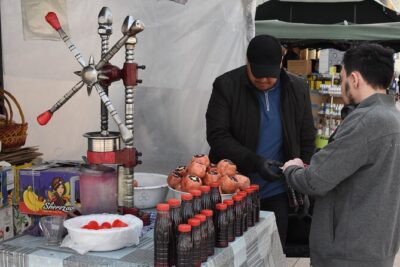
Cooking class in Samarkand with local life experience
Read our review →
Private Samarkand Cooking Class with Market Tour & Transfers
Read our review →
Browse the lists this tour appears in