
Reviewed · ARAL SEA & YURT CAMPS
2 Days Private Tour To Aral Sea from Nukus.
The sea is gone, but the story remains. This two-day private trip from Nukus takes you across northern Uzbekistan to Moynak, the dried seabed, the Aral Sea shoreline, and the remote Ustyurt Plateau. It is part road trip, part history lesson, and part desert night under a wide sky.
I like the private 4×4 transport, since the route includes rough, remote desert roads where comfort and flexibility matter. I also like the overnight yurt stay beside the Aral Sea, which gives you time to walk, collect shells, and see the stars instead of rushing back to Nukus. The main drawback is the long driving time and limited phone service, so this is not a soft, easy holiday.
This experience costs $315 per person and includes one night in a yurt, dinner, breakfast, museum and monument admission, and an air-conditioned 4×4 vehicle. An English-speaking guide and two lunches are included only if you select those options, so check the exact package before paying.
In This Review
- Key points to know before you go
- Why the Aral Sea trip is worth two days
- From Nukus through Khojely and Kungrad
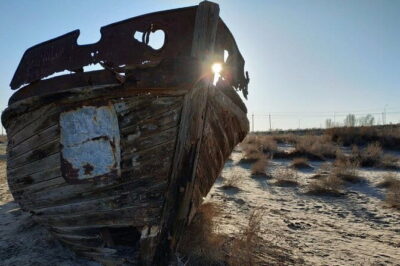
- Moynak and the ship cemetery
- Crossing the former seabed to the Aral Sea
- The yurt camp beside the Aral Sea
- Ustyurt Plateau and Kurgancha Kala
- Kungrad’s monuments and a local lunch
- What the $315 price includes
- Comfort, communication, and the long road
- Who should book this Aral Sea experience?
- Should you book the two-day Aral Sea tour?
- FAQ
- Where does the tour begin and end?
- How long does the experience last?
- Is transportation included?
- Is an English-speaking guide included?
- Will I have mobile phone and internet service throughout the tour?
- Are meals included?
Key points to know before you go
- Moynak’s ship cemetery puts the Aral Sea disaster in plain view: Rusting vessels now sit far from the water that once supported a major fishing town.
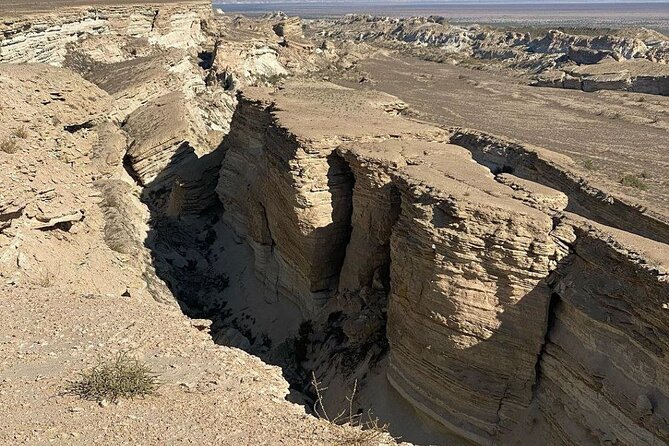
- The route crosses the dried seabed: You can stop for photographs of shells, abandoned industrial features, and the strange desert terrain created by the sea’s retreat.
- The overnight yurt stay changes the pace: Dinner, breakfast, a walk near the water, and a star-filled night make this more than a long day trip.
- Ustyurt Plateau adds a second story: Kurgancha Kala and the remote Kubla Ustyurt area bring old caravan routes and present-day desert life into the trip.
- Mobile service disappears for much of the route: Make calls and send messages in Moynak or Kungrad before heading farther into the desert.
- This is a private outing: Only your group takes part, which helps with photo stops, meal needs, and the general rhythm of the journey.
Why the Aral Sea trip is worth two days
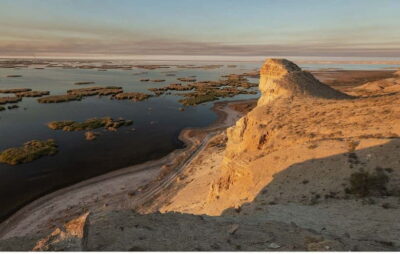
The Aral Sea is not simply a scenic destination. It is a place where geography, industry, local life, and environmental damage are all visible at once. The water has retreated so far that ships are stranded near Moynak, while gas drilling towers rise from parts of the former seabed.
That makes this a demanding but useful trip. You are not coming for a polished resort or a long list of attractions. You are coming to see what happens when a major inland sea shrinks, and to meet a region that still carries on in difficult conditions.
A two-day schedule is much better suited to this area than a rushed day excursion. You need time to reach Moynak, visit the museum and ship cemetery, continue toward the Aral Sea, spend the night near the water, and return through the Ustyurt Plateau. The route is long, but the overnight stop breaks up the journey and gives the desert some room to work on you.
More Aral Sea & Yurt Camps in Uzbekistan:
- Daytrip from Khiva to Aral Sea Cemetery of Ships. All in one
★ 4.3 · 52 reviews - Yurt stay and Hiking in the Nurata Mountains tour – 2 days
★ 5.0 · 35 reviews - Yurt Camp Tour with Night from Bukhara
★ 3.8 · 35 reviews
From Nukus through Khojely and Kungrad
Your driver meets you in Nukus and begins the journey north. The first part passes through Khojely and Kungrad, districts that once served as trading centers along the Great Silk Road.
The stop in Kungrad is short, about 30 minutes, and admission is free. Do not expect a long guided visit here. Its value comes from placing the journey in a wider setting: this is not an empty stretch of nowhere, but a corridor shaped by trade, movement, and settlements over many centuries.
The route also gives you an early look at how quickly town life gives way to open country. A private vehicle is especially useful here because you are not tied to a large group’s timetable. You can settle into the long drive, ask questions, and prepare for the more powerful sights ahead.
The supplied vehicle is an air-conditioned 4×4. That is an important inclusion, not a minor comfort. Northern Uzbekistan can be intensely sunny, and the road toward the former sea includes remote desert sections. Closed shoes, light clothing made from natural fabrics, sunglasses, a hat, sunscreen, lip balm, and moisturizer are sensible choices.
Moynak and the ship cemetery
Moynak is the emotional center of the first day. Once associated with fishing and the Aral Sea, the town now sits beside a vast area of dry seabed. The ship cemetery makes the change difficult to ignore.
You have about two hours for the cemetery, the local museum, and a short documentary about Moynak’s past. The museum helps explain what the rusting ships alone cannot. The vessels are striking for photographs, but the museum gives the place human scale by connecting the sea’s retreat with the town’s former way of life.
I would not treat this stop as a quick photo break. Take time to look at the ships from different angles, then watch the film and visit the museum before deciding what the scene means to you. The combination is more effective than either part on its own.
Admission to the museum and monuments listed in the program is included. That keeps the day simple, though the experience is still physically exposed. Much of the visit takes place outdoors, with sun and wind likely to be part of the setting. Your hat and water bottle will matter more than stylish clothing.
Crossing the former seabed to the Aral Sea
After Moynak, the road continues across the dried bottom of the sea. This is where the trip becomes particularly unusual. You may see drilling towers rising from the former seabed, and there are opportunities to photograph shells scattered across ground that once lay beneath water.
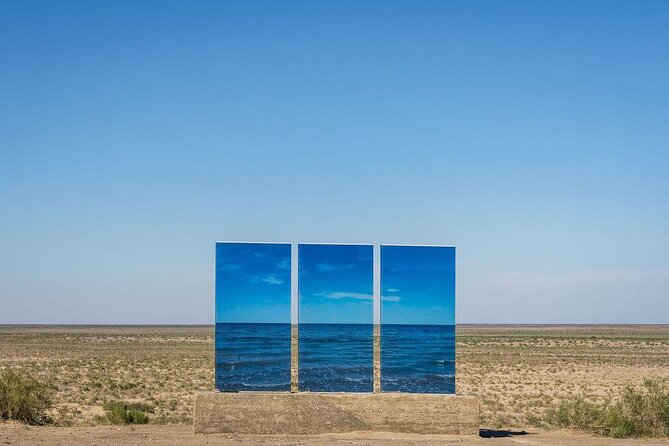
The contrast is the point. A shell is a small object, but here it carries a strong message. It shows that the sea was not an abstract blue shape on a map. It was a living body of water with fishing, transport, and communities attached to it.
The road is remote, and communication becomes limited. For roughly half the journey, you may have no mobile network or internet because the route passes through desert without settlements. YUSELL SIM cards may work in some areas, but you should not rely on that. Make necessary calls and send messages in Moynak or Kungrad before leaving the last settled areas.
This lack of service is both a practical problem and part of the experience. You can enjoy a break from constant messages, but you need to plan around it. Tell family or friends where you are going before the signal disappears, and do not assume you can solve a booking or transport issue from the road.
Same stretch of the Silk Road, a different sort of day:
- Best of Tashkent Mountains: Amirsoy, Chimgan & Charvak Trip
★ 4.8 · 567 reviews - Samarkand: Historical Monuments Guided Walking Tour
★ 4.8 · 446 reviews - Samarkand One Day Tour – Departure From Tashkent
★ 5.0 · 313 reviews - Khiva: Historical City Highlights Guided Walking Tour
★ 4.8 · 156 reviews
The yurt camp beside the Aral Sea
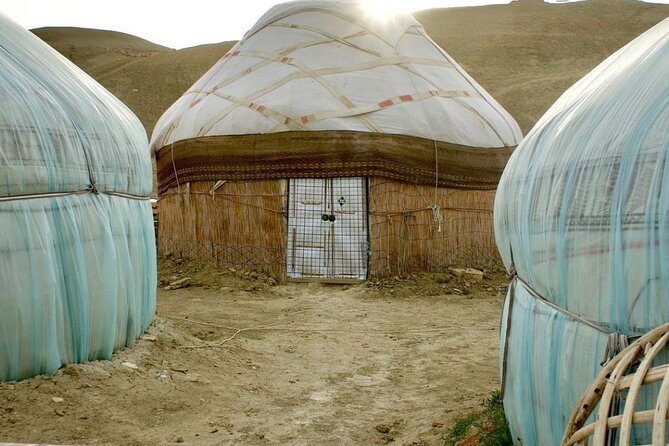
At the Aral Sea, you reach Besqala Yurt Camp. You leave your luggage at the yurt, then drive down to the sea.
The program allows about two hours here. You can walk, collect shells, breathe the dry sea air, and take a swim if conditions suit you. The wording about swimming should be treated with common sense: follow local guidance and do not enter the water simply because it is listed as an option.
The camp is the strongest reason to choose this two-day version over a single long outing. Instead of seeing the sea and immediately turning around, you spend the night close to it. Dinner is included, and the open sky gives the evening a very different feel from a hotel stay in Nukus.
The yurt is not presented as a luxury room, and you should pack for a basic desert camp rather than a full-service hotel. Keep your clothing practical, protect your skin from wind and sun, and bring any personal items you need for the night. The exact camp facilities are not specified, so it is wise to ask about bedding and washroom arrangements before departure if those details affect your comfort.
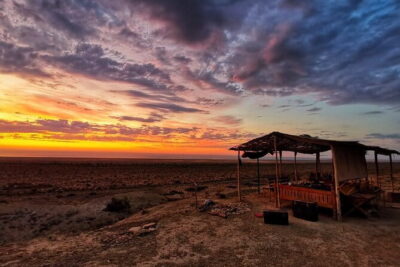
The night itself is one of the experience’s best features. With few settlements around, the sky can become the main event. You may find the silence more memorable than another formal sightseeing stop.
Ustyurt Plateau and Kurgancha Kala
The second day turns from the Aral Sea’s recent environmental story to much older routes across the Ustyurt Plateau. You visit Kurgancha Kala, a 13th-century caravanserai hidden among the plateau’s hills.
This stop gives the trip historical range. The first day is about a sea that has retreated within living memory. The second brings you to a place connected with earlier movement across Central Asia, when caravans needed protected stopping points between distant settlements.
The visit lasts about two hours. The setting is remote and exposed, so comfortable closed shoes are a must. You will be walking in an area where uneven ground, wind, and strong sunlight can affect the pace.
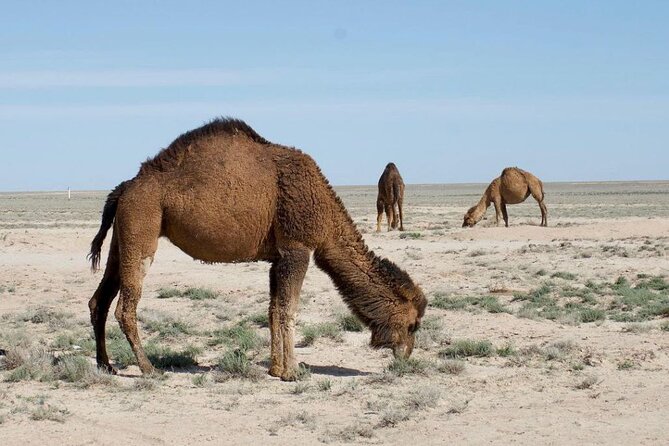
The itinerary also includes Kubla Ustyurt village, about 50 kilometers away. It is described as one of the region’s remote villages, where local people keep camels. This is a valuable counterpoint to the abandoned ships and empty seabed. The area is not only a record of loss. People still live, work, and adapt here.
Do not expect a large visitor center or a string of polished attractions. The appeal lies in the setting, the old structure, and the glimpse of present-day life in a very isolated part of Uzbekistan.
Kungrad’s monuments and a local lunch
The return journey brings you back through Kungrad district for lunch at a local cafe. Lunch is listed as included only if you select the relevant option, so confirm this carefully when booking. The distinction matters because the base price and optional inclusions may not be identical.
After lunch, you visit the Mizdakhan architectural complex. The site includes the Halifa Erejep mausoleum, dated to the 12th century, the Nazlumhansuluw monuments from the 12th to 14th centuries, Shamun Nabi from the 19th century, and the ruins of Gaur Kala.
This collection gives the final day a different pace. Instead of one dramatic object, you get a group of religious, architectural, and archaeological remains spread across a historic area. The dates also show how many periods are represented here, from medieval structures to later memorial buildings.
The two-hour visit is enough to make the complex worthwhile without turning the return to Nukus into an exhausting race. Still, this remains a full road trip. If you prefer short transfers and long stays at each site, the schedule may feel tiring.
What the $315 price includes
At $315 per person, the tour is not a budget bus excursion. It is a private two-day trip with a 4×4, a remote overnight stay, several admission tickets, and meals. The value depends heavily on how much you want privacy and logistical support in an area where independent transport can be difficult.
The included elements are:
- One night in a yurt camp
- An air-conditioned 4×4 vehicle
- Admission to the museums and monuments on the route
- One dinner
- One breakfast
- An English-speaking guide if you select that option
- Two lunches if you select the lunch option
The word private matters here. Only your group participates, so the trip can feel more personal than a large coach outing. It may also help if your group has food restrictions, photography priorities, or a preferred pace.
Food needs should be reported in advance. The provider says meals can be prepared according to dietary restrictions or allergies when notified beforehand. Insurance and personal expenses are not included, so budget for those separately.
The tour is often booked 56 days ahead on average. That suggests you should not leave it until the last moment if the dates matter to you, especially since the route involves a remote camp and private transport.
Comfort, communication, and the long road
The biggest practical issue is distance. This is a two-day desert journey, not a compact sightseeing loop. You will spend substantial time in the vehicle, and the route includes areas without settlements or phone coverage.
The air conditioning is welcome, but it does not remove the need for sensible preparation. Wear comfortable clothing and closed shoes. Natural fabrics are recommended, and sunglasses, a hat, sunscreen, lip balm, and moisturizer will help with the sun and dry wind.
Pack light but thoughtfully. Keep your important items accessible in the vehicle, especially medication, personal hygiene items, and anything you need during the yurt night. Since mobile service may disappear, save essential information before leaving Nukus.
The private format is a clear advantage for couples, families, and small groups of friends. Solo participants may appreciate the support of a driver and optional English-speaking guide, though the per-person price may feel less attractive than it would for a group sharing the experience.
Most people can participate according to the tour information. Still, you should be realistic about the long drives, outdoor walking, desert conditions, and basic yurt accommodation. The experience rewards curiosity and flexibility more than luxury expectations.
Who should book this Aral Sea experience?
I would recommend this trip to you if you want to understand northern Uzbekistan beyond its major city sights. It suits people interested in environmental change, Soviet-era industrial history, Silk Road routes, desert settlements, photography, and unusual overnight stays.
It is also a good fit if you value private transport and do not want to arrange a remote journey on your own. The route combines several experiences that would be hard to connect without a driver: Moynak, the ship cemetery, the dried seabed, the Aral Sea, Ustyurt Plateau, Kurgancha Kala, Kubla Ustyurt, and Mizdakhan.
I would hesitate to recommend it if your ideal trip means reliable internet, short drives, polished hotels, and many restaurant choices. The Aral Sea route is exposed and remote. Its strongest qualities are also its demands.
Free cancellation is available up to 24 hours before the start time for a full refund. Changes or cancellations made less than 24 hours before departure are not accepted for a refund.
Should you book the two-day Aral Sea tour?
Book it if you want a serious, unusual journey rather than a simple scenic outing. The ship cemetery and dried seabed are powerful, but the yurt night, remote village, old caravanserai, and Mizdakhan complex give the trip more range than a quick visit to Moynak.
The best value comes when you use the private format well. Ask questions, take the photo stops, confirm which meal and guide options are included, and prepare for the phone-free desert stretch. If you can accept long roads and basic camp conditions, this is a memorable way to see a part of Uzbekistan that few standard routes reach.
FAQ
Where does the tour begin and end?
The tour begins with pickup in Nukus and ends with arrival back in Nukus on the second day.
How long does the experience last?
The tour lasts approximately two days and includes one night at a yurt camp near the Aral Sea.
Is transportation included?
Yes. An air-conditioned 4×4 vehicle is included.
Is an English-speaking guide included?
An English-speaking guide is included if you select that option when booking.
Will I have mobile phone and internet service throughout the tour?
No. About half of the route passes through desert areas without settlements, so mobile service and internet may not be available. YUSELL SIM cards may work in some places.
Are meals included?
One dinner and one breakfast are included. Two lunches are included if you select the lunch option. Food restrictions and allergies should be reported in advance.
Freshly added in Uzbekistan
- Uzbek wedding ceremony★ 5.0 · 2 reviews
- Wine tour in Samarkand (Baguizagan) English★ 5.0 · 2 reviews
- Traditional Khiva Cooking Class with Market Visit & Lunch★ 5.0 · 4 reviews
- Uzbek Brews & Views: Tashkent Craft Beer Discovery Tour★ 5.0 · 2 reviews
- Uzbekistan 6 Days Private Tour Khiva-Bukhara-Samarkand by Train★ 5.0 · 4 reviews
- Urgench Airport / Railway Station – Khiva Transfer★ 3.0 · 2 reviews
- Fergana Valley 2-Day Private Tour★ 5.0 · 4 reviews
- Uzbekistan Tour – 6 Days 5 Nights★ 5.0 · 4 reviews
Aral Sea & Yurt Camps, compared.
Daytrip from Khiva to Aral Sea Cemetery of Ships. All in one
Read our review →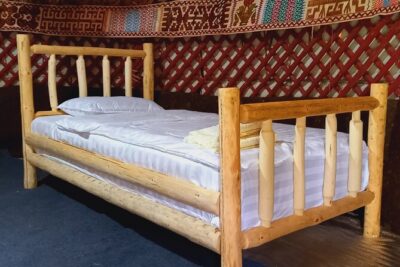
Yurt stay and Hiking in the Nurata Mountains tour – 2 days
Read our review →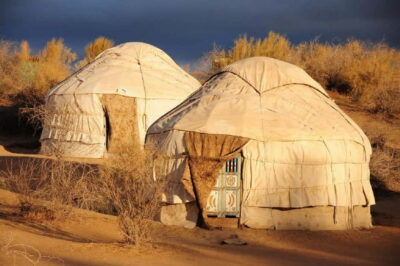
From Khiva To Aral Sea 2-Days One Night In Yurt Stay
Read our review →Daytrip From Khiva to Aral Sea Cemetery Of Ships . All In One
Read our review →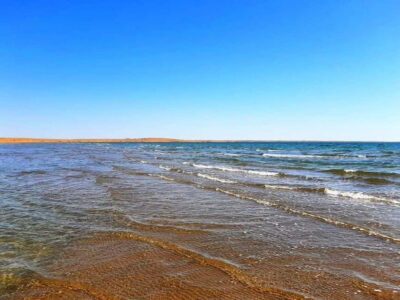
Desert Adventure from Samarkand: Yurt Camp & Aydarkul Escape
Read our review →
Browse the lists this tour appears in