
Reviewed · BUKHARA TOURS
Bukhara: Full-Day Guided Tour with English-Speaking Guide
Bukhara rewards anyone who likes history on foot. I like the careful mix of famous monuments and working bazaars, especially the 10th-century Samanid Mausoleum and the old trading dome. I also like that this is a private tour with an English-speaking guide, giving you room to ask questions instead of following a fixed group.
The main drawback is the walking and extra cost. Entrance tickets, meals, drinks, and transportation with a driver are not included, so the $80 price is not your final spend. The historic center also includes uneven surfaces and stairs, making this a poor fit for wheelchair users or anyone with major mobility limits.
In This Review
- Key points to know before booking
- Why this Bukhara tour works well for first-time visitors
- Samanid Mausoleum, where brick becomes art
- The Kalon Minaret and Poi Kalan Mosque
- Magok-i-Attari Mosque and Bukhara’s layered past
- Tim Abdulla Khan Trading Dome and the Silk Road marketplace
- The Ark of Bukhara, royal power behind thick walls
- Bolo Haouz Mosque and the craft of wood
- Lyabi Khauz, a calm finish beside old water
- What the $80 price really covers
- Walking, clothing, and practical preparation
- Who will get the most from this experience
- Should you book this Bukhara tour?
- FAQ
- How much does the Bukhara guided tour cost?
- Is the tour private?
- Which languages are available?
- Where does the tour begin and end?
- Which major sights are included?
- Is transportation included?
- Is the tour suitable for wheelchair users?
Key points to know before booking
- The Samanid Mausoleum offers the tour’s oldest and most refined stop, with 10th-century brickwork and strong geometric design.
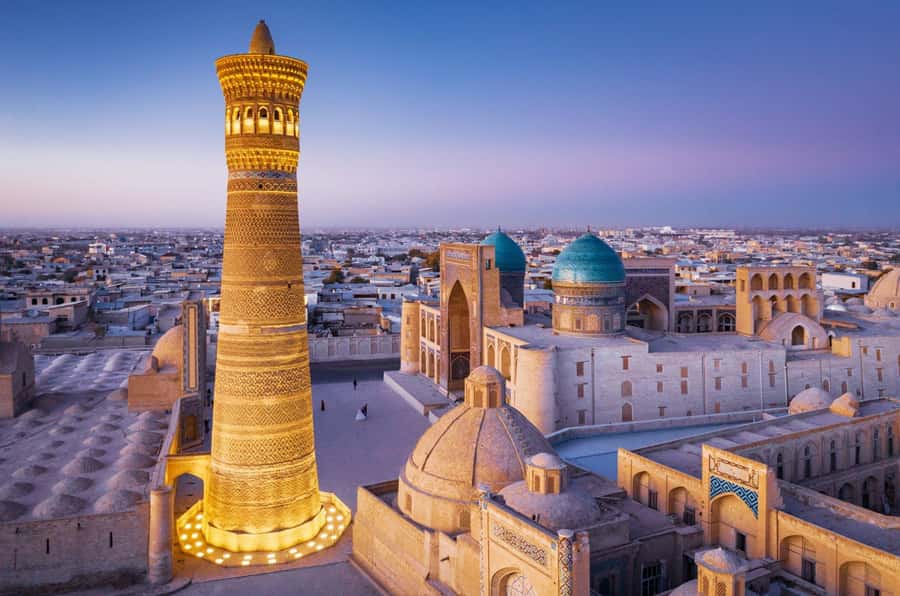
- The 47-meter Kalon Minaret gives Bukhara its signature view, while the nearby Poi Kalan Mosque adds a grand religious setting.
- Guide quality is a major strength, with Lola, Paris, and Malika praised for clear English, personal warmth, and useful local advice.
- The route covers both monuments and commerce, from the Ark fortress to the Tim Abdulla Khan Trading Dome and artisan workshops.
- The $80 rate covers a private guide, not every tour expense, so budget separately for entry fees, transport, food, and drinks.
- Lyabi Khauz is both the meeting point and the final stop, making it an easy place to begin and finish your day.
Why this Bukhara tour works well for first-time visitors
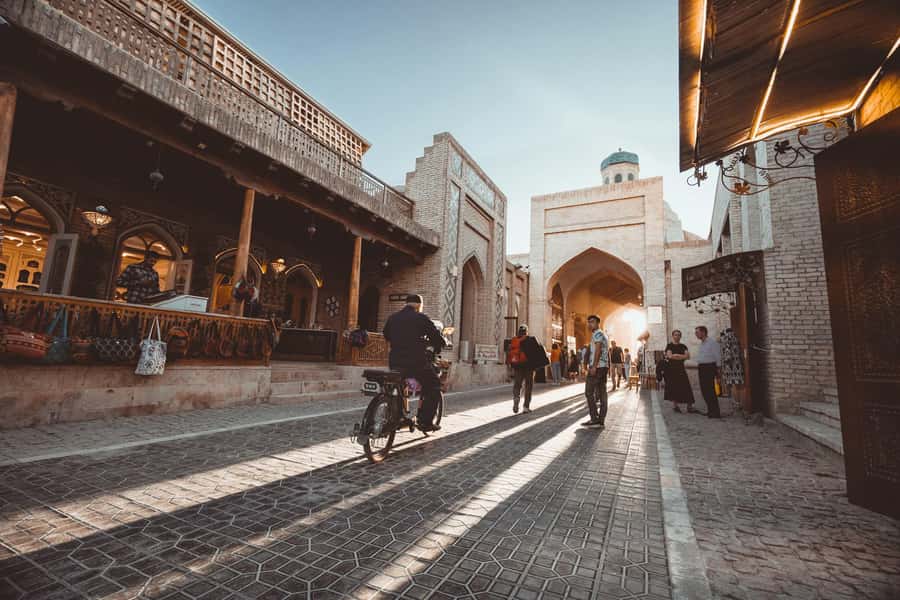
Bukhara can feel like several cities at once. Its lanes lead from royal walls to tiled mosques, then into covered market halls where local goods are still sold. This full-day route gives you a useful framework for understanding how those pieces fit together.
You meet near Lyabi Khauz, close to the Hodja Nasreddin monument. From there, the route takes in major landmarks across the old city and nearby historic areas, ending back at the same meeting point. Since it is a private tour, you can ask for more detail when a subject catches your attention, or keep moving when a site is less important to you.
I would choose this experience if you want context rather than a simple list of photo stops. Bukhara’s buildings are beautiful, but their meaning becomes clearer when you know which ones served as royal quarters, prayer halls, burial places, or market centers.
The guide is central to the experience. Lola received praise for her strong English, practical suggestions, and warm personality. Paris was described as friendly and charming, while Malika was praised for her precise English and ability to answer detailed questions. The tour is offered in English or Russian, so you should confirm your preferred language when booking.
Other Bukhara trips travellers line up with this one:
- Best of Bukhara: All Day Private Old Town Tour
★ 5.0 · 66 reviews - Best of Bukhara: All Day Private Old Town Tour
★ 4.9 · 62 reviews - City Tour Around Bukhara
★ 5.0 · 55 reviews
Samanid Mausoleum, where brick becomes art
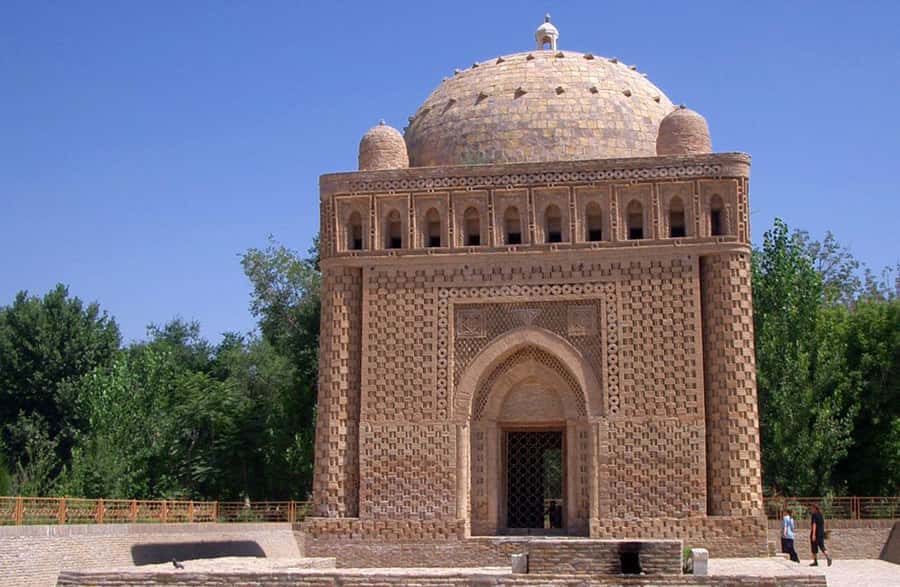
The Samanid Mausoleum is one of the strongest reasons to take this tour. Built in the 10th century, it is linked to Ismail Samani, founder of the Samanid dynasty, and is described as one of the oldest important monuments in Central Asia.
The building is not covered in the blue tile that many people associate with Central Asian architecture. Its character comes from carefully arranged baked brick. The repeated patterns change with the light, and the symmetrical design rewards a slow look rather than a quick photograph.
Your guide can help you notice how the brickwork creates decoration without relying on painted surfaces. That detail matters because it gives you an early example of the architectural ideas that shaped later buildings in Bukhara.
This stop is also a good reminder that Bukhara’s story reaches beyond the better-known medieval rulers. The mausoleum connects the city to the Samanid period and gives the day an early historical starting point.
You will want comfortable shoes here and throughout the tour. The sites are spread across the city, and the day includes a moderate amount of walking. Bring water, a hat, and sunscreen, especially during hot weather.
The Kalon Minaret and Poi Kalan Mosque
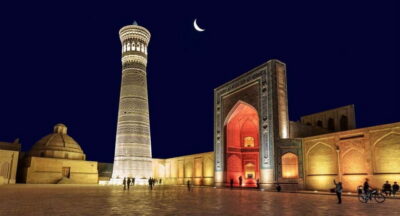
The 47-meter Minorai Kalon, also called the Kalon Minaret, is one of Bukhara’s most memorable sights. Built in the 12th century, it once helped guide Silk Road caravans toward the city. Its survival through invasions gives your guide plenty of material for explaining Bukhara’s changing fortunes.
The minaret is more than a tall structure for photographs. Its height helped announce the city from a distance, while its brick construction shows how much visual effect can come from texture and proportion. Take time to look up from different points around the square.
Nearby, the Poi Kalan Mosque gives you a much larger sense of scale. The mosque can hold up to 10,000 worshippers, and its wide courtyard makes the minaret feel even more imposing. Blue-tiled domes and an elaborate mihrab add color and detail after the earthier brick of the Samanid Mausoleum.
This part of the route can be busy with sightseeing activity, so the private format helps. You can pause for explanations or ask your guide to point out architectural features that are easy to miss from a distance.
Photography is allowed, but flash photography is not permitted inside the monuments. Food and drinks are also not allowed inside, so plan your meal before or after the visit rather than expecting to snack between stops.
Magok-i-Attari Mosque and Bukhara’s layered past
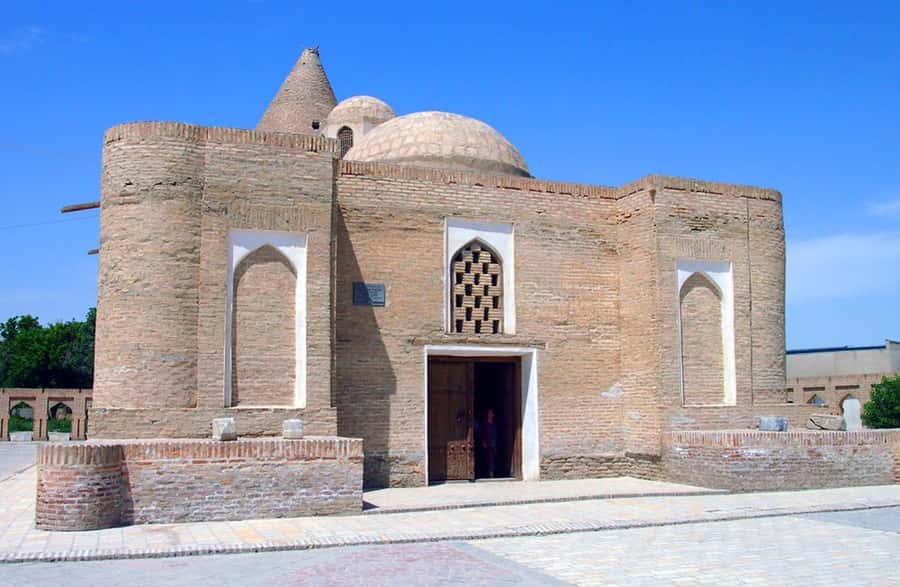
The Magok-i-Attari Mosque is a smaller but historically unusual stop. It began as a Zoroastrian temple before becoming a mosque in the 12th century. Its underground entrance gives the building an unusual appearance and hints at the layers beneath modern Bukhara.
This is the sort of place where a guide adds real value. Without explanation, you might simply see an old entrance set lower than the surrounding ground. With context, you can understand how religious buildings changed as different communities and rulers shaped the city.
I like this stop because it moves beyond a single-period view of Bukhara. The city was not built all at once, and its monuments reflect changes in belief, power, and daily life. Magok-i-Attari makes that point in a compact, memorable way.
The lower entrance and historic surfaces may be difficult for anyone with limited mobility. The tour is not suitable for wheelchair users or people with significant mobility impairments, and you should take that warning seriously rather than treating it as a minor inconvenience.
Same stretch of the Silk Road, a different sort of day:
- Bukhara Full Day Old City Private Tour
★ 5.0 · 46 reviews - Yurt Camp Tour with Night from Bukhara
★ 3.8 · 35 reviews - All You Need To Know About Bukhara. A Walk In The Town
★ 4.9 · 31 reviews - One-Day Private Tour in the Old Town of Bukhara
★ 5.0 · 24 reviews
Tim Abdulla Khan Trading Dome and the Silk Road marketplace
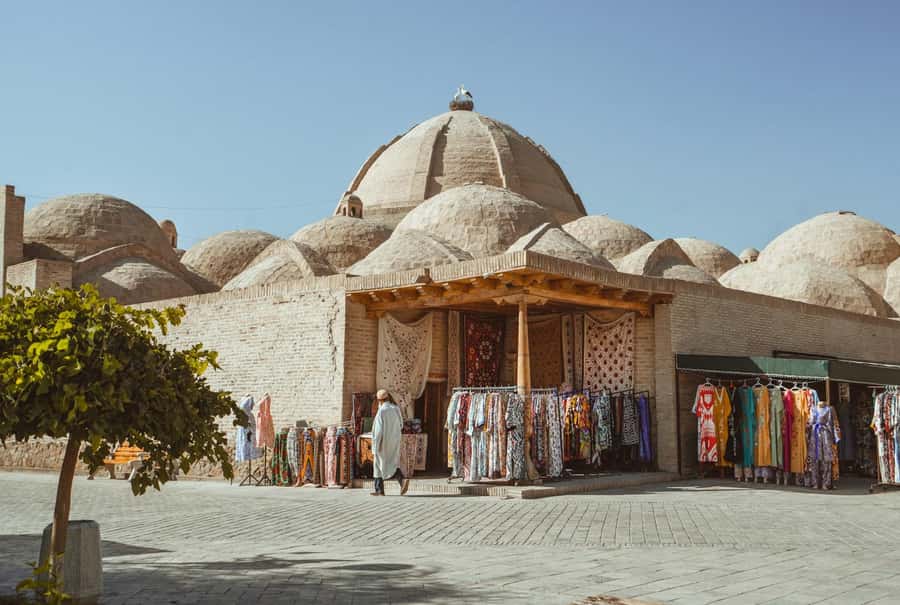
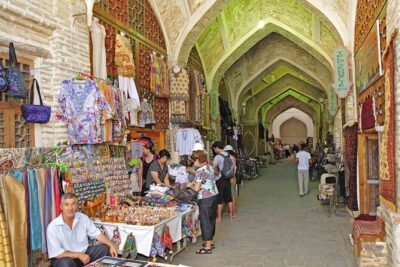
The Tim Abdulla Khan Trading Dome takes you from religious architecture into the commercial life that helped Bukhara prosper. It is one of the remaining covered market structures associated with the city’s Silk Road trade.
A trading dome was practical as well as impressive. A covered space offered shade and shelter while merchants bought and sold goods. Your guide explains how these market buildings fit into long-distance commerce, helping you picture Bukhara as a place where goods, languages, and ideas crossed paths.
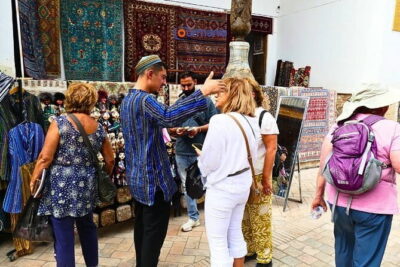
The market is also a chance to browse local handicrafts. One useful tip comes from the tour experience: if you want scarves, wait until after your guide has shown you artisan workshops. Malika reportedly directed visitors toward higher-quality products, which is a good reason to ask your guide for buying advice before making a purchase.
Keep your shopping expectations sensible. The tour includes an opportunity to browse, but it does not promise a set amount of time or specific products. You are paying for the private guiding, not a shopping package, so treat purchases as optional.
The Ark of Bukhara, royal power behind thick walls
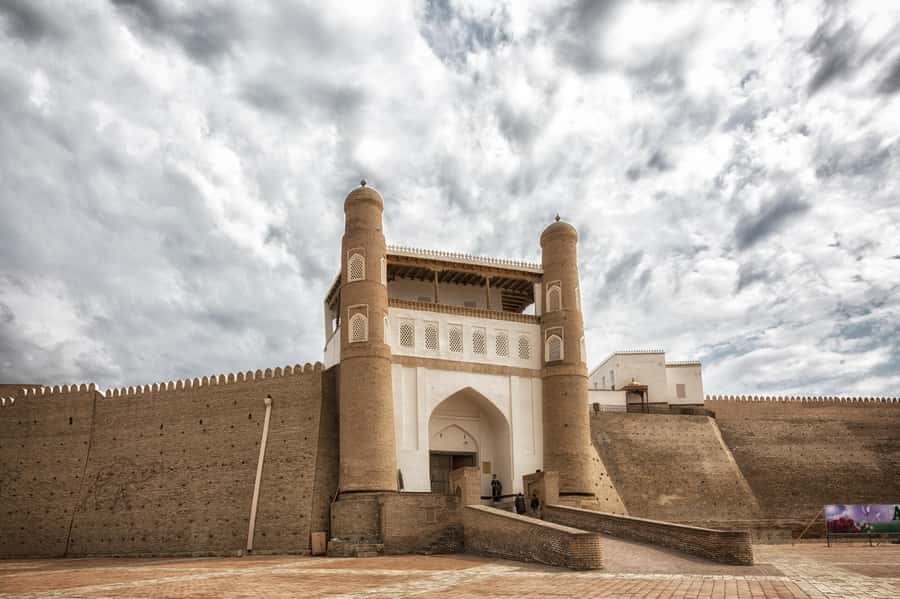
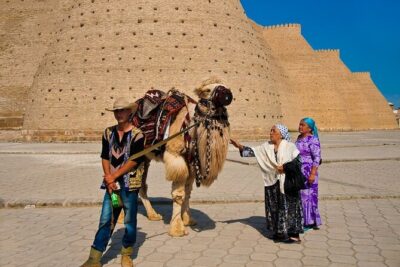
The Ark of Bukhara is a massive fortress that served as the royal residence of Bukhara’s rulers. Its origins reach back to the 5th century, making it one of the day’s most important places for understanding how the city was governed and defended.
The scale changes again here. After the detailed brickwork of the mausoleum and the open religious spaces near Kalon, the Ark feels heavy and defensive. Its walls, courtyards, and chambers suggest a self-contained seat of power rather than a single monument.
Your guide recounts the Ark’s role in defense and government. That explanation helps you read the fortress as more than an old wall. It was a working center where rulers made decisions, received visitors, and controlled the city.
Allow energy for this stop. The full-day route includes repeated walking between sites, and the fortress adds more ground to cover. If you prefer a slow pace, tell your guide early. A private tour gives you more opportunity to manage the rhythm than a large scheduled group would.
Bolo Haouz Mosque and the craft of wood
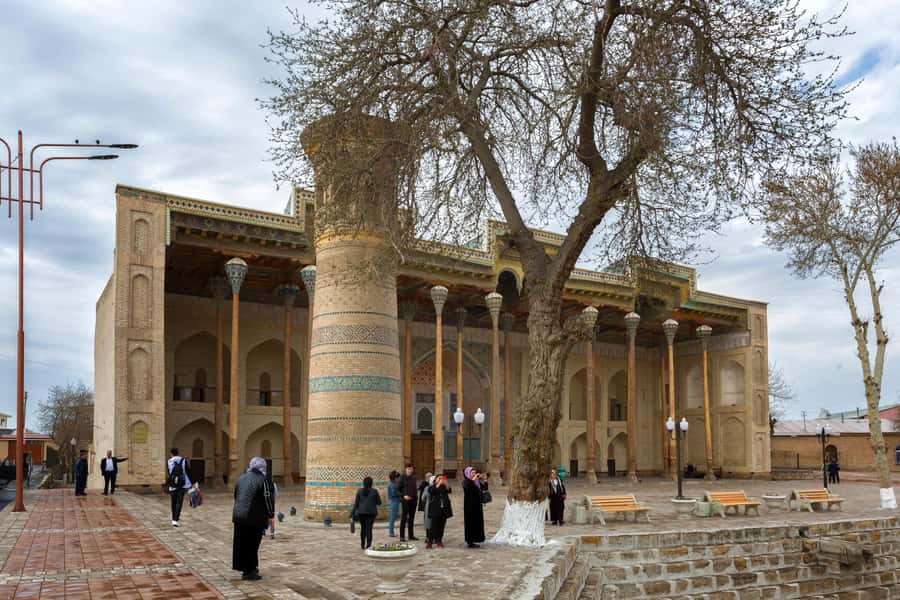
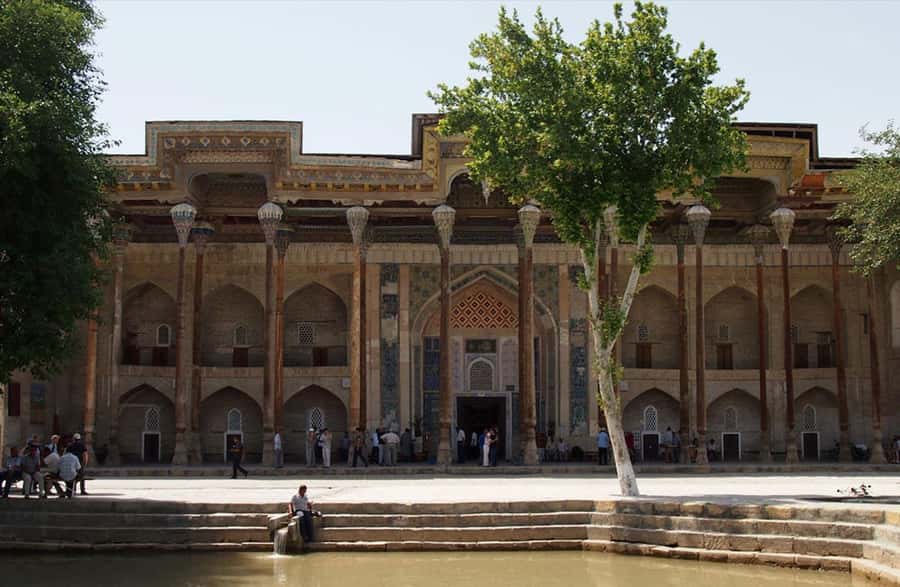
The Bolo Haouz Mosque provides a quieter change of mood. Built in the early 18th century, it served as the Emir of Bukhara’s official place of worship.
Its most striking feature is the row of elegant wooden columns. Look closely at the craftsmanship and the way the columns frame the mosque’s entrance. The building offers a useful contrast with the brick domes and tiled surfaces seen earlier in the day.
I would not rush this stop. It is described as peaceful, and that calm gives you a chance to absorb the visual variety of Bukhara’s religious buildings. A guide can also explain why this mosque mattered to the emir and how its role differed from the larger Poi Kalan Mosque.
As with the other religious sites, follow local rules inside. Flash photography is prohibited, and food and drinks must remain outside.
Lyabi Khauz, a calm finish beside old water
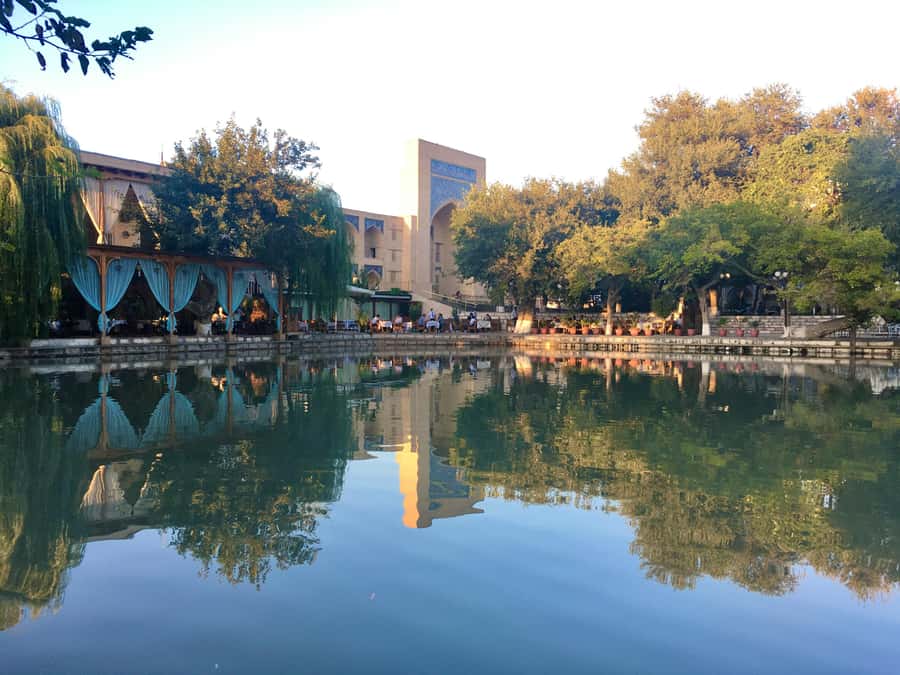
Lyabi Khauz is the natural ending point for this route because it combines architecture, water, and public life. The plaza surrounds one of the last remaining ponds in Bukhara, with madrassas and tea houses around it.
Your guide explains how this area once served as a center of social life. That context is useful because the pond is not simply a decorative feature. Water helped shape where people gathered, rested, traded, and talked.
The setting also makes a practical meeting point. Starting and ending near the same place reduces the chance of getting lost after a long day, and you can continue exploring the surrounding area on your own after the tour ends.
Lyabi Khauz is a good place to pause after the fortress and mosques. You may want tea or a meal nearby, but remember that food and drinks are not included in the tour price.
What the $80 price really covers
At $80 per person, this is not an all-inclusive sightseeing package. The price includes a certified English-speaking guide, a private tour, and suggestions from the guide. That private format is the main value.
You are paying for a personal explanation of Bukhara’s buildings, not just access to the monuments. If you ask questions, want help comparing handicrafts, or need a slower pace, the private structure should serve you better than a large group tour.
The listed price does not include entrance tickets. You also pay separately for meals, drinks, personal expenses, and transportation during the tour with a driver. Accommodation and flight or train tickets are not part of the experience.
Because the route begins and ends at Lyabi Khauz but transportation with a driver is excluded, clarify how you will move between the more spread-out stops before booking. Do not assume a vehicle is included simply because the tour covers a full day.
The booking terms are flexible: you can reserve and pay later, and cancellation up to 24 hours in advance qualifies for a full refund. Those terms are useful if your Uzbekistan schedule depends on train connections or changing plans.
Walking, clothing, and practical preparation
Wear comfortable shoes. The tour covers historic sites, courtyards, fortress areas, market lanes, and uneven old surfaces, so thin sandals or stiff dress shoes may become tiring.
Bring:
- Water
- A hat
- Sunscreen
- A camera
- Shoes suitable for moderate walking
Prepare for changing weather conditions. The information provided specifically recommends sun protection, but a light extra layer may also be sensible if the day begins cool. Do not count on carrying food or drinks into the monuments.
Dress with religious sites in mind. The tour information does not give a detailed clothing rule, but modest clothing is a sensible choice when visiting mosques and other historic religious buildings.
The route is not suitable for wheelchair users or people with significant mobility impairments. If you have a less severe limitation, ask about the exact walking route, steps, and transportation arrangements before paying.
Who will get the most from this experience
I would recommend this tour to a first-time visitor who wants Bukhara’s major sights explained in one day. It also suits anyone who prefers a private guide and values the freedom to ask questions.
History and architecture fans will get the most from the sequence. You move from early brick construction at the Samanid Mausoleum to the medieval minaret, layered religious history at Magok-i-Attari, trade at the Tim Abdulla Khan dome, royal power at the Ark, and public life at Lyabi Khauz.
The tour is also a good choice if you want practical local help. Lola, Paris, and Malika were all praised for their communication and personal approach, with Malika especially useful for questions and artisan shopping advice.
I would be more cautious if you dislike full-day walking or prefer to explore at your own speed without a guide. The route is packed with major sights, and the extra expenses can make the day cost more than the advertised $80.
Should you book this Bukhara tour?
Book it if you want a private, guided introduction to Bukhara and are happy to walk between historic sites. The strongest reasons are the broad route, the chance to ask questions in English or Russian, and the guide quality shown by the praise for Lola, Paris, and Malika.
Before booking, confirm the transport plan and ask how entrance fees will be handled. Bring water, sun protection, and sturdy shoes, and keep some extra money for tickets, food, drinks, and handicrafts.
If you want a clear first-day orientation to Bukhara, this is a sensible choice. If you need step-free access, included transport, or an all-inclusive price, choose a different arrangement.
FAQ
How much does the Bukhara guided tour cost?
The tour costs $80 per person. Entrance tickets, meals, drinks, personal expenses, and transportation during the tour with a driver are not included.
Is the tour private?
Yes. The tour includes a private experience with a certified English-speaking guide.
Which languages are available?
The tour is available in English and Russian.
Where does the tour begin and end?
It begins at Lyabi Khauz near the Hodja Nasreddin monument and ends back at the same meeting point.
Which major sights are included?
The route includes the Samanid Mausoleum, Minorai Kalon, Poi Kalan Mosque, Magok-i-Attari Mosque, Tim Abdulla Khan Trading Dome, the Ark of Bukhara, Bolo Haouz Mosque, and Lyabi Khauz.
Is transportation included?
Transportation during the tour with a driver is not included. You should clarify the transport plan before booking, especially because the route covers several areas.
Is the tour suitable for wheelchair users?
No. The tour is not suitable for wheelchair users or people with significant mobility impairments because of the historic sites and moderate amount of walking.
Freshly added in Bukhara
- Private Tour in 3 top Places Outside of Bukhara City★ 5.0 · 2 reviews
- Full-Day Private Guided Tour to Islamic 7 Saints of Bukhara★ 4.5 · 3 reviews
- Bukhara: Tour Outside of Old Town. Guide with Transportation★ 5.0 · 2 reviews
- Discover Bukhara One Day Group Experience★ 4.5 · 2 reviews
- Bukhara in a Day History, Culture, and Local Insight Private Tour★ 5.0 · 4 reviews
- Bukhara Walking Tour★ 5.0 · 4 reviews
- Bukhara Hammam Bathhouse with Massage★ 5.0 · 2 reviews
- A Complete Chapter To Old Bukhara★ 5.0 · 5 reviews
Bukhara Tours, compared.
All You Need To Know About Bukhara. A Walk In The Town
Read our review →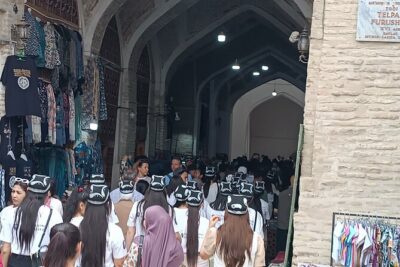
Bukhara Historical City Highlights Guided Walking Tour
Read our review →Browse the lists this tour appears in