
Reviewed · COOKING CLASSES
Legends and Crafts: Suzani Masterclass & Cultural Immersion
Stitch a small piece of Uzbekistan. This private three to three-and-a-half-hour experience combines an ethnographic park, Silk Road craft traditions, a hands-on Suzani embroidery lesson, and a full Uzbek meal. I especially like that you do not just look at local crafts, and that you leave with something you made yourself.
I also like the warm, personal guiding. Yusuf is praised for his clear English, good humor, and patience, while Yulia and Julia have also led parts of the experience. The main consideration is timing: the craft lesson is fairly short, so you will make a small beginner project rather than master the full art of Suzani embroidery.
In This Review
- What makes this Tashkent experience special
- Why Suzani is worth your time
- Starting at Navruz Park in Tashkent Province
- Uzbek textiles, dolls, jewelry, and metalwork
- Global change and old traditions
- The one-hour Suzani workshop
- The traditional Uzbek meal
- Guides, language, and the private format
- Best time to schedule the experience
- Who will enjoy it most
- Practical value at $90 per person
- Should you book Legends and Crafts?
- FAQ
- Where does the experience take place?
- How long does the experience last?
- Is hotel pickup included?
- What languages are available?
- Is this a private tour?
- What will I do during the Suzani workshop?
- What food is included?
- Are extra dishes included?
- Can I cancel the booking?
What makes this Tashkent experience special
- You make your own Suzani piece: Learn basic stitches and designs, then take home an embroidered souvenir with symbolic meaning.
- The Silk Road story connects the crafts: Textiles, ceramics, jewelry, and metalwork are explained as part of Uzbekistan’s role between Asia and Europe.
- Navruz Park adds context: The guided visit introduces Uzbek customs, legends, clothing, dolls, and traditional workmanship before you sit down to sew.
- The meal is part of the cultural lesson: Non, salads, plov, green tea, and water turn lunch into another way to understand Uzbekistan.
- Private guiding keeps the pace flexible: The guide can answer your questions, explain prices and materials, and adjust the food stop when possible.
- It works well early in your visit: The craft background can help you judge textiles, ceramics, and souvenirs during the rest of your time in Uzbekistan.
Why Suzani is worth your time
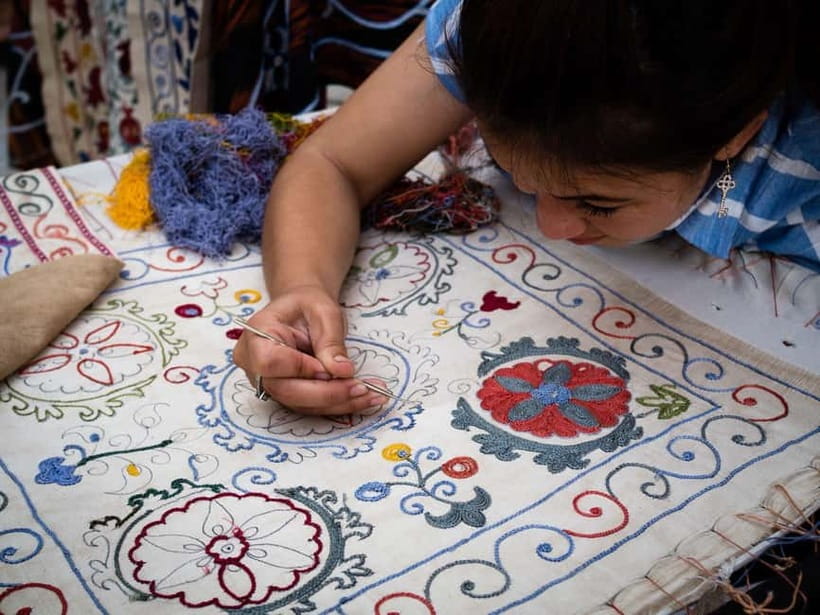
Suzani is a decorative embroidered textile associated with Uzbek homes, celebrations, and family traditions. Its patterns are not simply decoration. Flowers, leaves, circular forms, and other motifs can carry ideas of protection, good fortune, fertility, or a safe household.
The exact meaning of a design can vary, and the experience presents Suzani through legends as well as technique. That matters because you begin to see the embroidery as a form of visual storytelling rather than a pretty cloth sold in a market.
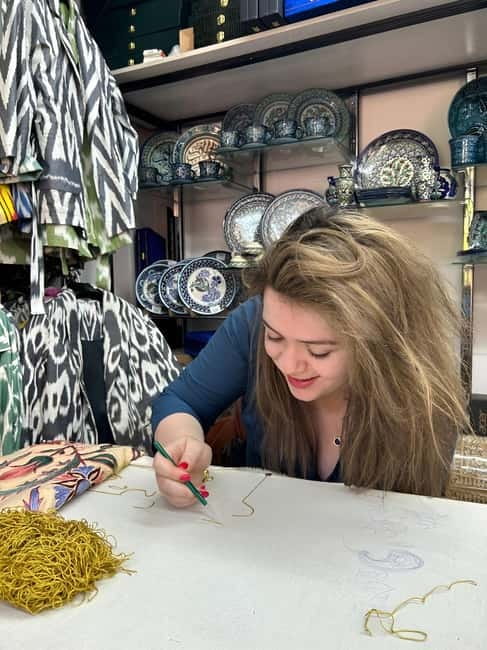
You will work on a small piece during the masterclass. An artisan guides you through basic stitches and designs, so you do not need previous sewing experience. Still, do not expect to finish a large wall hanging in an hour. Suzani takes patience, and the short lesson gives you a respectful introduction rather than professional training.
That limitation is also part of the lesson. One participant described being bad at the stitching but still enjoying the chance to try. I think that is the right attitude. Your finished work may not be perfectly even, but it will carry a personal memory that a shop-bought souvenir cannot match.
More Cooking Classes in Tashkent
- Tashkent: Cultural Exploration & Pottery Masterclass
★ 5.0 · 24 reviews - Tashkent: Uzbek Culture, Food, Crafts & Pottery Masterclass
★ 5.0 · 24 reviews - Tashkent Vegan Street Food Tour
★ 5.0 · 22 reviews
Starting at Navruz Park in Tashkent Province
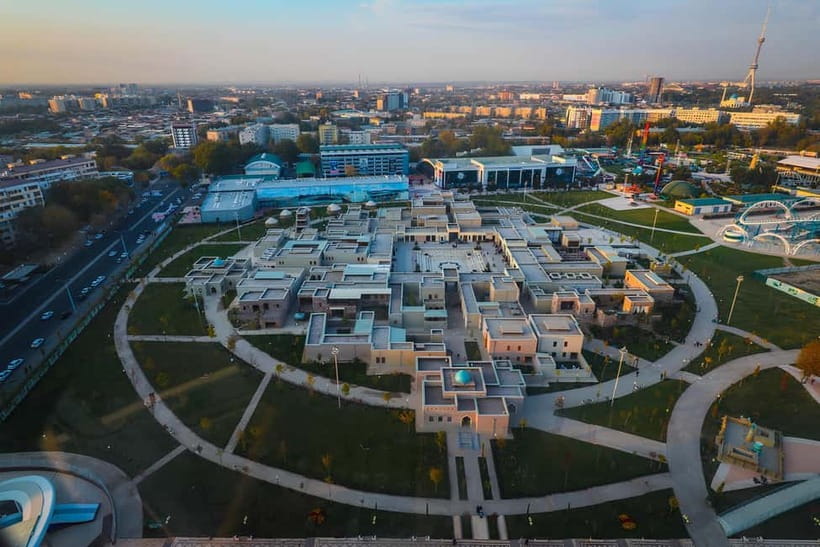
The experience begins with pickup in Tashkent, if you choose that option. You are asked to wait in your hotel lobby about five minutes before the scheduled time, and the driver uses a sign with your last name. After pickup, the first major stop is Navruz Park, where the cultural portion lasts about one hour.
The park provides a setting for stories about Uzbekistan’s past and its traditional crafts. Your guide explains how the Silk Road connected Central Asia with both Asian and European markets, helping textiles, ceramics, metalwork, and other goods travel across long distances.
The important point is not only that Uzbekistan sat on a trade route. Silk Road trade also encouraged techniques, patterns, materials, and ideas to move between communities. Local crafts developed within that larger exchange, while still keeping their own regional look.
You will also hear about why certain objects were valued. Textiles and ceramics could be prized for their workmanship, usefulness, and beauty. Some were also believed to carry blessings or protect the household, which helps explain why traditional motifs appear again and again.
Uzbek textiles, dolls, jewelry, and metalwork
The cultural tour covers several forms of Uzbek workmanship, so the Suzani lesson does not feel isolated from the rest of the visit. You look at textile traditions that include ikat and embroidery, with attention to regional styles and the way patterns express local identity.
An Uzbek doll store adds a particularly approachable element. The dolls represent different regions, and each one is connected with local legends or superstitions. This gives you an easy way to notice regional differences without needing a long academic lecture.
Jewelry and metalwork offer a different view of the same beliefs. Designs may be worn or displayed for beauty, but traditional interpretations also connect them with protection and luck. Your guide can help you look beyond the surface and ask why a particular shape or ornament mattered to the people who made it.
I find this part especially useful if you plan to shop later. You will have a better sense of why a textile costs what it does, how much labor may be involved, and why two objects that look similar can have different value. One couple also found the visit useful at the start of their trip because it helped them understand the quality and price of textiles and pottery.
Global change and old traditions
The experience also addresses how globalization affects Uzbek crafts. Artisans must decide how to preserve older techniques while responding to changing tastes, tourist demand, and modern design.
That discussion keeps the tour from treating tradition as something frozen in the past. Some crafts remain closely tied to old patterns and beliefs, while others adapt in size, color, or use. The key idea is continuity: an object can change and still retain a connection to the stories behind it.
You will not receive a long formal lecture on every craft. The benefit comes from having a guide who can connect your questions to daily life, both old and modern. Yusuf has been praised for answering many questions, sharing practical tips for the rest of an Uzbekistan trip, and explaining local customs in an easygoing way.
Same stretch of the Silk Road, a different sort of day:
- Best of Tashkent Mountains: Amirsoy, Chimgan & Charvak Trip
★ 4.8 · 567 reviews - Samarkand One Day Tour – Departure From Tashkent
★ 5.0 · 313 reviews - Tashkent City Tour
★ 5.0 · 121 reviews - Shymkent Day Tour from Tashkent
★ 4.6 · 71 reviews
The one-hour Suzani workshop
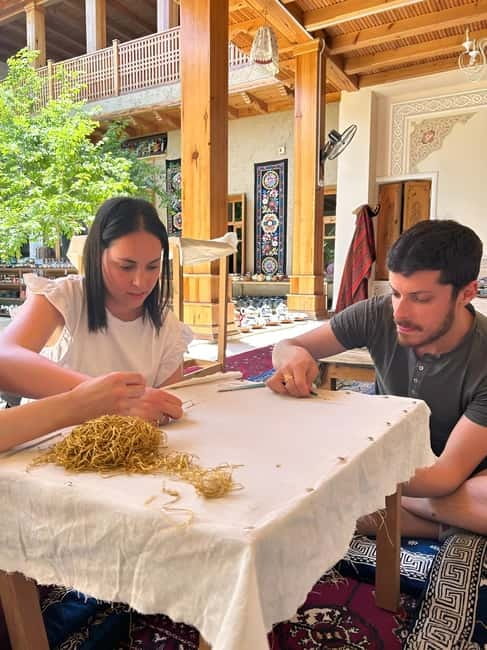
After the cultural visit, you move to the workshop portion, which takes about one to one-and-a-half hours. This is the most personal part of the experience and the reason I would choose this tour over a standard sightseeing stop.
The artisan first introduces the basic process. You learn simple stitches and work with a design that reflects the symbolic side of Suzani. The goal is not speed or technical perfection. It is to understand how much time and care goes into even a modest embroidered piece.
The private format helps here. You can ask for help when your thread tangles, your stitches wander, or your pattern begins to look less like the example. Several visitors appreciated the patience of Yusuf and his wife, and that patience matters when you are handling an unfamiliar craft.
You take the finished piece home. It is small, but it represents time spent learning rather than time spent browsing. Pack it carefully if you are continuing your trip, especially if you plan to place it in checked luggage.
You may also gain a new respect for the large Suzani textiles you see in shops or museums. A short attempt makes the labor visible. The work can look simple from across a room, but repeated stitches and detailed patterns require steady hands and concentration.
The traditional Uzbek meal
The final part is a traditional lunch or dinner, usually lasting around 45 minutes to an hour. It takes place in a calm garden setting and includes several familiar Uzbek staples.
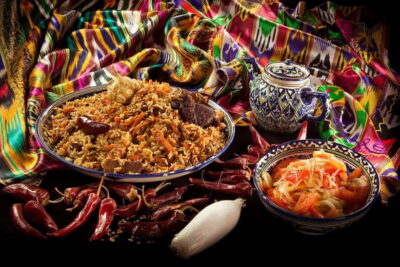
The included meal features freshly baked non, the round Uzbek bread that accompanies many meals, along with shakarob, a tomato and herb salad. You also receive Kuzchi Kayfiyat Salad, a main course of traditional Uzbek palov, and unlimited green tea and water.
Palov is made with rice, lamb, carrots, and raisins. The combination gives you a direct taste of one of Uzbekistan’s best-known dishes, and the guide explains the cultural stories connected with the food. The meal is not an afterthought added to fill the schedule. It extends the same theme: materials, methods, customs, and stories all come together around everyday life.
If you have already eaten a great deal of palov, tell the guide. One visitor had reached that point, and the guide changed the restaurant plan so the meal could offer something different. That flexibility is one of the benefits of a private outing, though additional sides cost extra.
The meal includes a full course, but it is worth checking what you want before ordering anything beyond the included menu. Green tea and water are covered, while extra side dishes are not.
Guides, language, and the private format
The experience is offered in English, Polish, Russian, or Uzbek. Yusuf has received especially strong praise for his English, humor, and ability to explain both historic customs and modern life. Yulia and Julia have also been praised for clear communication, warmth, and enthusiasm for Uzbekistan.
The exact guide may depend on the date you book. After booking, you should contact the local guide through WhatsApp as requested. That is also a good time to confirm your pickup details and mention food preferences or the fact that you have already visited a particular restaurant.
A private group makes the three-hour schedule feel less rigid. You can stop to ask about a pattern, spend a little more time looking at an object, or request help with the embroidery without holding up a large group. It also suits couples, families, and solo visitors who prefer conversation over a fixed procession from one stop to another.
The main tradeoff is that a private tour costs more than a large group outing. At $90 per person, the price reflects pickup, guiding, materials, the artisan lesson, the souvenir, and a full traditional meal. For a solo visitor, it is a noticeable expense. For two or more people who value personal attention, it is easier to justify.
Best time to schedule the experience
I would put this experience on your first or second day in Tashkent if your schedule allows. The cultural introduction gives you useful background before you visit craft shops, museums, and markets elsewhere in Uzbekistan.
It also gives you early food guidance. You will try plov, non, salads, and green tea, then have a guide available to answer questions about other local dishes and places to eat. Several people found the activity a strong opening to their trip for exactly that reason.
It can also work as a gentle final morning or afternoon. One visitor used it as a satisfying ending after seeing other parts of the country, combining a last craft experience with a memorable meal. The best choice depends on your itinerary: early in the trip for orientation, or near the end for a hands-on farewell.
Allow three to three-and-a-half hours rather than trying to squeeze it into a tight gap between flights or major appointments. Pickup and local transport take part of the day, and the food stop is worth enjoying without watching the clock.
Who will enjoy it most
I would recommend this to you if you like meeting local people, learning the meaning behind objects, and taking part in an activity rather than only taking photographs. It is also a good match if you want a souvenir with a personal connection.
Families can benefit from the mix of dolls, clothing, stories, food, and simple stitching. Couples and solo visitors will likely appreciate the private conversation and the chance to shape the pace around their questions.
The experience is less suitable if you want a long, advanced textile course or a full-day historical tour. The cultural portion is broad but compact, and the Suzani lesson covers only the basics. You will see and discuss several crafts, but you will not become an expert in any one of them in three hours.
I would also think about your interest in food. Palov is a central part of the meal, and additional dishes cost extra. If you are eager to taste several regional foods, tell the guide early so the restaurant choice can work better for you.
Practical value at $90 per person
The $90 price is fair when you use all the included elements. You receive hotel pickup, a private guide, the park visit, craft explanations, workshop materials, artisan instruction, a take-home piece, and a traditional meal.
The strongest value comes from the combination. A meal alone would be easy to arrange for less, and a market visit would cost nothing beyond transport. What you are paying for is the connection between the objects, the legends, the making process, and the person explaining them.
The private group also adds value for people who ask many questions or want a little flexibility. Yusuf has adjusted food plans when needed and offered practical suggestions for the rest of the trip. That sort of help can save time and prevent guesswork during your first days in Uzbekistan.
Free cancellation up to 24 hours before the activity and reserve-now, pay-later booking make the commitment less awkward if your Tashkent schedule is still changing. Starting times depend on availability, so check the day and pickup arrangement before booking.
Should you book Legends and Crafts?
Book it if you want a thoughtful introduction to Uzbekistan through making, eating, and conversation. The Suzani project gives the experience a personal finish, while Navruz Park and the craft displays explain why Uzbek textiles, dolls, jewelry, and metalwork carry more meaning than their decorative surfaces suggest.
I would especially choose it early in a Tashkent stay, when advice about craft quality, prices, food, and customs is most useful. If your priority is advanced embroidery, a large museum collection, or a full-day excursion beyond the city, choose something longer.
For most people who want a friendly, private cultural outing, $90 is a reasonable price. You get a meal, a souvenir, and enough context to make later shopping and sightseeing more rewarding.
FAQ
Where does the experience take place?
The experience begins with pickup in Tashkent and includes a guided visit to Navruz Park in Tashkent Province, a Suzani workshop, and a local restaurant.
How long does the experience last?
The full experience lasts approximately three to three-and-a-half hours.
Is hotel pickup included?
Hotel pickup from Tashkent is included. After booking, contact the local guide through WhatsApp and wait in your hotel lobby five minutes before the scheduled pickup time.
What languages are available?
The experience is offered in English, Polish, Russian, and Uzbek.
Is this a private tour?
Yes. The experience is operated as a private group.
What will I do during the Suzani workshop?
You will learn basic stitches and designs from artisans and create a small embroidered piece to take home.
What food is included?
The meal includes non bread, shakarob, Kuzchi Kayfiyat Salad, traditional Uzbek palov with lamb, carrots, and raisins, plus unlimited green tea and water.
Are extra dishes included?
No. Additional side dishes can be ordered for an extra cost.
Can I cancel the booking?
You can cancel up to 24 hours in advance for a full refund. You can also reserve now and pay later.
Freshly added in Tashkent
- Uzbek Brews & Views: Tashkent Craft Beer Discovery Tour★ 5.0 · 2 reviews
- Uzbekistan Tour – 6 Days 5 Nights★ 5.0 · 4 reviews
- Tashkent International Airport (TAS) to Tashkent – Arrival Private Transfer★ 5.0 · 2 reviews
- 8-Day Private Tour in Uzbekistan with Pick Up★ 5.0 · 2 reviews
- Tashkent-Samarkand-Bukhara tour-3nights/4 days★ 5.0 · 5 reviews
- Tashkent Food and Metro Journey★ 5.0 · 4 reviews
- Private Intercity Transfer Tashkent – Samarkand – Tashkent★ 3.5 · 3 reviews
- Tashkent Mountain Tour Amirsoy with Transport★ 3.5 · 3 reviews
Cooking Classes, compared.
Samarkand: Village Tour with Plov Cooking Class & Home Visit
Read our review →
Tashkent: Uzbek Culture, Food, Crafts & Pottery Masterclass
Read our review →
Tashkent: Cultural Exploration & Pottery Masterclass
Read our review →
Samarkand: Uzbek Cooking Class in a Village Home
Read our review →
Cooking class in Samarkand with local life experience
Read our review →
Tashkent Walking & Food Tour: Highlights + Local Flavors
Read our review →
Private Samarkand Cooking Class with Market Tour & Transfers
Read our review →Browse the lists this tour appears in