
Reviewed · HISTORICAL TOURS
10 Days Private Historical Tour of Uzbekistan
Uzbekistan rewards the curious. This 10-day private journey links the country’s grandest Islamic monuments, old bazaars, museums, and desert-edge traditions without making you arrange every transfer yourself. I especially like the private transport and full-time guide, which make a multi-city route far easier to manage. I also like the mix of famous sights and quieter experiences, from Khiva’s walled old town to a yurt camp beside Aidarkul Lake.
The main drawback is the pace. You cover a lot of ground in 10 days, with early starts, train rides, a domestic flight, and several long road journeys. If you want slow mornings and extended time in each city, this plan may feel tight. If you want a broad first look at Uzbekistan, it is a strong and well-planned introduction.
The guide named in the tour’s customer feedback is Amin. His patience with children, broad knowledge of Uzbek history, and willingness to adjust plans for a group of five American men are useful clues about the personal service you can expect. The tour is private, so your group sets the rhythm rather than sharing a bus with strangers.
In This Review
- Key points at a glance
- What $2,240 buys you
- Day 1: Arriving in Tashkent after dark
- Day 2: Tashkent’s squares, earthquake memorial, and Chorsu Bazaar
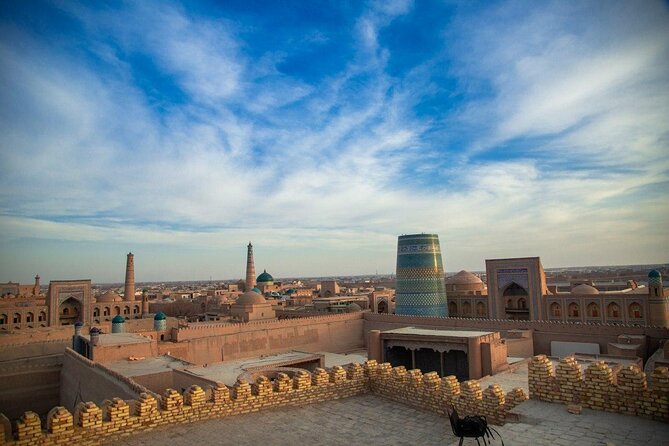
- Day 3: Khiva inside the walls of Ichan Kala
- Day 4: The long rail connection to Bukhara
- Day 5: Bukhara’s trading domes and the Kalyan minaret
- Day 6: From Bukhara to Aidarkul Lake and a yurt camp
- Day 7: Samarkand and the Timurid masterpieces
- Day 8: Sacred tombs, medieval astronomy, and local craft
- Day 9: Shahrisabz and Timur’s birthplace
- Day 10: Airport transfer and the end of the route
- Who should book this Uzbekistan tour?
- Final verdict
- FAQ
- How long is the private Uzbekistan tour?
- What cities and regions does the tour visit?
- Is the tour private?
- Is transportation included?
- Are hotels and the yurt camp included?
- Are meals included?
- Are monument entrance tickets included?
- Are international flights included?
- Can I cancel for a full refund?
Key points at a glance
- Seven major destinations in 10 days: You visit Tashkent, Khiva, Bukhara, Aidarkul Lake, Samarkand, Shahrisabz, and a yurt camp.
- Private travel from start to finish: Air-conditioned vehicles, trains, and a Tashkent to Urgench flight are arranged for you.
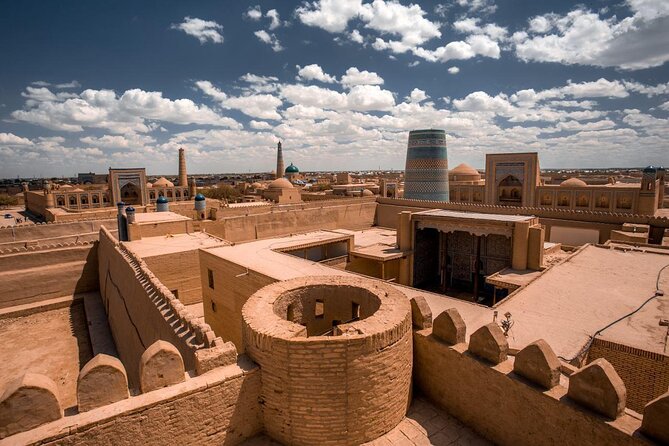
- Khiva is given real attention: One full day covers the gates, citadel, palaces, mosques, madrassas, and mausoleums of Ichan Kala.
- A night outside the cities: The yurt camp and camel-riding experience add a nomadic setting to an otherwise monument-heavy trip.
- Meals and entry fees are covered: Breakfast, lunch, dinner, monument tickets, taxes, and transport are included.
- A busy but useful route: The schedule favors range and sightseeing over free time, so pack comfortable shoes and expect full days.
What $2,240 buys you
At $2,240 per person, the price is not simply paying for hotel rooms and sightseeing. It covers a domestic flight, all listed train journeys in economy class, private air-conditioned transport, eight nights of accommodation in a single or shared double room, one night at a yurt camp, a guide for the entire tour, meals, monument tickets, Wi-Fi on board, taxes, and other listed fees.
That bundle gives the tour solid value for anyone who would otherwise need to coordinate several Uzbek cities independently. Transport is the big advantage. Tashkent, Khiva, Bukhara, Samarkand, and Shahrisabz are spread across a large country, and the route includes both rail and road travel. Having one person manage the changes can save time and reduce confusion.
International flights are not included, and tips are extra. The exact standard of the hotels is not described, so I would ask for the hotel names before paying if room quality matters to you. The same goes for the yurt camp, where facilities can differ from one camp to another.
Nine breakfasts, nine lunches, and nine dinners are included. That is helpful in a country where meal times can be part of the daily schedule, though you should still tell the operator about dietary needs before arrival. Vegetarian, vegan, and gluten-free food is available according to the tour information.
More History Tours in Tashkent:
- Samarkand: Historical Monuments Guided Walking Tour
★ 4.8 · 446 reviews - Khiva: Historical City Highlights Guided Walking Tour
★ 4.8 · 156 reviews - Khiva Historical City Highlights Guided Walking Tour
★ 5.0 · 30 reviews
Day 1: Arriving in Tashkent after dark
Your Uzbekistan experience begins with an international flight into Tashkent. The schedule allows for arrival late in the evening, around midnight, or early the next morning, followed by an airport meeting and hotel transfer.
This is a sensible first step for a long route. You do not need to find a taxi or negotiate a late-night transfer after an international flight. The tradeoff is that the first night can be short, depending on your arrival time. I would avoid planning anything important before breakfast on Day 2.
Day 2: Tashkent’s squares, earthquake memorial, and Chorsu Bazaar
The capital day begins with Amir Temur Square, a central public space founded in 1882. It gives you a quick sense of modern Tashkent and its civic center before the tour turns toward museums and older religious sites.
The Amir Timur Museum follows. The museum is devoted to Amir Timur, also known as Tamerlane, the Turko-Mongol ruler who founded the Timurid dynasty. For this trip, the museum matters because Timur’s influence appears again and again in Samarkand and Shahrisabz. A visit here helps connect the monuments you see later.
At the Alisher Navoiy Theater, you see one of Uzbekistan’s leading opera and ballet buildings. The theater has absorbed both Uzbek and international artistic traditions over more than eight decades. The stop offers a change of pace from mausoleums and madrassas.
The Courage Earthquake Memorial recalls the April 26, 1966 earthquake that devastated Tashkent. More than two million square meters were destroyed. This is one of the day’s most human stops, since it shifts attention from medieval rulers to the city’s modern past and reconstruction.
In the old Sibzar district, the Hazrati Imam complex introduces one of Tashkent’s key religious centers. The area was linked to the medieval city of Shash, and its buildings give you a feel for the capital’s older layers.
Chorsu Bazaar is the day’s most sensory stop. The market sits beneath enormous domes covered with colored glazed tiles and is officially called Eski Juva, or Old Tower. You get two hours here, enough time to look at food, household goods, and local trade without treating the bazaar as a quick photo stop.
The day ends with the Tashkent Metro, Central Asia’s first and currently only metro system. The stations themselves are part of the city experience. Since the full day already includes seven stops, expect an active schedule rather than a relaxed stroll.
Day 3: Khiva inside the walls of Ichan Kala
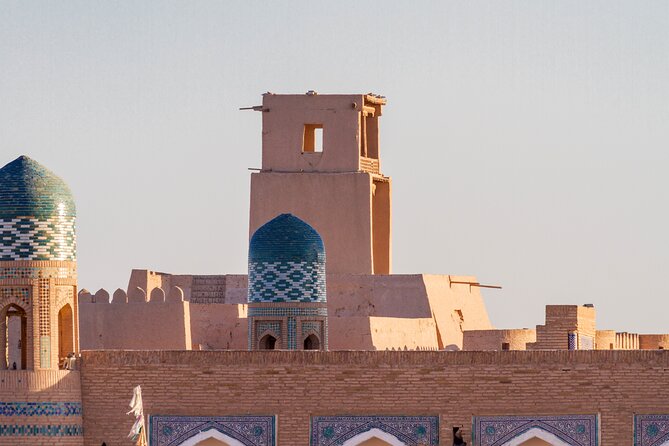
A domestic flight from Tashkent to Urgench takes about an hour and a half in economy class. From there, the tour brings you into Khiva and the walled city of Ichan Kala, a concentrated historic center where many sights are close together.
You begin at the Ota Darwaza, or West Gate. Passing through a gate into the old city is a fitting start, since Khiva’s appeal comes from the way its monuments remain grouped within the walls rather than scattered across a modern city.
Kunya-Ark, the old citadel, dates to the late 17th century. Its former reception hall, khan’s offices, and fortified setting show how political power worked in the khanate. The nearby Muhammad Rakhim Khan Madrassah adds a religious and educational side to the same urban center.
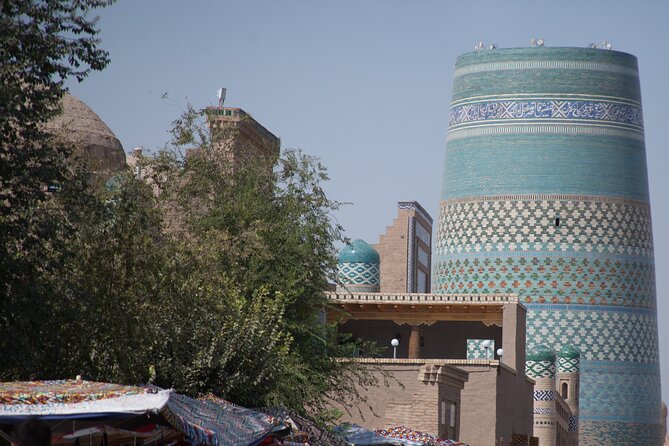
Kalta Minor is Khiva’s famous unfinished minaret. Its squat shape is unusual, and its incomplete state gives it a story beyond perfect architecture. You also visit the Muhammad Amin Khan Madrassah, one of the major landmarks inside Ichan Kala.
Tosh-Hovli Palace is a highlight for anyone interested in court life. Its name means Stone Courtyard, and the complex was built as a major residence for Khiva’s rulers. Pahlavan Mahmoud Mausoleum offers a more personal and spiritual stop. Pahlavan Mahmoud was known locally as a poet, philosopher, strongman, and healer.
The Juma Mosque closes the main sightseeing list. Its location in the center of Ichan Kala and its place among Khiva’s UNESCO-protected monuments make it an important stop, but the day’s strength is the overall sequence. You are not just checking off isolated buildings. You are walking through a compact former city of rulers, scholars, merchants, and worshippers.
The drawback is the amount of standing and walking. The itinerary gives most major sights about an hour, with only 30 minutes at some stops. Wear shoes that can handle uneven surfaces and expect the heat to matter in warmer months.
Same stretch of the Silk Road, a different sort of day:
- Best of Tashkent Mountains: Amirsoy, Chimgan & Charvak Trip
★ 4.8 · 567 reviews - Samarkand One Day Tour – Departure From Tashkent
★ 5.0 · 313 reviews - Tashkent City Tour
★ 5.0 · 121 reviews - Shymkent Day Tour from Tashkent
★ 4.6 · 71 reviews
Day 4: The long rail connection to Bukhara
After breakfast, you take a train to Bukhara from 8:23 a.m. to 1:35 p.m. The five-hour journey is not a sightseeing stop, but it is an important part of the route. Uzbekistan is large, and this train keeps you from spending the entire day in a vehicle on the road.
The schedule lists about seven hours in Bukhara, beginning around midday. That gives you a first look at a UNESCO World Heritage city known for its historic center and old urban atmosphere. Since much of the detailed sightseeing comes on Day 5, this afternoon works best as an introduction rather than a full tour.
Day 5: Bukhara’s trading domes and the Kalyan minaret
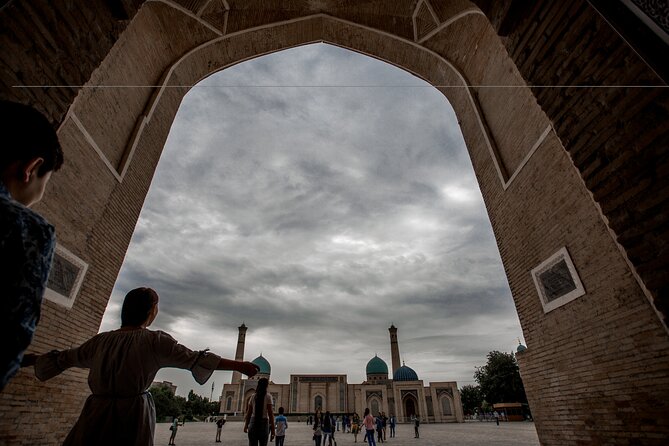
Bukhara gets the kind of day it deserves. Start at Lyabi Khauz, an architectural ensemble built around a large artificial reservoir dug in 1620. The pool, madrassahs, and khanaka create one of the city’s most memorable public spaces.
Maghak-i Attari Mosque is a compact but important monument. Its name means Deep Mosque, and it dates from the 12th to the 16th centuries. Its location beside Lyabi Khauz makes it easy to combine with the city’s other central sights.
The trading domes show how Bukhara worked as a commercial center. Toki Sarrofon, Toqi Telpakfurushon, and Toqi Zargaron once served different trades. The names point to money changers, hat sellers, and jewelers. Today, you can still read the old market plan in the domed passages, even if shopping is not your main reason for visiting.
Poi-Kalyan is the visual centerpiece. The complex includes the Kalyan Minaret, the Miri-Arab Madrassah, and the Kalyan Mosque, with buildings dating from the 12th to 16th centuries. I would save room in your attention for the minaret’s scale and the tiled details around the square.
The Ark of Bukhara ends the day. This ancient citadel covers about 3.9 hectares and is linked to archaeological remains from the fourth and third centuries. Two hours here gives you time to grasp that it was not simply a fortress, but a center of government and court life.
Bukhara is one of the strongest parts of the route because the monuments are close enough to connect on foot. The day is still full, but it has a more natural rhythm than the rapid sequence in Tashkent.
Day 6: From Bukhara to Aidarkul Lake and a yurt camp
After breakfast, you drive toward Nurata, the yurt camp, and Aidarkul Lake. The listed travel time is about seven hours, so this is one of the route’s longest road days.
The payoff is a clear change in setting. Instead of another city of tile and brick, you spend time near Uzbekistan’s largest lake and experience a version of nomadic life. Camel riding is included in the plan, and the yurt camp provides the trip’s most distinctive overnight setting.
This day is valuable because it breaks up the historic-city circuit. Ten days of mausoleums and madrassahs could begin to blur together. The lake and camp give you space to see another side of the country, though the long drive means the day is as much about the journey as the destination.
Ask in advance about the camp’s facilities and the exact timing of camel riding. Those details are not specified, and they can shape how comfortable the overnight feels.
Day 7: Samarkand and the Timurid masterpieces
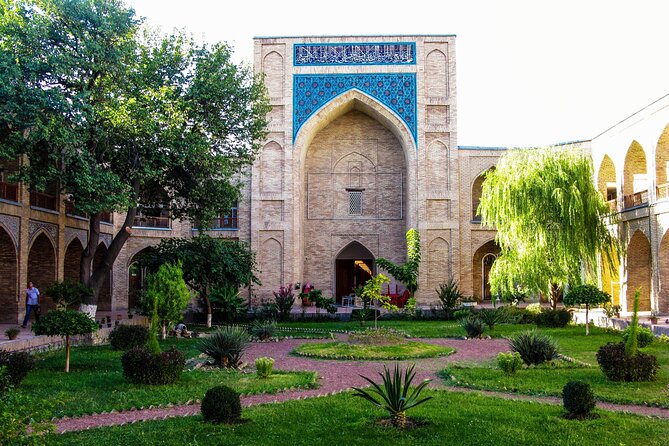
After breakfast at the yurt camp, you continue to Samarkand and begin sightseeing around midday. The first main stop is Gur Emir Mausoleum, the tomb of the emir. Construction began in 1404, and the building is one of the finest examples of medieval eastern architecture on this route.
Registan Square is the major event. Its three madrassahs, Ulugbek, Tilla-Kari, and Sher-Dor, form one of Central Asia’s most recognizable architectural ensembles. The name comes from the Persian words for sandy place, a reminder that this grand square began as an urban open space before becoming a ceremonial center.
Bibi-Khanym Mosque follows. Built between 1399 and 1404, it is connected by tradition to Timur’s beloved wife. Its scale makes the ambition of Timurid Samarkand easy to understand, though you may also notice the pressure that time and construction place on such a large monument.
Siyob Bazaar sits between Bibi-Khanym Mosque and the Shokhi Zinda complex. It is a good place to see Samarkand as a living city rather than only an archaeological one. The day gives you four hours of sightseeing, so the sequence is focused and efficient.
Day 8: Sacred tombs, medieval astronomy, and local craft
Shah-i-Zinda is one of Samarkand’s most powerful sites. The name means Living King, and the necropolis contains mausoleums and religious buildings on the southeastern side of ancient Afrasiab. Give yourself time to look closely at the tilework. The approach is as important as the individual tombs.
The Ulugbek Observatory shifts the subject from faith and royal burial to science. Built in 1428 to 1429, it was a major medieval observatory near Samarkand. Ulugbek’s work helps explain why Samarkand was more than a stop on a trade route. It was also a center for study and astronomy.
The tour then visits a silk carpet factory. This adds a working craft element to the historic monuments, with traditional techniques passed through generations. The stop lasts two hours, so you should have time to see how the carpets are made and decide if the shopping aspect interests you.
At Konigil, you visit a paper factory outside Samarkand. Mulberry trees support the traditional paper-making process, and the setting gives you a practical look at an old craft rather than another formal museum visit. These two stops are useful additions, though anyone focused only on architecture may prefer more free time in Samarkand.
Day 9: Shahrisabz and Timur’s birthplace
The final full sightseeing day takes you to Shahrisabz, a historic city in southern Uzbekistan associated with Amir Timur. The program also includes a local mountain dish called tandoor, cooked in a clay oven. Food is a welcome part of the day, especially after so many formal visits.
At the Palace Complex of Ak-Saray, you see the remains of a palace commissioned by Timur in the late 14th century. The palace was intended to be among the grandest in the world, and even the surviving sections convey the scale of that ambition.
Dorut Tilovat is a religious and architectural center in Shahrisabz’s historic core. The Kok Gumbaz Mosque, with its blue dome, continues the city’s Timurid connection and gives the day a strong architectural finish.
The listed sightseeing time is about seven hours across the city and its monuments. Since Shahrisabz is about 80 kilometers from Samarkand, the route adds another road journey. It is worth it for readers who want more context about Timur, but it is also the point where the trip’s packed schedule may catch up with you.
Day 10: Airport transfer and the end of the route
The final day is simple. You check out and receive a transfer to the airport. Since departure times are not given, the practical value here is having the last transfer handled for you after nine days of changing cities and transport modes.
Who should book this Uzbekistan tour?
I would recommend this trip to first-time visitors who want to see the major historic centers in one organized journey. It suits people who enjoy full sightseeing days, private guiding, local food, bazaars, and a few unusual stops beyond the standard monuments.
Families may appreciate the private format and Amin’s reported patience with children. A private group of friends can also benefit from the flexibility, especially if you have specific interests or food needs.
I would hesitate if you dislike early departures, long drives, or changing hotels. The tour gives you a broad view, not a slow one. I would also confirm hotel standards, yurt facilities, flight and train times, and the exact transport plan before booking.
Free cancellation is available up to 24 hours before the experience begins for a full refund. Service animals are allowed, the tour is near public transportation, and most people can participate according to the provided details.
Final verdict
I like this tour because it combines Uzbekistan’s essential historic cities with a yurt camp, camel riding, bazaars, craft workshops, and modern Tashkent. The transport, meals, entry fees, and full-time guide make the $2,240 price easier to justify than a bare sightseeing package.
Book it if your goal is to cover a lot of Uzbekistan with one private team handling the details. Skip it if you want long pauses, independent wandering, or more than one night in each major city. For a first visit, the route is ambitious, practical, and full of memorable places.
FAQ
How long is the private Uzbekistan tour?
The tour lasts approximately 10 days, beginning with arrival in Tashkent and ending with an airport transfer on Day 10.
What cities and regions does the tour visit?
The route includes Tashkent, Khiva, Bukhara, Nurata, Aidarkul Lake, Samarkand, and Shahrisabz.
Is the tour private?
Yes. Only your group participates in the private tour or activity.
Is transportation included?
Yes. The package includes excursions and transfers in modern air-conditioned vehicles, the domestic Tashkent to Urgench flight in economy class, and all train journeys in economy class.
Are hotels and the yurt camp included?
Yes. The package lists eight nights of accommodation in a single or shared double room, plus one night at a yurt camp.
Are meals included?
Yes. Breakfast, lunch, and dinner are included for nine days. Vegetarian, vegan, and gluten-free food options are available.
Are monument entrance tickets included?
Yes. Entrance tickets to the monuments, taxes, and listed fees are included.
Are international flights included?
No. International flights to and from Uzbekistan are not included in the price.
Can I cancel for a full refund?
You can cancel at least 24 hours before the local start time for a full refund. Cancellations and changes made less than 24 hours before the start time are not accepted for a refund.
Freshly added in Tashkent
- Uzbek Brews & Views: Tashkent Craft Beer Discovery Tour★ 5.0 · 2 reviews
- Uzbekistan Tour – 6 Days 5 Nights★ 5.0 · 4 reviews
- Tashkent International Airport (TAS) to Tashkent – Arrival Private Transfer★ 5.0 · 2 reviews
- 8-Day Private Tour in Uzbekistan with Pick Up★ 5.0 · 2 reviews
- Tashkent-Samarkand-Bukhara tour-3nights/4 days★ 5.0 · 5 reviews
- Tashkent Food and Metro Journey★ 5.0 · 4 reviews
- Private Intercity Transfer Tashkent – Samarkand – Tashkent★ 3.5 · 3 reviews
- Tashkent Mountain Tour Amirsoy with Transport★ 3.5 · 3 reviews
Historical Tours, compared.
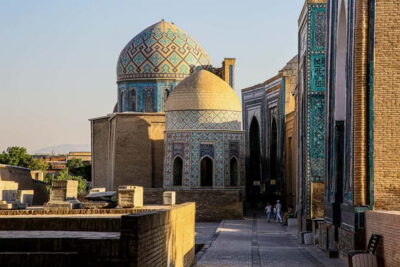
Samarkand: Historical Monuments Guided Walking Tour
Read our review →Khiva: Historical City Highlights Guided Walking Tour
Read our review →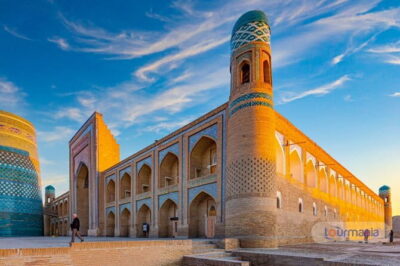
Khiva Historical City Highlights Guided Walking Tour
Read our review →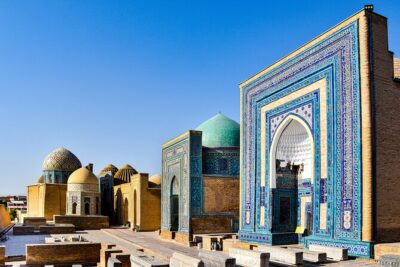
Samarkand: Historical Monuments Group Walking Tour
Read our review →
Samarkand Historical City Highlights Guided Walking Tour
Read our review →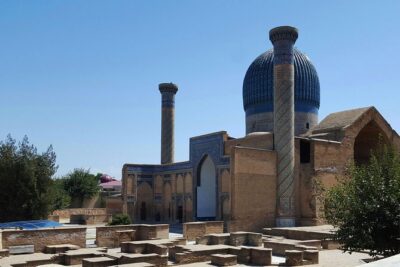
Private Guided Tour Samarkand city history and culture
Read our review →
Bukhara Historical City Highlights Guided Walking Tour
Read our review →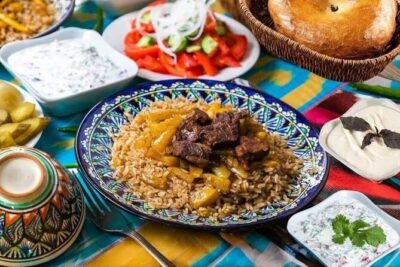
Samarkand Walking Tour History Culture and Hidden Gems
Read our review →Browse the lists this tour appears in