
Reviewed · SAMARKAND TOURS
Panjakent day trip from Samarkand
History begins before breakfast here. This private Panjakent day trip takes you from Samarkand into Tajikistan for ancient Sogdian ruins, a medieval mausoleum, Sarazm, a local bazaar, and a small regional museum. I like the mix of major archaeological sites and ordinary town life, and I like that lunch, entrance fees, an air-conditioned vehicle, and a private guide are included. The main drawback is clear: Panjakent is historically important, but its sights are modest beside Samarkand’s grand monuments.
I also like the chance to cross into Tajikistan for a compact introduction to a neighboring country rather than seeing only another Uzbek showcase city. The border crossing has been described as smooth, and Umar, one of the named guides, is praised for his strong English and clear explanations. Still, you should book this for ancient sites and cultural context, not for a long list of polished attractions.
In This Review
- Key points to know before booking
- Why Panjakent makes a useful side trip from Samarkand
- The Mausoleum of Mukhammad Bashoro and its quiet village setting
- Ancient Panjakent, the Sogdian city near the modern town
- Panjakent Bazaar, a brief look at daily life
- Rudaki Museum and the literary side of Tajik culture
- Sarazm, the oldest chapter of the day
- Guide quality, private travel, and the border crossing
- Is $150 per person good value?
- Who should book this day trip?
- FAQ
- How long does the Panjakent day trip from Samarkand last?
- Is this a private tour?
- Is pickup available?
- What is included in the price?
- Is the Panjakent Bazaar entrance fee included?
- Can I cancel for a full refund?
- Should you book the Panjakent day trip?
Key points to know before booking
- Sarazm reaches back about 5,500 years: This early settlement is Tajikistan’s first World Heritage Site and the oldest major stop on the day.
- Ancient Panjakent shows Sogdian city life: The ruins date from the early Middle Ages, when the town was the easternmost city of Sogdiana.
- The private format matters: Only your group takes part, giving you a more personal day and making it easier to set the pace.
- The tour crosses an international border: The border crossing has gone smoothly for some visitors, but you should allow mental space for border formalities.
- The bazaar adds local life: Panjakent’s market is a short stop where you see present-day Tajik commerce rather than another archaeological site.
- The value depends on your interests: At $150 per person, the package is strongest for history fans who appreciate included transport, lunch, fees, and a private guide.
Why Panjakent makes a useful side trip from Samarkand
Samarkand can make almost any nearby destination seem understated. Its blue-tiled monuments, huge courtyards, and famous Timurid architecture set a very high bar. Panjakent offers something different: older ruins, a smaller town, and a direct look at the Sogdian world that once linked Central Asia through trade and culture.
The crossing from Uzbekistan into Tajikistan is part of the experience, not just a technical nuisance. You are changing countries and moving from Samarkand’s heavily visited historic core to a place where the story is often told through excavated walls, museum objects, and local streets.
The day lasts about six to seven hours, so this is a concentrated outing rather than a slow regional exploration. That makes it manageable from Samarkand, but it also means each stop has a firm time limit. The stated schedule gives two hours at the Mausoleum of Mukhammad Bashoro, one hour at Ancient Panjakent, thirty minutes at the bazaar, one hour at the museum, and an hour and a half at Sarazm.
The experience is private, which is a real advantage. You are not being moved through the sites with a large mixed group, and you can ask questions throughout the day. The strongest feedback centers on the guide’s explanations and conversation, so the human side of the tour may matter as much as the ruins.
A few more Samarkand days worth comparing
- Samarkand One Day Tour: one day walking & group tour
★ 4.4 · 87 reviews - Samarkand: Shahrisabz Day Trip with Optional Local Guide
★ 4.9 · 81 reviews - From Samarkand: Shahrisabz Day Trip & Mountain Pass Tour
★ 4.5 · 42 reviews
The Mausoleum of Mukhammad Bashoro and its quiet village setting
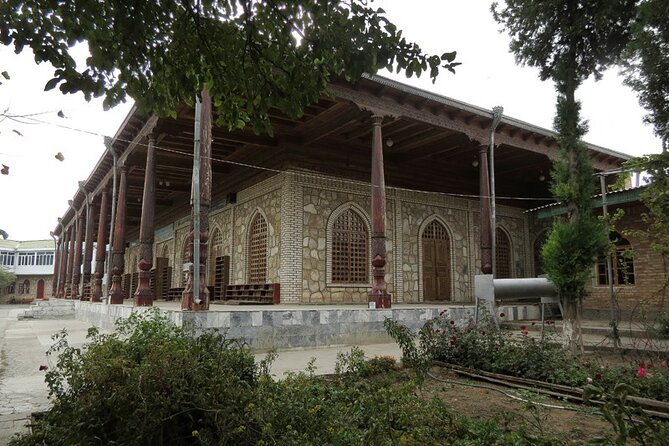
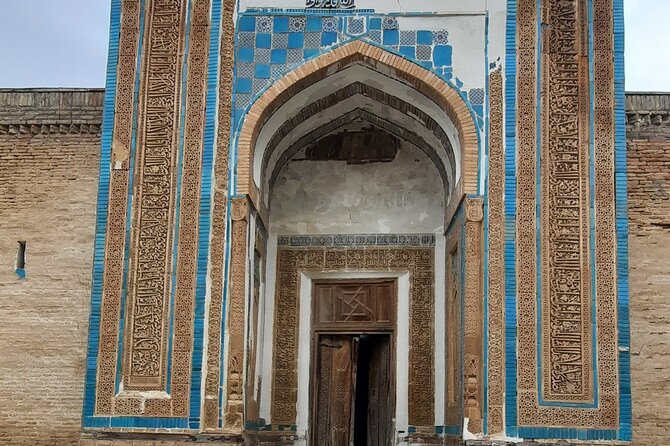
The first major stop is east of Panjakent, on a road leading away from the main highway to the small village of Mazari Sharif. Here you find the Mausoleum of Mukhammad Bashoro, an architectural monument dating from the 11th or 12th century.
The building is linked to Mukhammad Bashoro, described as a religious figure. Its design includes a large, deep arched shrine, small corner rooms, and corridors added or developed in the 14th century. That combination gives the site more than a quick photo stop. You can look at how the structure changed over time and how later additions shaped the original monument.
The scheduled two hours is generous compared with the one-hour stops later in the day. That may suit you if you enjoy architectural detail or want time to listen carefully to the guide. If your main interest is in large ruins and sweeping monuments, you may find the stop slower than expected.
Its village setting is part of its appeal. The mausoleum is not presented as an isolated museum object. It sits within a living local environment, giving you a sense of how historic religious architecture can remain tied to an ordinary settlement.
Admission is included. Since this is a private tour, ask your guide to explain which parts belong to the original structure and which were added later. That distinction helps the building make sense instead of becoming a blur of dates and architectural terms.
Ancient Panjakent, the Sogdian city near the modern town
Ancient Panjakent is the archaeological heart of the trip. The settlement began as early as the 5th century BC within the Sogdian civilization, then grew strongly in the 5th century AD. It was the easternmost city of Sogdiana during the 5th to 8th centuries.
The Sogdians were central to trade across Central Asia, and Panjakent gives you a physical link to that world. You see the remains of a city rather than a single surviving monument. Ruined walls, former buildings, and traces of urban planning help you picture a place that once had homes, public spaces, and religious structures.
One hour is enough for an introduction, but not for a slow archaeological study. The site requires imagination. You are looking at foundations and partial walls, so the guide’s explanation is especially important. A strong guide can help you picture streets, rooms, and the role of the city. Without that context, the ruins may seem sparse.
This is where the contrast with Samarkand matters most. Samarkand gives you finished architecture. Ancient Panjakent gives you evidence. I find that distinction useful, but you should know what kind of day you are choosing.
Admission is included, and the private setting lets you stop for questions. If you enjoy early medieval Central Asian history, this is likely to be one of the best parts of the outing. If you prefer intact buildings, you may come away wishing more of the city had survived.
Panjakent Bazaar, a brief look at daily life
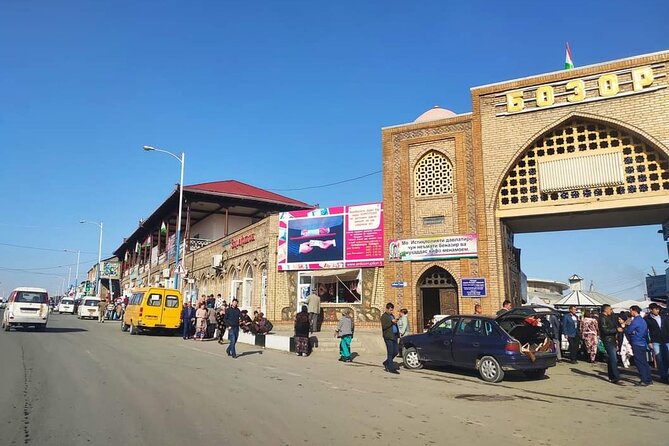
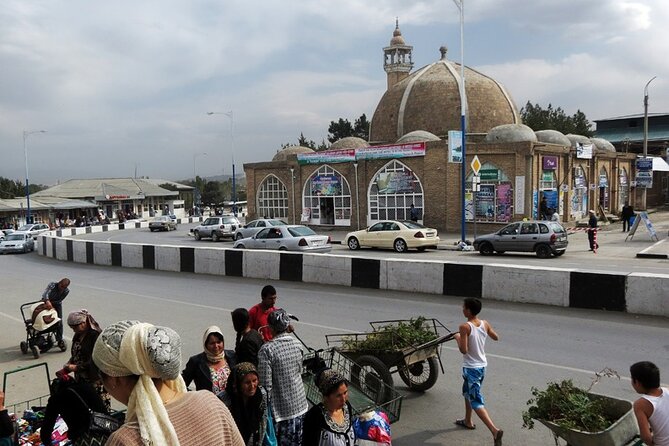
The Panjakent Bazaar takes only thirty minutes, but it changes the rhythm of the day. After mausoleums and ruins, you enter a working market where people are shopping, moving through the gates, and handling ordinary business.
The market scene includes women in floral clothing and headscarves, along with the morning rush. That detail gives the stop a human scale. You are not simply looking at another old site. You are seeing how the modern town functions.
Thirty minutes is a short visit, so think of this as a quick orientation rather than a full market tour. You may have enough time to look around and take in the atmosphere, but not enough time for a leisurely browse. The stop is free, which keeps the day’s included value strong.
I would pay attention to the market’s layout, entrances, and pace rather than treating it as a shopping assignment. The point is not to collect souvenirs. It is to see Panjakent as a present-day town with its own daily routines.
Same stretch of the Silk Road, a different sort of day:
- Samarkand: Historical Monuments Guided Walking Tour
★ 4.8 · 446 reviews - Private Samarkand City Tour With Transportation
★ 5.0 · 149 reviews - A City Tour Of Samarkand: The Pearl Of The East
★ 5.0 · 133 reviews - Full Day Private Tour in Seven Lakes from Samarkand
★ 5.0 · 94 reviews
Rudaki Museum and the literary side of Tajik culture
The Republican Museum of History and Local Lore of Rudaki provides a more organized explanation of the region. The building is described as an elegant single-storey structure with white Doric columns and a floral display. Inside, one room is dedicated to Abu Abdullah Rudaki, who lived from 858 to 941 and is known as the father of Persian poetry.
The museum is important because the outdoor sites can leave you with fragments. Here, objects and displays can help place Panjakent and its surrounding area into a wider cultural story. The Rudaki room also adds a literary dimension to a day otherwise focused heavily on archaeology and architecture.
You have one hour here. That is enough time for a focused visit, especially with a guide who can explain the displays. The museum’s local character is part of the experience, but do not expect a huge international-standard institution. The value lies in regional context and the chance to connect place, language, history, and identity.
If you are mainly interested in monumental architecture, the museum may feel less urgent than the archaeological sites. I would keep an open mind. Small local museums often give you the background that ruins cannot provide on their own.
Sarazm, the oldest chapter of the day
Sarazm is the most important stop for many history-minded visitors. The site dates to around 3500 BC and has a history of roughly five and a half thousand years. It is Tajikistan’s first World Heritage Site.
This is an early settlement, older by several thousand years than Ancient Panjakent. Its remains include palace and religious buildings, public structures, and residential buildings. Those categories matter because they show a settled society with more than simple temporary shelters. Sarazm points to organized community life at a very early stage.
The scheduled visit lasts an hour and a half, giving you more time than at Ancient Panjakent. That is helpful because Sarazm needs explanation and patience. The remains are archaeological, not grand or fully restored. You are reading the shape of a very old settlement through partial structures and preserved traces.
I would listen closely to the guide here. The dates alone are impressive, but the real value comes from understanding what the buildings suggest about early communities in this part of Central Asia. Sarazm also gives the trip a clear arc, moving from prehistoric settlement to medieval Sogdian city and then to modern Tajik life.
The site may not satisfy you if you want dramatic ruins rising above the ground. Its importance is historical rather than visual. That is the central trade-off of the entire tour.
Guide quality, private travel, and the border crossing
The strongest practical advantage is the private format. Only your group participates, so the day can feel more like a guided conversation than a scheduled procession. One especially positive experience names Umar as the guide and praises his English and ability to keep the conversation going throughout the day.
That detail matters. These sites are not self-explanatory, and the day covers several time periods. You move from an 11th or 12th-century mausoleum to Sogdian ruins, a modern market, a literary museum, and a settlement dating to about 3500 BC. Good explanations help keep those periods distinct.
The border crossing has been described as smooth, which is encouraging. Still, you are making an international crossing, so patience is sensible. The tour description does not give exact border procedures, required documents, or waiting times. Confirm those practical points before departure rather than assuming the process will be identical for every departure.
The air-conditioned vehicle is included. That is useful because the day combines several stops and a cross-border journey. Lunch is included as well, along with all listed entrance fees and taxes. Alcoholic drinks are not included.
Is $150 per person good value?
At $150 per person, this is not a budget outing. The price makes more sense because the tour is private and includes an air-conditioned vehicle, lunch, entrance fees, and taxes. You are paying for transport across a border, a dedicated guide, and a tightly arranged day, not just admission to one attraction.
Value depends heavily on your interests. If you care about Sogdian civilization, early Central Asian settlements, and seeing a smaller Tajik town, the package covers a lot in six to seven hours. If you want dramatic architecture, polished visitor facilities, or a large number of major sights, the price may feel high.
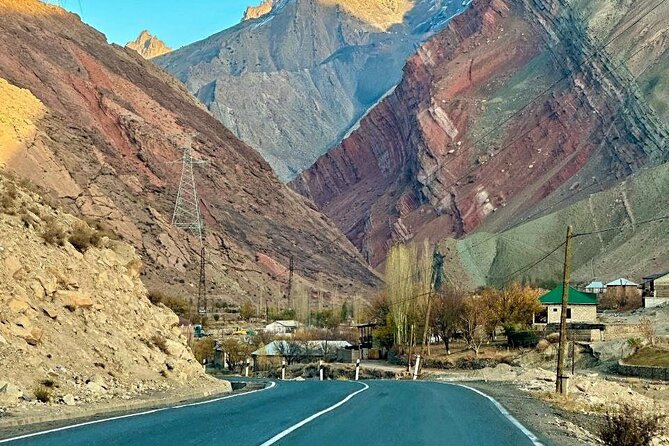
The short duration is both an advantage and a limit. You can add Tajikistan to a Samarkand stay without giving up a full day and night, but you will not get a relaxed exploration of the wider Panjakent area. One critic found the attractions disappointing after Samarkand and suggested the Seven Lakes as a stronger alternative for a Tajikistan day from Samarkand. That is useful advice if scenery and mountain views matter more to you than archaeology.
The tour is booked, on average, about 45 days ahead. That suggests you should not leave it until the last minute if your dates are fixed. Free cancellation is available up to 24 hours before the start time. Poor weather can lead to a different date or a full refund.
Who should book this day trip?
I would recommend it most strongly to you if you:
- Enjoy archaeological sites, even when only partial walls remain
- Want to visit Tajikistan during a short Samarkand stay
- Care about Sogdian history and early Central Asian culture
- Prefer a private guide and the ability to ask questions
- Like mixing historic monuments with a market and local museum
- Value an all-in-one price that includes lunch, transport, and entry fees
I would think twice if your ideal day means grand architecture, dramatic mountain scenery, or a long stretch of free time. Panjakent’s appeal is quiet and historical. The sights ask you to look closely and use your imagination.
The guide can make a major difference. If available, requesting Umar may be worth asking about because his English and conversational approach received particularly strong praise. A guide who explains the sites well is essential here, especially at Sarazm and Ancient Panjakent.
FAQ
How long does the Panjakent day trip from Samarkand last?
The experience lasts approximately six to seven hours.
Is this a private tour?
Yes. Only your group participates in this private activity.
Is pickup available?
Yes. Pickup is offered.
What is included in the price?
The price includes an air-conditioned vehicle, lunch, all listed entrance fees, and taxes.
Is the Panjakent Bazaar entrance fee included?
The bazaar stop is free, so no admission fee is required.
Can I cancel for a full refund?
Yes. You can cancel at least 24 hours before the experience starts for a full refund. Cancellations or changes made less than 24 hours before the start time are not refunded or accepted. Poor weather may result in a new date or a full refund.
Should you book the Panjakent day trip?
Book it if you want a compact, private introduction to Tajikistan built around archaeology and local culture. Sarazm and Ancient Panjakent give the day real historical weight, while the bazaar and Rudaki Museum keep it connected to present-day Panjakent.
Skip it if you expect another Samarkand, or if your main goal is scenery. The ruins are restrained, and one hour at Ancient Panjakent cannot reveal every layer of the site. At $150 per person, the tour earns its price through private transport, lunch, entry fees, and a strong guide rather than through spectacle.
For the right visitor, this is a rewarding change of pace: less polished than Samarkand, more modest in scale, and far older than it first appears.
Freshly added in Samarkand
- Uzbek wedding ceremony★ 5.0 · 2 reviews
- Wine tour in Samarkand (Baguizagan) English★ 5.0 · 2 reviews
- Samarkand Capital of Amir Timur Private Tour with Transport★ 5.0 · 3 reviews
- Shakhrisabz Private Day Tour from Samarkand★ 5.0 · 4 reviews
- Seven Lakes Panjakent: One-Day Adventure from Samarkand★ 5.0 · 3 reviews
- The Golden City of Samarkand: A Self-Guided Audio Tour★ 4.0 · 4 reviews
- Tadjikistan 7 Lakes Day Trip from Samarkand with Lunch★ 5.0 · 5 reviews
- Ancient and Modern tour in Samarkand with Transport★ 5.0 · 3 reviews
Samarkand Tours, compared.
Samarkand: Historical Monuments Guided Walking Tour
Read our review →
Private Samarkand City Tour With Transportation
Read our review →
A City Tour Of Samarkand: The Pearl Of The East
Read our review →
Full Day Private Tour in Seven Lakes from Samarkand
Read our review →
Samarkand One Day Tour: one day walking & group tour
Read our review →
Samarkand: Shahrisabz Day Trip with Optional Local Guide
Read our review →
Browse the lists this tour appears in