
Reviewed · SAMARKAND TOURS
Kolkhoz: Private visit to the cotton farmers’ village
Step beyond Samarkand’s famous monuments. This private day trip takes you into a former Soviet collective farm, where you walk through cotton fields, eat palov in a family home, and meet people who still live close to the land. I like the warm family lunch and the chance to see rural Uzbekistan without a staged village show. I also like the walk beside the Zeravchan River, where the dry river basin makes Central Asia’s water crisis easy to understand. The main drawback is the long day, with about seven kilometers of walking and a schedule that can feel tiring in hot weather.
This is not a quick photo stop in the countryside. You spend real time in the village, visit working farms, and may see seasonal tasks such as silkworm breeding or cotton picking. The school visit is especially appealing for French-speaking visitors, but it requires advance permission and cannot be treated as a guaranteed drop-in.
In This Review
- Key points to know before booking
- Why this rural day trip feels different
- Payshanba Bozor: a Thursday market before the village
- Welcome tea and village life around 10 a.m.
- The Zeravchan River walk and Central Asia’s water problem
- Palov in a family home
- Cotton fields, cotton honey, and seasonal work
- The countryside school and its French connection
- How the $90 price works in practice
- Who should book this experience?
- Should you book the Kolkhoz village visit?
- FAQ
- How long does the Kolkhoz village tour last?
- What is included in the $90 price?
- Is the tour private?
- How much walking is involved?
- Can I visit the rural school?
- What seasonal activities might I see?
- Can I cancel for a full refund?
Key points to know before booking
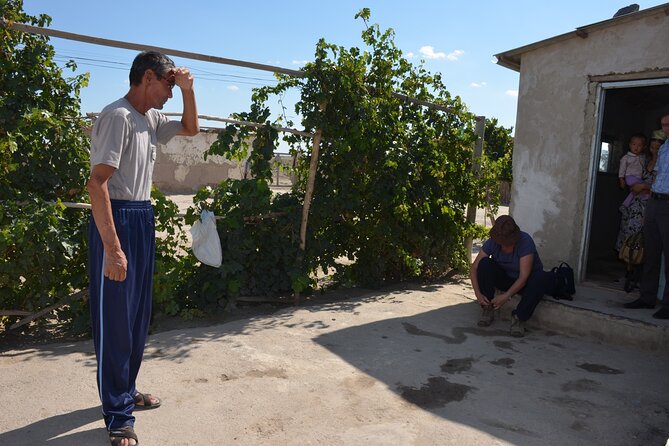
- A former Soviet collective farm: You see how a kolkhoz has changed into a modern village while cotton farming remains central to local life.
- Two substantial walks: Plan for about 4.5 kilometers along the Zeravchan River and another 2.5 kilometers through cotton fields and farm areas.
- A family-cooked palov lunch: The meal takes place in a local home and is one of the day’s most personal experiences.
- The Zeravchan’s dry basin: Irrigation has redirected the river’s water, allowing you to see the region’s water problems rather than only hear about them.
- Seasonal farm activity: April and May may bring silkworm breeding, while September and October are cotton-picking months.
- A private format: Your own group travels with private transport and a French- or English-speaking guide.
Why this rural day trip feels different
Samarkand gives you grand architecture, tiled courtyards, and busy historic sites. This excursion gives you something less polished but just as important: a look at how people live outside the city.
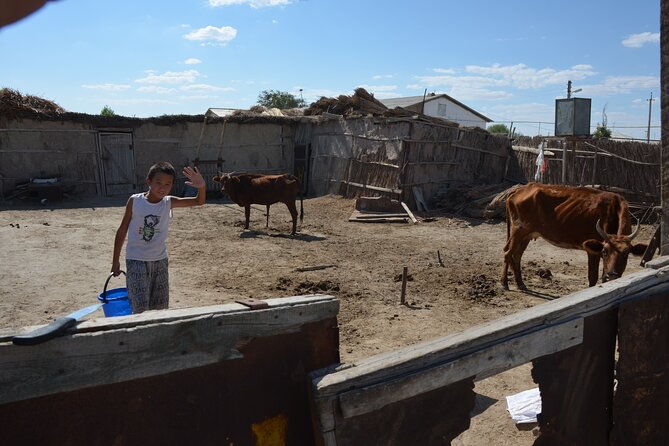
The former kolkhoz is the heart of the experience. During the Soviet period, collective farms organized agricultural work across large areas. Here, cotton still shapes the fields and the seasonal rhythm, but the visit is not presented as a museum display. You meet former kolkhozians and village families in their own setting.
That personal contact matters. You are not simply looking at rows of cotton from a vehicle window. You walk into the countryside, talk with local people, share tea, and sit down for a home-cooked meal. The day has a human scale that you will not get from a standard Samarkand city tour.
The private setup also helps. Only your group takes part, so the guide can adjust the pace and explain what you are seeing. The experience includes pickup, private transportation, lunch in a family setting, and a French- or English-speaking guide. At $90 per person, the price is reasonable for a full private day, especially if you are traveling with a few people and can use a group discount. The exact discount is not specified, so check the final price before booking.
The trade-off is time. This is a 10 to 11 hour outing, not a half-day break between visits to Samarkand’s monuments. You should book it because you want rural contact and walking, not because you need a light change of scenery.
Other Samarkand trips travellers line up with this one:
- Samarkand: Historical Monuments Guided Walking Tour
★ 4.8 · 446 reviews - Private Samarkand City Tour With Transportation
★ 5.0 · 149 reviews - A City Tour Of Samarkand: The Pearl Of The East
★ 5.0 · 133 reviews
Payshanba Bozor: a Thursday market before the village
If your outing falls on a Thursday, the day may begin at Payshanba Bozor. The market opens from about 6 a.m. until 2 p.m., so an early departure gives you the best chance to see it before reaching the village around 10 a.m.
The market sells a little of everything: livestock, clothing, food, and everyday goods. That range gives you a useful look at local trade. It is not a decorative market arranged for sightseeing. You may see the practical side of rural commerce, where people come to buy and sell what they need.
The stop lasts about an hour and has no admission charge. It is optional in the sense that it depends on the day and the route, since the market takes place only on Thursdays. If your visit is on another day, the village program remains the main event.
Because the market can begin early, ask the operator about pickup time if this stop matters to you. The day already runs long, and an early start followed by several hours of walking will affect how much energy you have later.
Welcome tea and village life around 10 a.m.
You reach the village at around 10 a.m. and meet a local family over welcome tea. Allow roughly one hour for this introduction.
Tea is a simple beginning, but it sets the tone. You have time to settle in, meet the people hosting you, and ask questions before setting off on foot. This is also the point where the visit feels less like a sightseeing circuit and more like an invitation into someone’s daily world.
Do not expect a formal performance. The description emphasizes simple village people and a warm welcome, which is a good clue about the experience’s character. The value lies in the conversation and the setting, not in a long list of prepared attractions.
Language can shape the visit. The guide speaks French or English, but communication with the family may not always be direct. One review praised the warmth of the school welcome and the shared meal while noting a language barrier. That is useful advice: bring patience, use your guide, and accept that gestures, smiles, and shared food may carry part of the conversation.
The Zeravchan River walk and Central Asia’s water problem
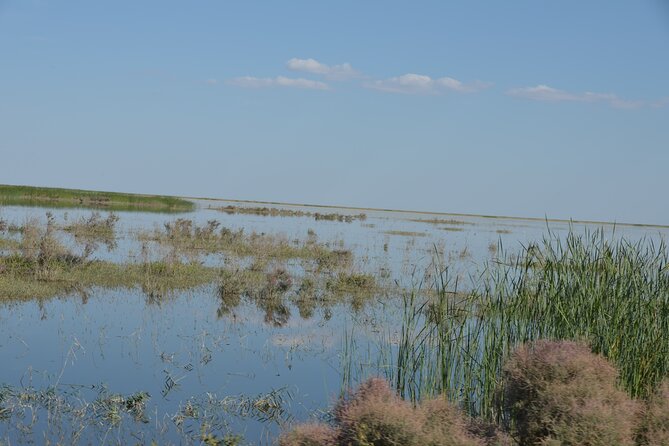
The first major walk covers about 4.5 kilometers and takes around two and a half hours. You head toward the Zeravchan River, but the important point is that its water is entirely used for irrigation.
You then see the river’s dry basin and crops growing in or near the former riverbed. There is also a fish farm along the route. This combination makes the water issue concrete. Instead of hearing a general warning about drought in Central Asia, you see how water is moved toward agriculture and how little remains in the natural channel.
The Zeravchan is tied closely to the region’s farmland. Cotton, fish farming, and other crops all depend on irrigation, so the walk connects the river to the village economy. It also shows the tension between farming and water supply. The dry basin is not merely a scenic oddity. It helps explain why water is one of the most serious problems in this part of the world.
This section requires sensible preparation. Four and a half kilometers over two and a half hours is not an athletic challenge for most people, but the walk is long when combined with the afternoon route. The tour information says most people can participate, yet anyone with limited stamina should ask about the pace and terrain before booking. Weather matters too, since the experience can be canceled in poor conditions.
Same stretch of the Silk Road, a different sort of day:
- Full Day Private Tour in Seven Lakes from Samarkand
★ 5.0 · 94 reviews - Samarkand One Day Tour: one day walking & group tour
★ 4.4 · 87 reviews - Samarkand: Shahrisabz Day Trip with Optional Local Guide
★ 4.9 · 81 reviews - Guide / excursion service in Samarkand
★ 5.0 · 57 reviews
Palov in a family home
After the river walk, lunch is served in a local home. The main dish is palov, the Uzbek rice meal often associated with hospitality and special gatherings.
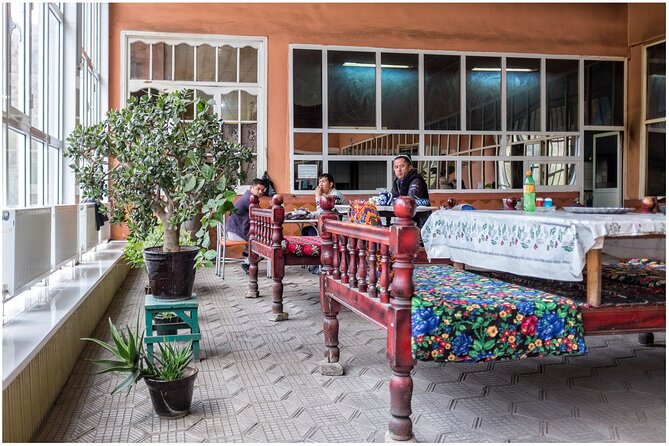
The lunch lasts about two hours, which gives you more than a rushed meal between stops. You have time to watch or discuss the preparation, eat with the family, and enjoy the slower pace of village life. A particularly praised part of the experience is the preparation of the palov and sharing the meal with the family. That makes lunch one of the strongest reasons to choose this tour.
The family setting is also where the trip’s personal value becomes clear. You are not simply tasting Uzbek food in a restaurant. You are eating in a home connected to the agricultural community you have just walked through.
Keep your expectations practical. A family meal may feel informal, and the language barrier may limit conversation. That is not necessarily a problem, but you should be comfortable with a social experience that relies on your guide and on simple interaction.
Lunch is included, while personal expenses are not. Since the meal is part of the program, you will not need to arrange your own midday food. Any purchases at the market or farms would be your responsibility.
Cotton fields, cotton honey, and seasonal work
The afternoon walk covers about 2.5 kilometers and takes another two and a half hours. You go into cotton fields that stretch across the countryside, then visit a beekeeper who produces cotton honey.
The fields change with the calendar. Cotton is sown in April, flowers in early June, and is harvested in September and October. That means the same tour can feel quite different depending on your month of arrival.
In April and May, you may have the chance to see silkworm breeding. In September and October, cotton picking becomes the key seasonal activity. At other times, you see the plants at another stage of their growth. If you have a particular interest in cotton or silkworms, ask the operator what is likely to be happening during your dates.
The beekeeper visit adds another useful layer. Cotton is not only a field crop here. It also supports local honey production, and the cotton honey gives you a specific taste of the area’s agricultural cycle. You visit the farm and learn about the product rather than simply buying a jar in a shop.
You may also have the possibility of helping with farm work. Treat this as a chance that depends on the season and conditions, not as a guaranteed hands-on activity. The tour is strongest when you approach it with curiosity rather than a fixed list of tasks you expect to perform.
The two walks total about seven kilometers. Add the village movements and market stop, and this becomes a full physical day. Comfortable shoes, sun protection, and water are sensible choices, even though the precise equipment list is not specified.
The countryside school and its French connection
A school visit can be arranged at Ishtixon tuman 17-umumiy o‘rta ta’lim maktabi, a rural school where French is still taught as a foreign language.
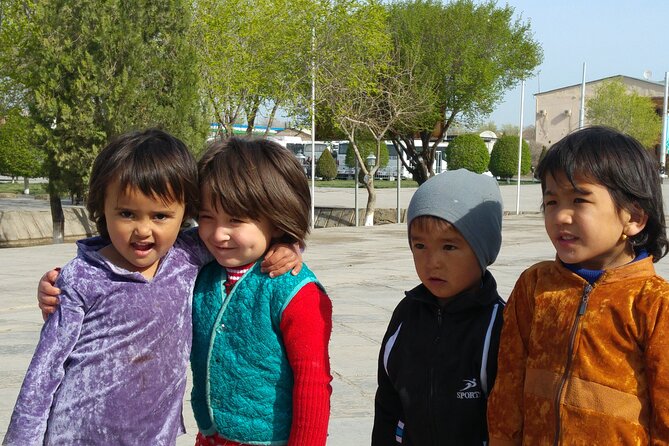
For French-speaking visitors, this is a memorable addition. You may meet students and teachers, tour the school, and learn why French remains part of the curriculum in a village setting. One of the strongest parts of the available feedback was the warm reception from the children and their teachers. The visit was described as especially meaningful and enriching.
There is an important condition: the school must approve the visit in advance. You need to notify the school administration so the visit does not disturb classes, and permission is required. This is not a guaranteed stop that can be added casually on the morning of the tour.
That rule is sensible. A school is a working place, not a tourist attraction, and advance planning protects the students’ normal lessons. If this is a major reason for booking, tell Trip Orient when you reserve and confirm that the school has agreed to receive you.
The school stop is listed as about one hour. Depending on the final plan, it may be included as part of the village day or arranged alongside the other activities. Confirm the order with the operator, since the total outing is described as lasting about 10 to 11 hours.
How the $90 price works in practice
The price is $90 per person. That includes private transportation, a French- or English-speaking guide, and lunch in a family setting. Pickup is offered, and group discounts are available, though no discount amounts are provided.
For a private full-day excursion, the package offers solid value. You are paying for transport beyond Samarkand, a guide, several local encounters, a home meal, and a full program rather than one short rural stop. The private format is particularly useful if your group has specific language needs or wants to request the school visit.
Value depends on your interests. If you only want cotton fields or a quick countryside photograph, $90 may feel high for such a long day. If you value local contact, agricultural context, and a meal with a family, the cost makes more sense.
The experience is booked an average of 61 days ahead, which suggests that early planning is wise. Confirmation arrives within 48 hours of booking, subject to availability. Since the school requires advance permission and the tour may need a minimum number of participants, leave room in your schedule if possible.
Free cancellation is available up to 24 hours before the start time. Cancellations or changes inside that 24-hour window are not refunded or accepted. Poor weather can also cause a cancellation, in which case you are offered another date or a full refund. The same choice applies if the minimum number is not reached.
Who should book this experience?
I would choose this outing if you want to understand Uzbekistan beyond Samarkand’s historic center. It suits you especially well if you enjoy walking, home meals, farming, and conversations that may require a little patience.
It is a good match for:
- Couples or families seeking a private rural day
- French-speaking visitors interested in meeting school students
- People curious about cotton production and seasonal farm work
- Anyone who wants to see how irrigation shapes village life
- Small groups that can benefit from private transport and a group discount
I would think twice if you dislike long days, outdoor walking, uncertain weather, or informal social contact. The program has several fixed pieces, but farm work and school access depend on timing and permission. The countryside is the point, so do not book this expecting the polished rhythm of a city sightseeing tour.
Should you book the Kolkhoz village visit?
Book it if the idea of sharing palov with a family appeals more than adding another monument to your schedule. The strongest moments are the human ones: welcome tea, the family meal, the school reception, and the chance to see cotton farming as part of everyday life.
The dry Zeravchan basin also gives the trip real depth. You leave with a clearer sense of how irrigation supports agriculture while putting pressure on the region’s rivers. That context makes the fields and fish farm more meaningful.
For the best fit, confirm three things before paying: the pickup plan, the expected walking conditions, and whether the school visit has been approved. Also check what seasonal activity is likely during your dates. If you are ready for a long, outdoors-focused day, this is one of the more personal ways to meet rural Uzbekistan near Samarkand.
FAQ
How long does the Kolkhoz village tour last?
The full experience lasts approximately 10 to 11 hours. The village program itself includes welcome tea, walking, lunch, farm visits, and the return to Samarkand.
What is included in the $90 price?
The price includes lunch in a family setting, private transportation, and a French- or English-speaking accompanying guide.
Is the tour private?
Yes. Only your group participates in the private tour or activity.
How much walking is involved?
The river walk covers about 4.5 kilometers and takes around two and a half hours. The cotton-field and beekeeper walk covers about 2.5 kilometers and takes another two and a half hours.
Can I visit the rural school?
A school visit may be arranged, but it requires advance booking and permission from the school administration. You must notify the school so the visit does not disrupt classes.
What seasonal activities might I see?
Silkworm breeding may be available in April and May. Cotton is sown in April, flowers in early June, and is picked in September and October.
Can I cancel for a full refund?
You can cancel up to 24 hours before the experience begins for a full refund. Poor weather or failure to meet the minimum number of participants may also lead to an alternative date or a full refund.
Freshly added in Samarkand
- Wine tour in Samarkand (Baguizagan) English★ 5.0 · 2 reviews
- Uzbek wedding ceremony★ 5.0 · 2 reviews
- Samarkand Capital of Amir Timur Private Tour with Transport★ 5.0 · 3 reviews
- Shakhrisabz Private Day Tour from Samarkand★ 5.0 · 4 reviews
- Seven Lakes Panjakent: One-Day Adventure from Samarkand★ 5.0 · 3 reviews
- The Golden City of Samarkand: A Self-Guided Audio Tour★ 4.0 · 4 reviews
- Tadjikistan 7 Lakes Day Trip from Samarkand with Lunch★ 5.0 · 5 reviews
- Ancient and Modern tour in Samarkand with Transport★ 5.0 · 3 reviews
Samarkand Tours, compared.
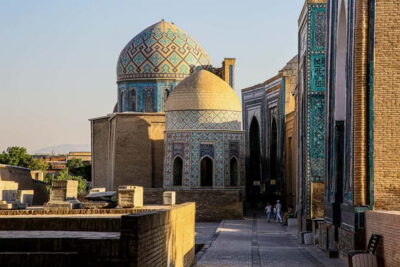
Samarkand: Historical Monuments Guided Walking Tour
Read our review →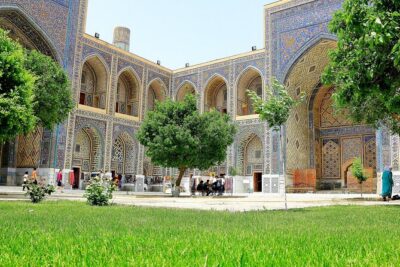
Private Samarkand City Tour With Transportation
Read our review →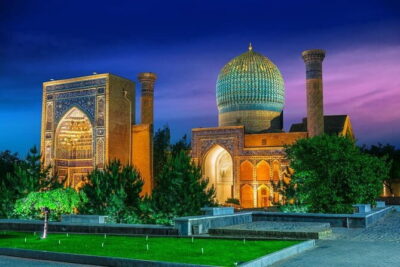
A City Tour Of Samarkand: The Pearl Of The East
Read our review →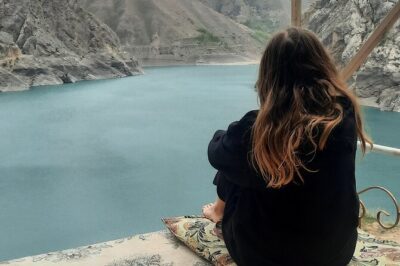
Full Day Private Tour in Seven Lakes from Samarkand
Read our review →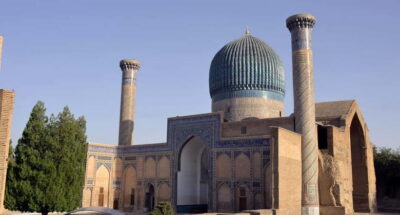
Samarkand One Day Tour: one day walking & group tour
Read our review →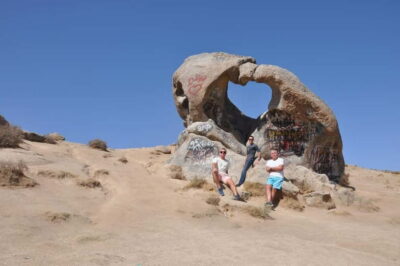
Samarkand: Shahrisabz Day Trip with Optional Local Guide
Read our review →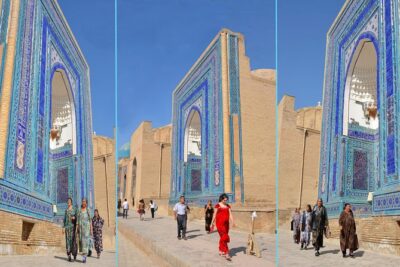
Browse the lists this tour appears in