
Reviewed · TASHKENT TOURS
Uzbekistan in 7 days Tashkent, Samarkand, Bukhara and Khiva
Four Silk Road cities, one fast-moving week. This tour gives you a practical route through Uzbekistan’s major sights, from Tashkent’s old quarters to Khiva’s walled city. I especially like the high-speed Afrosiyob trains between Tashkent, Samarkand and Bukhara, and I like that hotels, breakfasts, transfers, excursions and monument tickets are bundled into the $1,250 price. The main concern is the pace: the advertised title says seven days, but the schedule provided covers six days, with a long train journey to Khiva.
The plan works well for someone who wants the broad picture without arranging every train, hotel and local guide alone. Assalam Travel also says it can adjust the route to suit your plans. That flexibility matters, though you should confirm the exact number of nights, hotel names, train times and what happens on the final departure day before paying.
In This Review
- Key points to know before booking
- What the $1,250 price really buys you
- Day one in Tashkent: an easy arrival
- Day two: old Tashkent, markets and modern squares
- Day three in Samarkand: blue tile and astronomical ambition
- Day four in Bukhara: trading domes and royal power
- Day five: the long road toward Khiva
- Day six in Khiva: a complete walk through Itchan Kala
- How the organization affects your trip
- Who should book this Uzbekistan tour?
- FAQ
- Is this tour six days or seven days?
- What cities are included?
- Are train tickets included?
- What is included in the $1,250 price?
- How large can the group be?
- Can I cancel for a full refund?
- Should you book it?
Key points to know before booking
- Four historic cities in six scheduled days: Tashkent, Samarkand, Bukhara and Khiva are all included, but you will keep moving.
- Afrosiyob trains save valuable time: The fast train takes about 2 hours 15 minutes from Tashkent to Samarkand and 1 hour 30 minutes from Samarkand to Bukhara.
- Khiva requires patience: The train from Bukhara takes 6 to 7 hours, with a stop near the Amu Darya River.
- The package covers the costly basics: Three- and four-star hotels, breakfasts, train tickets, transfers, transport, excursions and entrance tickets are included.
- Local support is a major strength: Sayeed and his team receive repeated praise for safety, daily contact and careful organization.
- Small-group format: The maximum group size is 25 people, with pickup offered and mobile ticketing available.
What the $1,250 price really buys you
At $1,250 per person, this is not a bare-bones sightseeing package. The price includes accommodation in three- and four-star hotels, breakfast, train tickets, transfers, transportation services, guided excursions and entrance fees to the historic monuments. Those inclusions remove many of the costs that can quietly pile up on a multi-city trip.
The trains are especially important. Buying rail tickets, matching them to hotel transfers and arranging city guides can take time, particularly when you are moving through four cities in quick succession. Here, the main route is organized for you.
I would still ask for a written list of inclusions. The information does not name the hotels, explain whether every meal beyond breakfast is excluded, or describe the final transfer after the Khiva sightseeing day. It also does not say how many people usually travel in a group, only that the maximum is 25.
The tour is listed at approximately six days, while its title refers to seven days. That is worth clearing up early. The schedule begins with arrival and hotel check-in in Tashkent, followed by sightseeing on day two, and finishes with a full Khiva program on day six.
Other Tashkent trips travellers line up with this one:
- Best of Tashkent Mountains: Amirsoy, Chimgan & Charvak Trip
★ 4.8 · 567 reviews - Samarkand One Day Tour – Departure From Tashkent
★ 5.0 · 313 reviews - Tashkent City Tour
★ 5.0 · 121 reviews
Day one in Tashkent: an easy arrival
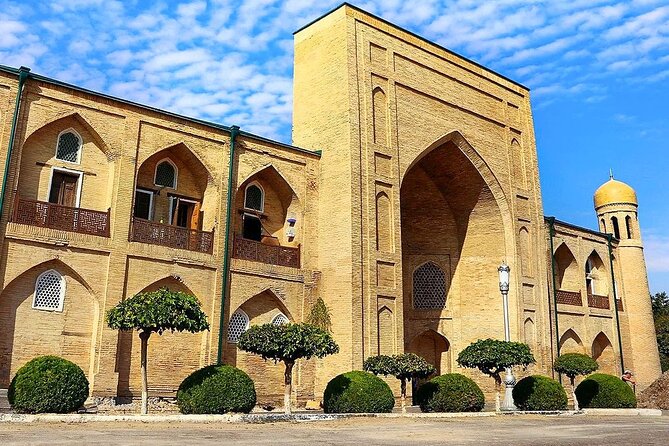
The first day is intentionally light. You receive an airport or arrival transfer, check into the hotel and have time to settle in. Excursions begin the next day.
That is a sensible start after an international flight. You are not expected to rush straight into a museum or monument, and a private transfer can make the first hours in a new country much easier. Since the tour offers pickup, confirm exactly where the driver will meet you and how late arrivals are handled.
Tashkent is the modern entry point for the trip. The following day gives you both its old religious quarter and its newer civic center, so this first night is mainly about getting rested for a full sightseeing day.
Day two: old Tashkent, markets and modern squares
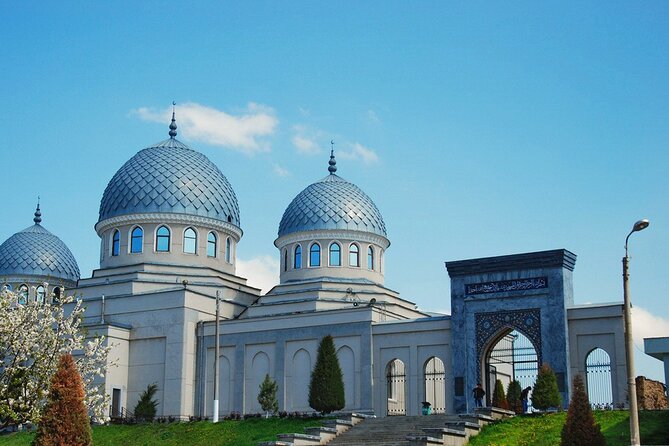
The Tashkent sightseeing day is packed with nine stops. It begins at the Hazrati Imam Complex, one of the city’s key spiritual sites. You will see the Barak-Khan Madrasa and its detailed decoration, then continue to Juma Mosque and the Abdulkasym Medrese.
These first visits give you a useful introduction to religious architecture in the capital. The schedule allows about 90 minutes at Hazrati Imam, followed by 45 minutes at each of the two smaller religious sites. That is enough time for an overview, though not the sort of schedule that allows a slow, private study of every tile and carved detail.
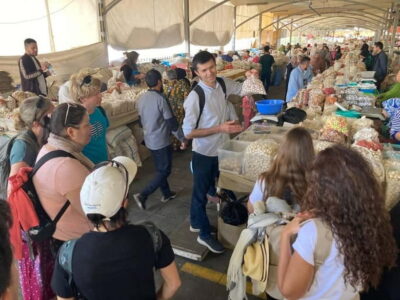
Chorsu Bazaar brings a welcome change of pace. Set beneath a huge blue dome in Tashkent’s old city, it is a place to look at spices, produce, sweets and everyday local commerce. I would treat this as more than a shopping stop. Markets often explain a city better than a formal display, and Chorsu gives you a chance to see the practical side of Uzbek life.
After the bazaar, the route shifts to Amir Timur Square and Independence Square. Amir Timur Square has a statue of Timur on horseback and landscaped gardens. Independence Square is the country’s main political and cultural center, with the Independence Monument, an Eternal Flame and fountains.
The final two stops show the capital’s newer identity. Tashkent City Park offers modern buildings, cafes and newly designed public spaces. The Uzbekistan State Museum of Applied Art then brings you back to traditional craft, with ceramics, woodwork and textiles displayed inside an old mansion.
The day ends at the Amir Timur Museum, where you can learn about the ruler’s life and legacy. With stops ranging from 30 minutes to 90 minutes, this is an efficient introduction rather than a relaxed day. Wear comfortable shoes and expect plenty of time getting on and off transport between sites.
Day three in Samarkand: blue tile and astronomical ambition
The journey to Samarkand uses the Afrosiyob high-speed train and takes about 2 hours 15 minutes. After arrival and hotel check-in, sightseeing begins at the Gur Emir Mausoleum.
Gur Emir is closely tied to Amir Timur and his dynasty. The visit lasts about 40 minutes, a good length for seeing the decorated interior and understanding why the mausoleum matters before moving to Samarkand’s most famous sight.
Registan Square is the centerpiece. Three grand madrasahs frame the square with mosaics, tall minarets and ornate facades. The scheduled hour lets you take in the scale of the place and hear the basic story behind the buildings. If you care about photography, this is one of the stops where you will want a little free time after the guide’s explanation.
Shah-i-Zinda follows, with an avenue of mausoleums covered in blue tilework. It is both a sacred place and an architectural highlight. The path and steps require steady walking, but the close-up detail here is very different from the broad spectacle of Registan.
At the Ulugh Beg Observatory, the focus shifts from rulers and religious schools to science. You will learn about Ulugh Beg, the scholar-ruler, and see the remains of his large sextant. The visit lasts around 40 minutes, which is enough to understand the site’s importance without turning the day into a technical lecture.
Bibi-Khanym Mosque brings another enormous structure into view. Once among the world’s largest mosques, it has huge domes and a broad courtyard. The scale is the point, especially after the more intimate mausoleums at Shah-i-Zinda.
The day ends at Siab Bazaar, near Samarkand’s historic center. Fresh fruit, nuts, spices and local sweets make this a good place to see what people buy and eat, and perhaps to pick up something simple for the train or hotel.
Samarkand receives the most famous names in the itinerary, so expectations can be high. The schedule covers the main sights well, but it leaves little room for wandering. If the guide offers a choice between an extra photo stop and more time at Registan or Shah-i-Zinda, I would choose the latter.
Same stretch of the Silk Road, a different sort of day:
- Shymkent Day Tour from Tashkent
★ 4.6 · 71 reviews - Highlights of Tashkent (old and new part)
★ 5.0 · 60 reviews - 2 Days Tour to Bukhara and Samarkand from Tashkent by train
★ 5.0 · 53 reviews - Tashkent city tour
★ 5.0 · 50 reviews
Day four in Bukhara: trading domes and royal power
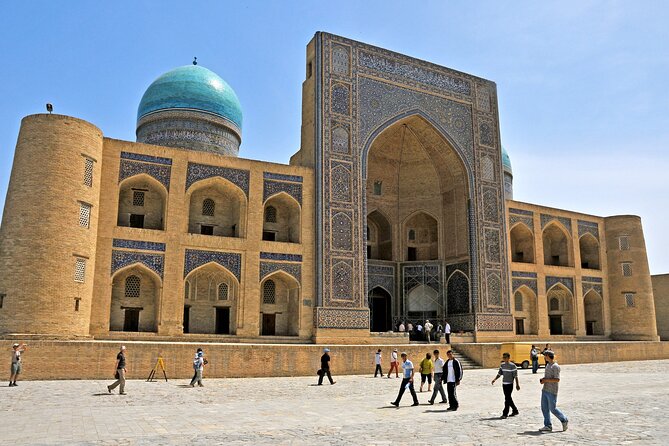
The train from Samarkand to Bukhara takes about 1 hour 30 minutes. After checking into the hotel and resting, you begin at Lyab-i-Hauz, a peaceful square built around a pool.
Lyab-i-Hauz is a useful place to start because Bukhara feels more intimate than Tashkent or Samarkand. The square, surrounding buildings and water create a calmer setting, and the 40-minute visit gives you time to take in the city’s traditional center.
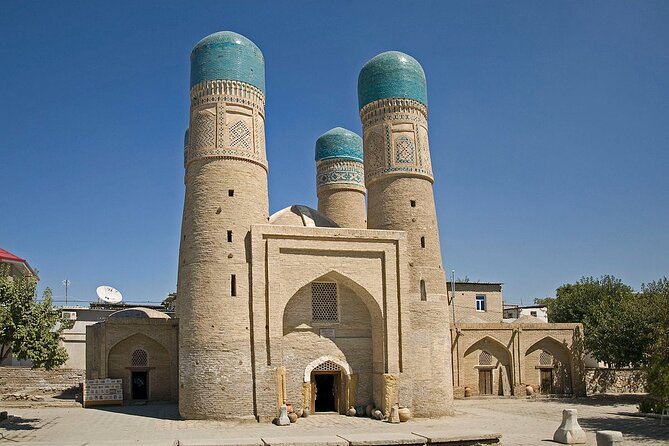
Chor Minor is one of Bukhara’s most recognizable buildings, with four blue-domed towers. The tour allows 30 minutes and includes a rooftop climb for a wider view. Check your footing and take the stairs at your own pace. The climb is short, but it is not suitable for everyone.
The Trading Domes follow. These covered market buildings once served merchants dealing in silk, spices and jewelry. Today, you can browse Uzbek souvenirs and speak with artisans. Shopping is part of the experience here, but you do not need to buy anything to appreciate the setting.
The Great Minaret of the Kalon is next. The schedule gives it 50 minutes, although the description appears to repeat the Trading Domes text, so I would ask the guide what exactly is included at this stop. The minaret is one of Bukhara’s defining monuments, and the surrounding area rewards a slow look at its brickwork and proportions.
The Ulugh Beg and Abdullazizkhan madrasahs face each other and show contrasting architectural styles. You will see Ulugh Beg’s comparatively restrained design alongside the more heavily decorated Abdullazizkhan building. The 50-minute stop gives the guide room to explain how different periods shaped the city.
At the Ark of Bukhara, you enter the former fortress and residence of the city’s rulers. Courtyards, museums and defensive walls make this a more varied stop than a single monument. Allow an hour, and expect a story about royal life as well as military power.
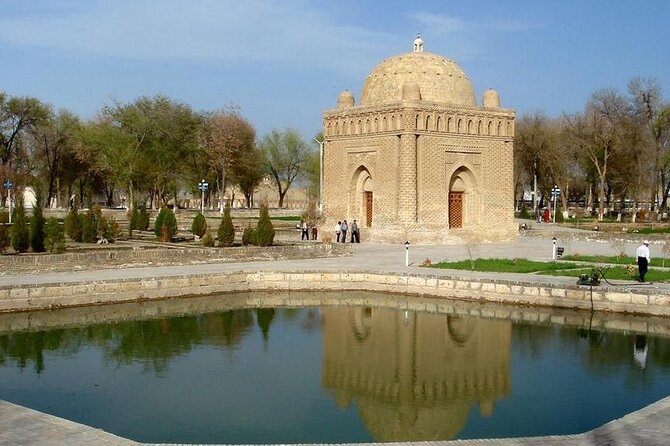
The Ismail Samani Mausoleum closes the day’s main sights. Built in the 10th century from baked brick, it uses geometric patterns instead of the colorful tilework found elsewhere. The 30-minute visit is short, but this building is a good reminder that Central Asian architecture was not defined by blue tile alone.
Bukhara’s center is compact enough to feel walkable, but this remains a full day of monuments. The combination of markets, religious schools, a fortress and a mausoleum gives you a broad sense of the city rather than a single narrow theme.
Day five: the long road toward Khiva
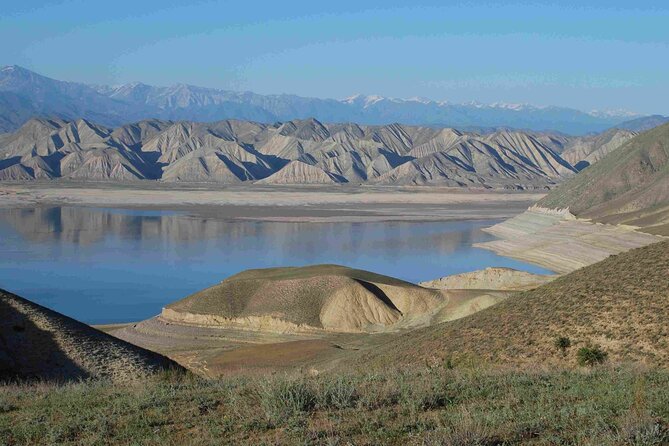
Day five is the least glamorous and perhaps the most important to understand before booking. The train from Bukhara to Khiva takes 6 to 7 hours, with a stop at the Amu Darya River.
This is a long transfer, not a sightseeing day in the usual sense. The Amu Darya is one of Central Asia’s major rivers and flows through several countries, including Uzbekistan. The stop gives the journey a geographic point of interest, but the schedule does not describe a longer excursion or a full guided visit.
Bring patience and something to read. The long ride is the price of reaching Khiva by rail after seeing Samarkand and Bukhara. You should ask whether you spend the night in Khiva after arrival and how the hotel transfer is arranged, since the supplied schedule does not spell out those details.
Day six in Khiva: a complete walk through Itchan Kala
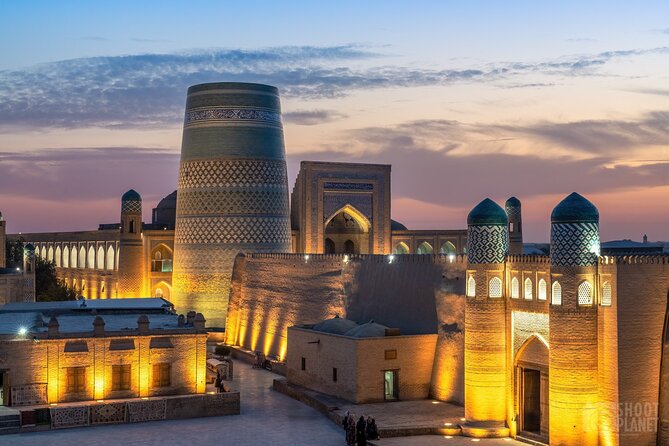
Khiva’s main attraction is Itchan Kala, the walled old city. The first visit lasts about two hours and includes the watchtower, views over the old city and the famous Kalta Minor Minaret.
Khiva feels different from the other cities because so many sights are concentrated inside the old walls. That makes the city easier to understand on foot, but the number of monuments can also become a blur. A good guide matters here, especially for explaining how mosques, madrasahs, palaces and mausoleums fit together.
Muhammad Amin Khan Madrassah is the largest madrasah in Khiva. It was built between 1851 and 1854, and the 30-minute stop gives you a focused look at one of the old city’s major buildings.
Kalta Minor is the unforgettable unfinished minaret, begun in 1851 by Muhammad Amin Khan. It was intended to be the tallest minaret in the area, but construction stopped before it was completed. Its broad, tile-covered shape is unlike the tall, slender towers elsewhere in Uzbekistan.
The Pahlavan Mahmoud Mausoleum is considered Khiva’s most sacred site. It honors Pahlavan Mahmud, a poet, philosopher and wrestler, according to the supplied description. Give this stop a respectful pace. Sacred spaces call for modest clothing and quiet attention.
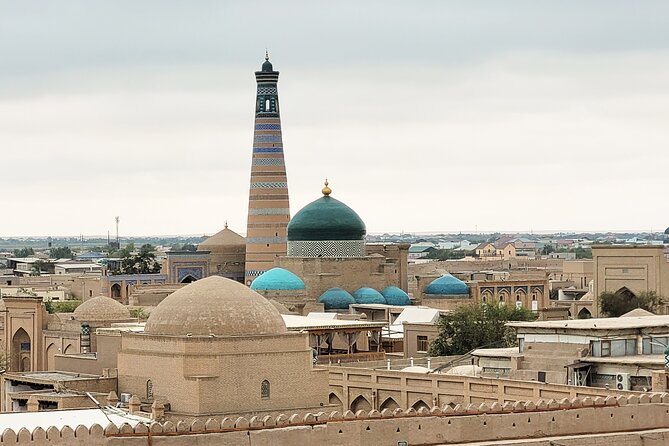
At the Islam Khodja Complex, you have the option to climb the narrow spiral staircase of Khiva’s tallest minaret. The reward is a panoramic view across the old city, but the climb is not compulsory. If heights or tight stairways are a concern, ask to remain below.
Juma Mosque is one of Khiva’s most unusual buildings. Its 213 carved wooden columns include examples said to date from the 10th century. After the tall minarets and decorated facades outside, the dim, column-filled interior offers a strong change in mood.
Tash Hauli Palace was the private home of the Khiva khans. You will see the harem and other palace areas, including spaces connected with the khan’s wives and concubines. The 45-minute visit provides a look at court life, though the word harem can make the site sound more glamorous than the realities of palace hierarchy.
The final stop is the Allakuli-Khan Caravanserai and Tim Market. This 19th-century marketplace once served merchants on the Silk Road and now contains souvenir shops. It is a natural place to finish because you can browse crafts and goods after learning how the old commercial routes worked.
How the organization affects your trip
Assalam Travel provides a guide in each city, according to the available tour details. One review noted that the service can vary from guide to guide because the trip is not handled by one continuous guide, but the operator made contact each day. That daily communication can be reassuring when you are changing cities often.
Sayeed and his team receive especially warm praise for taking care of safety, comfort and enjoyment from start to finish. Another booking from two women described feeling safe throughout the trip and praised the local guides and organization. Those comments do not guarantee that every guide will suit your style, but they point to attentive local coordination.
The maximum group size is 25. That is not a tiny private tour, so you should expect some waiting when the group gathers or enters a monument. It is also small enough to remain manageable if the guide keeps everyone together.
The ability to customize the tour is useful. You might ask for slower pacing in Samarkand, more market time in Bukhara or clearer arrangements around the long Bukhara to Khiva transfer. Get any changes confirmed in writing, especially if they affect train tickets or hotel nights.
Who should book this Uzbekistan tour?
I would recommend it to a first-time visitor who wants the four major destinations in one organized trip. It suits you if you value included transport, daily coordination and a guide at each key site more than free time in each city.
It is also a good fit for people who do not want to manage Central Asian rail travel alone. The Afrosiyob connections are a real advantage, and the package removes much of the guesswork around transfers and admission tickets.
I would hesitate if you prefer slow travel. Tashkent has nine stops in one day, Samarkand has six, Bukhara has seven, and Khiva has eight. The Bukhara to Khiva train is also 6 to 7 hours. This is a highlights tour with cultural context, not a leisurely stay in each city.
The cancellation terms are useful: you can receive a full refund if you cancel at least 24 hours before the start time. Changes or cancellations made within 24 hours are not accepted for a refund, and the cut-off follows local time.
FAQ
Is this tour six days or seven days?
The tour title refers to seven days, but the scheduled program runs from day one through day six. Ask Assalam Travel to confirm the exact duration, number of hotel nights and final departure arrangements.
What cities are included?
The route covers Tashkent, Samarkand, Bukhara and Khiva. It begins with arrival and hotel check-in in Tashkent and ends with sightseeing in Khiva.
Are train tickets included?
Yes. The package includes train tickets, including the Afrosiyob journeys between Tashkent, Samarkand and Bukhara, plus the train from Bukhara to Khiva.
What is included in the $1,250 price?
The stated inclusions are three- and four-star hotel accommodation, breakfast, train tickets, transfers, transportation services, excursions and entrance tickets to historical monuments.
How large can the group be?
The maximum group size is 25 people. Pickup is offered, and the experience provides mobile ticketing.
Can I cancel for a full refund?
Yes, if you cancel at least 24 hours before the experience start time. Cancellations or changes made less than 24 hours before the start time are not accepted for a refund.
Should you book it?
Book this tour if you want Uzbekistan’s major Silk Road cities arranged into one efficient route, with the main costs handled in advance. The strongest reasons are the fast trains, included entrance fees, local guides and daily support from Assalam Travel.
Before booking, confirm the six-day versus seven-day wording, the hotel list, meal details and the plan for arriving in Khiva after the long train ride. If you are comfortable with a full schedule and want a well-organized first look at Uzbekistan, the $1,250 package offers solid value. If you want lazy mornings and long café stops, choose a slower custom version instead.
Freshly added in Tashkent
- Uzbek Brews & Views: Tashkent Craft Beer Discovery Tour★ 5.0 · 2 reviews
- Uzbekistan Tour – 6 Days 5 Nights★ 5.0 · 4 reviews
- Tashkent International Airport (TAS) to Tashkent – Arrival Private Transfer★ 5.0 · 2 reviews
- 8-Day Private Tour in Uzbekistan with Pick Up★ 5.0 · 2 reviews
- Tashkent-Samarkand-Bukhara tour-3nights/4 days★ 5.0 · 5 reviews
- Tashkent Food and Metro Journey★ 5.0 · 4 reviews
- Private Intercity Transfer Tashkent – Samarkand – Tashkent★ 3.5 · 3 reviews
- Private Tashkent City Tour★ 5.0 · 3 reviews
Tashkent Tours, compared.
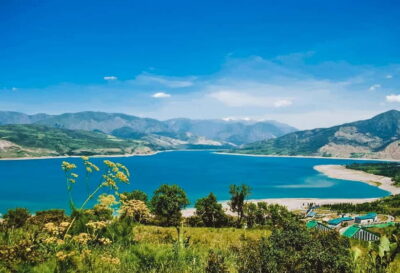
Best of Tashkent Mountains: Amirsoy, Chimgan & Charvak Trip
Read our review →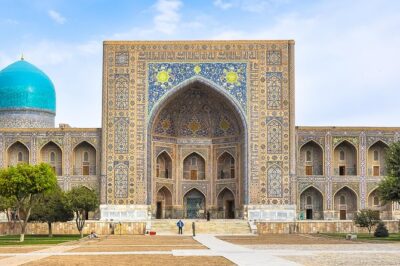
Samarkand One Day Tour – Departure From Tashkent
Read our review →
2 Days Tour to Bukhara and Samarkand from Tashkent by train
Read our review →
Browse the lists this tour appears in