
Reviewed · TASHKENT TOURS
Tashkent Tour
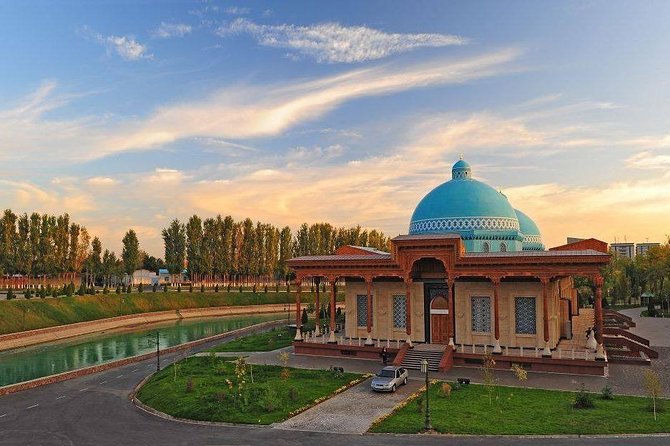
Tashkent reveals itself one landmark at a time. This private half-day tour links the city’s Islamic monuments, Soviet-era public spaces, grand buildings, and everyday market life in about five to six hours. With hotel pickup and drop-off, you can see a lot without spending your first day sorting out transport.
I especially like the flexible private format, which lets your guide adjust the pace and route for your group. I also like the mix of major sights and ordinary city life, from the tiled Barak-Khan Madrassah to the stalls of Chorsu Bazaar. The main caution is physical: you may face plenty of walking, steps, and heat, and the schedule can feel full if you linger at every stop.
The tour costs $65 per person and is led by a local guide from Silk Road Travellers. Guides named in feedback include MirSaid, Nuriddin, Murod, Dilmurat, Abror, Eldor, and others. Their personalities may differ, but the strongest praise centers on clear explanations, good English, local recommendations, and a genuine affection for Tashkent.
In This Review
- Key points to know before booking
- Why this makes a useful first day in Tashkent
- Barak-Khan Madrassah and Kaffal Shashi Mausoleum
- Chorsu Bazaar, where Tashkent feels most immediate
- Independence Square and Romanov Palace
- Navoi Opera Theater and Tashkent’s cultural side
- One hour at the Museum of Applied Art
- Amir Temur Square closes the route
- Guides are the main strength
- Walking, weather, and timing
- Is $65 a fair price?
- Who should book this Tashkent tour?
- Should you book it?
- FAQ
- How long does the Tashkent tour last?
- Is hotel pickup and drop-off included?
- Is this a private tour?
- Is admission to the sights included?
- What does the $65 price include?
- Can I cancel for a full refund?
Key points to know before booking
- Private touring keeps the day flexible: Your guide can alter the plan when your group has already seen a sight or wants more time somewhere else.
- Eight stops cover several eras: You will see sixteenth-century Islamic buildings, nineteenth-century royal architecture, a 1947 theater, modern public squares, a market, and an applied arts museum.
- Chorsu Bazaar adds daily life: This is more than a photo stop. A guide can help you understand the market and make the first visit less confusing.
- The museum visit takes one full hour: Admission is not included, so allow extra money beyond the $65 tour price.
- Expect walking and heat: One account describes many steps, lots of walking, and very hot conditions. Comfortable shoes and water matter.
- The rest of your day remains open: The tour finishes after roughly five to six hours, leaving time for your own plans in Tashkent.
Why this makes a useful first day in Tashkent
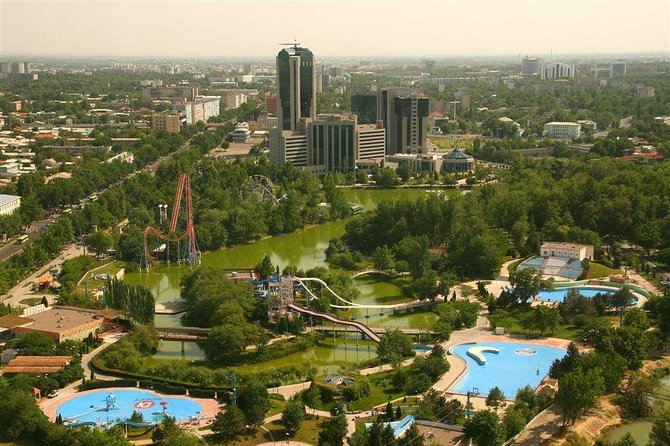
Tashkent is not a city that gives you its story in one neat view. It is a large capital with layers from the Timurid and Islamic periods, the Russian imperial era, the Soviet years, and independent Uzbekistan. These layers can feel scattered if you explore without a plan.
This tour gives you a sensible introduction. You begin among religious buildings, move into the city’s traditional market, then pass through grand civic spaces and cultural institutions. That sequence helps you see Tashkent as more than a collection of isolated monuments.
The private format matters here. You are not waiting for a large group to finish photographs or trying to hear a guide across a crowded sidewalk. Your guide can explain a detail, slow down for questions, or move along when a stop has given you enough.
The tour is advertised at five to six hours, which is a useful middle ground. It is long enough to cover the city’s main central sights, but short enough to leave your afternoon or evening free. One group finished early after seeing what they wanted, while another used the flexible schedule to change the route. That freedom is one of the best reasons to consider a private tour instead of a fixed group outing.
Other Tashkent trips travellers line up with this one:
- Best of Tashkent Mountains: Amirsoy, Chimgan & Charvak Trip
★ 4.8 · 567 reviews - Samarkand One Day Tour – Departure From Tashkent
★ 5.0 · 313 reviews - Tashkent City Tour
★ 5.0 · 121 reviews
Barak-Khan Madrassah and Kaffal Shashi Mausoleum
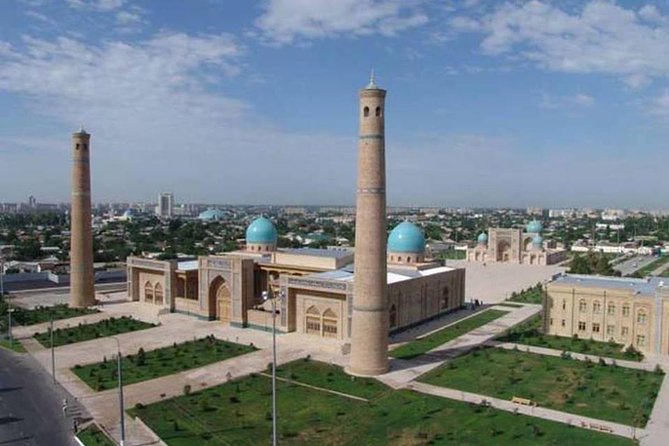
The first stop is Barak-Khan Madrassah, a sixteenth-century religious school in the old part of Tashkent. Its architecture gives you an immediate introduction to the region’s Islamic traditions, with the sort of courtyard setting and decorative details you would expect from a Central Asian madrassah.
You have about 20 minutes here, and admission is free. That is enough for an introduction and photographs, though not a long architectural study. I would use this stop to ask your guide about the building’s purpose, the role of religious schools, and how Tashkent fit into the wider Silk Road world.
The nearby Mausoleum of Saint Abu Bakr Kaffal Shashi receives about 15 minutes. This sixteenth-century site honors Abu Bakr Kaffal Shashi, an important religious figure connected with Tashkent. The visit is brief, but it adds a more personal and spiritual layer to the monumental madrassah.
These first two stops work well together. Barak-Khan shows the public and educational side of Islamic architecture, while the mausoleum gives you a place tied to devotion and remembrance. Do not expect a long quiet visit at either site. The value comes from the guide’s explanation and the way the stops establish the city’s older identity.
Chorsu Bazaar, where Tashkent feels most immediate
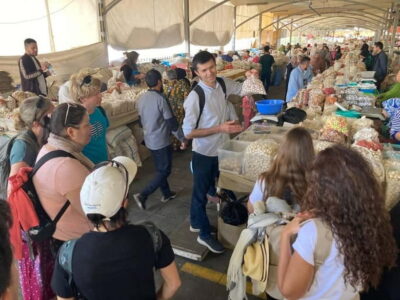
Chorsu Bazaar is the tour’s most useful stop for seeing present-day Tashkent. It is the city’s main traditional market, and the planned 30 minutes gives you time to look around without letting the market take over the entire day.
A market can be hard to read at first. You may see food, household goods, and local products arranged in areas that make sense to residents but not immediately to you. A guide such as Abror can help you get your bearings and offer local suggestions. That kind of introduction is practical, especially if this is your first visit to Uzbekistan.
I would not treat Chorsu as a quick background for photographs. Look at how people shop, how goods are presented, and how the market functions as a social space. Your guide may be able to explain what you are seeing, but you should also leave room for simple observation.
Thirty minutes is enough for an overview, not a slow market morning. If your group is especially interested in food or shopping, ask whether the schedule can give you more time here. The private arrangement makes that request possible, although spending longer at the bazaar may mean shortening another stop.
Independence Square and Romanov Palace
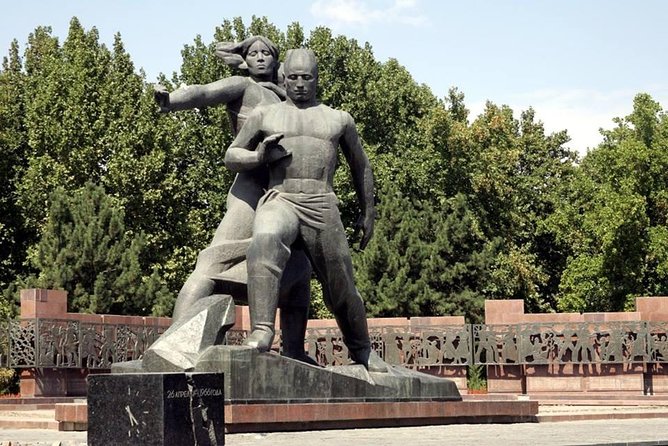
Mustaqillik Maydoni, or Independence Square, shifts the mood from old religious quarters to the formal center of modern Uzbekistan. You have about 20 minutes here. It is a broad civic space connected with the country’s independence and public identity.
Your guide can give the square context that you would miss by simply walking through it. Pay attention to the scale and design. Public squares often tell you how a government wants its capital to look and feel, and this one provides a clear counterpoint to the intimate courtyards seen earlier.
The Romanov Palace is a much shorter visit, at about 15 minutes. This nineteenth-century palace reflects another period in Tashkent’s story, when Russian imperial influence shaped the city. Even with limited time, the stop helps show that Tashkent’s architecture is not only Islamic or Soviet.
The palace may be more of an exterior or brief viewing stop than a long interior tour, since no extended admission visit is specified. I would see it as a useful historical marker rather than one of the day’s main attractions.
Same stretch of the Silk Road, a different sort of day:
- Shymkent Day Tour from Tashkent
★ 4.6 · 71 reviews - Highlights of Tashkent (old and new part)
★ 5.0 · 60 reviews - 2 Days Tour to Bukhara and Samarkand from Tashkent by train
★ 5.0 · 53 reviews - Tashkent Airport & Train Station Pick Up & Drop Off
★ 4.5 · 50 reviews
Navoi Opera Theater and Tashkent’s cultural side
The Alisher Navoi Theater dates from 1947 and gives the tour a strong Soviet-era cultural stop. You have about 15 minutes here, so the visit is likely focused on the building and its place in the city rather than a performance.
The theater is named after Alisher Navoi, one of the great literary figures associated with the region. Even without attending a show, the building connects architecture, literature, music, and national culture. Ask your guide what makes the theater important to local residents and how it fits into Tashkent’s cultural life.
This stop also helps break up the older monuments. The tour is not trying to present Tashkent as a preserved medieval city. Instead, it shows a capital that has been rebuilt, reshaped, and given new public institutions over time.
Fifteen minutes will not satisfy anyone who wants a full architectural tour. Still, as part of a broad city introduction, it is worthwhile. You get a sense of how Tashkent’s cultural identity continued into the twentieth century.
One hour at the Museum of Applied Art
The Uzbekistan State Museum of Applied Art is the longest stop, with about one hour planned. Admission is not included, so confirm the current entry fee when booking or with your guide and bring extra money for it.
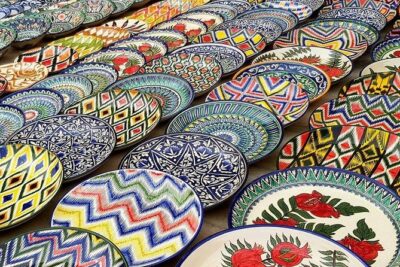
This museum is a good place to slow down after several short outdoor visits. Applied art can reveal daily life in ways that grand monuments cannot. Decorative objects, textiles, ceramics, and other crafts can show regional patterns, materials, and design traditions. The provided details do not specify the exact displays on the day of your visit, so your guide’s explanation will be important.
The one-hour allocation is sensible. You can see a meaningful portion of the collection without turning the entire tour into a museum day. If you prefer buildings and street scenes to museum displays, this may feel like the least essential stop. If you want cultural context, it may be one of the most rewarding.
This is also where the price calculation needs a little care. The advertised $65 covers the vehicle, bottled water, and professional guide, but not museum admission, personal expenses, tips, or all fees and taxes. The tour is still reasonably priced for private transport and guiding, but the final cost will be higher than the headline figure.
Amir Temur Square closes the route
Amir Temur Square receives about 30 minutes and provides a fitting final stop. Amir Temur, also known as Tamerlane, is one of the most important figures in Central Asian history, and his name appears often in Uzbekistan’s public spaces and national story.
The square gives you room to step back from individual buildings and consider the city as a whole. It is also a practical place to ask final questions and get advice for the rest of your stay. Guides praised for local recommendations, including Abror, can be especially helpful here, since you may want suggestions for dinner, museums, or independent sightseeing afterward.
Thirty minutes is enough to walk around and take in the setting. As with Independence Square, the appeal is partly civic and symbolic rather than purely architectural. You are seeing how modern Tashkent presents its connection with national history.
Because this is the final stop, the guide can also help you decide what deserves a second look later. That is a small but valuable benefit of a private tour. You finish with a clearer sense of where you are and what you want to explore next.
Guides are the main strength
The guide can make or break a city tour, and this experience has received especially strong praise for its staff. MirSaid was described as calm, pleasant, professional, and very clear in English. Nuriddin was praised for explaining the city’s past and culture with clarity, while Murod was appreciated for his enthusiasm for Tashkent and Uzbekistan.
Dilmurat received praise for bringing Uzbek culture to life through detailed explanations. Abror helped with airport pickup and local recommendations, with his introduction to Chorsu Bazaar singled out as particularly useful. Eldor was praised for punctuality, kindness, and clear explanations in Spanish.
You should not assume you will receive a specific guide unless the provider confirms it. Still, the repeated pattern is encouraging: the strongest part of the experience is not simply transportation from sight to sight. It is having someone explain why each place matters.
There was one report of initial difficulty connecting with the agency, though the matter was resolved and the tour then ran smoothly. I would confirm your pickup time and location before the day begins, particularly if you are arriving by air or have a tight schedule.
Walking, weather, and timing
The tour includes an air-conditioned vehicle and bottled water, both welcome in Tashkent’s heat. Even so, the vehicle does not remove all physical effort. You will walk around squares, markets, religious sites, and museum spaces, and one account specifically noted many steps and very hot weather.
Wear comfortable shoes and carry sun protection. The tour data does not specify a season or exact start time, so ask the provider which departure works best for the weather. An earlier start may be more comfortable if temperatures are high, but you should confirm this rather than assume it.
The short time allocations also mean you need to keep moving. Barak-Khan Madrassah, the mausoleum, Independence Square, Romanov Palace, and the theater each receive only 15 to 20 minutes. That suits a first look, but not a slow, detailed study.
The private setup gives you some control. If your group has already visited one of the sights, the guide may be able to replace it or spend more time elsewhere. One group changed the route because it had seen several locations the day before. That is exactly the kind of flexibility you pay for with a private experience.
Is $65 a fair price?
At $65 per person, the tour offers solid value if you want a guided introduction without arranging separate taxis, admissions, and explanations for each site. Pickup and drop-off reduce the day’s practical friction, and the air-conditioned vehicle matters when the city is hot.
The value is strongest for a small private group. You are paying for a dedicated guide and vehicle, not only for entrance to monuments. If you are traveling alone, the per-person price may feel less attractive. If several people share the private tour, the cost becomes easier to justify.
Remember the exclusions. The museum admission is not included, and personal spending, tips, gratuities, and all fees and taxes are also outside the stated price. Ask what fees apply before you set your budget.
Free cancellation is available if you cancel at least 24 hours before the start time. Changes made inside that window are not accepted, and a minimum number of participants is required for the experience to operate. These terms are straightforward, but they matter if your Tashkent plans are still moving around.
Who should book this Tashkent tour?
I would choose this tour for a first visit, a short stay, or a stopover when you want a quick but meaningful introduction to the capital. It suits anyone who prefers a private guide, hotel pickup, and a prepared route rather than piecing together the city alone.
It is also a good match for families or small groups who want to set their own pace. The guide can explain the sites at the level your group needs, and the route can sometimes be adjusted.
I would be more cautious if your main interest is one specific subject, such as Islamic architecture, Soviet design, or Uzbek food. Eight stops in five to six hours gives you range, not specialist depth. You may prefer a focused tour or independent time at Chorsu Bazaar and the Museum of Applied Art.
Should you book it?
Book this Tashkent tour if you want to cover the capital’s key sights in one organized morning or afternoon, with a local guide who can supply context and practical advice. Its best features are the private vehicle, flexible route, strong guide feedback, and useful mix of monuments, market life, public squares, theater, and museum time.
Skip it if you dislike structured sightseeing, struggle with heat and steps, or want long visits at every location. Before paying, confirm pickup details, the guide language, museum admission, and whether the route can be adjusted for places you have already seen.
For most first-time visitors with only a day or two in Tashkent, $65 is a fair price for a well-paced orientation. You will not see everything, but you will finish with a clear map of the city and better ideas for exploring on your own.
FAQ
How long does the Tashkent tour last?
The tour lasts approximately five to six hours. The rest of the day is free for your own plans.
Is hotel pickup and drop-off included?
Yes. Pickup and drop-off are provided. The listed meeting point is Hotel Uzbekistan, Mirzamakhmud Musakhanov Street 45, Tashkent.
Is this a private tour?
Yes. Only your group participates, and the route can be adjusted to suit your group’s pace and interests.
Is admission to the sights included?
Admission is listed as free for Barak-Khan Madrassah, the Mausoleum of Saint Abu Bakr Kaffal Shashi, Chorsu Bazaar, Independence Square, Romanov Palace, Alisher Navoi Theater, and Amir Temur Square. Admission to the Uzbekistan State Museum of Applied Art is not included.
What does the $65 price include?
The price includes bottled water, an air-conditioned vehicle, and the services of a professional guide. Personal expenses, tips, gratuities, and all fees and taxes are not included.
Can I cancel for a full refund?
You can receive a full refund if you cancel at least 24 hours before the experience start time. Cancellations or changes made less than 24 hours in advance are not accepted for a refund.
Freshly added in Tashkent
- Uzbek Brews & Views: Tashkent Craft Beer Discovery Tour★ 5.0 · 2 reviews
- Tashkent International Airport (TAS) to Tashkent – Arrival Private Transfer★ 5.0 · 2 reviews
- Uzbekistan Tour – 6 Days 5 Nights★ 5.0 · 4 reviews
- 8-Day Private Tour in Uzbekistan with Pick Up★ 5.0 · 2 reviews
- Tashkent-Samarkand-Bukhara tour-3nights/4 days★ 5.0 · 5 reviews
- Private Intercity Transfer Tashkent – Samarkand – Tashkent★ 3.5 · 3 reviews
- Tashkent Food and Metro Journey★ 5.0 · 4 reviews
- Private Tashkent City Tour★ 5.0 · 3 reviews
Tashkent Tours, compared.
Best of Tashkent Mountains: Amirsoy, Chimgan & Charvak Trip
Read our review →
Samarkand One Day Tour – Departure From Tashkent
Read our review →
2 Days Tour to Bukhara and Samarkand from Tashkent by train
Read our review →
Browse the lists this tour appears in