
Reviewed · TASHKENT TOURS
Discover Uzbekistan – explore top destinations: Samarkand, Bukhara & Tashkent
Three famous cities, one very tight schedule. This three-day Uzbekistan tour links Tashkent, Bukhara, and Samarkand by high-speed train, giving you a quick look at the country’s grandest monuments, museums, mosques, and markets. It is a strong choice if you have limited time and want transport, entrance tickets, guides, breakfast, and lunch handled in advance.
I especially like the small group limit of eight people, which should make the sightseeing more personal than a large coach tour. I also like the practical route, since the included trains remove much of the trouble of arranging separate journeys across Uzbekistan.
The catch is clear: this is an ambitious program. You will cover three major cities in roughly 72 hours, with many stops lasting only 20 or 30 minutes. If you prefer slow café breaks, long museum visits, or time to wander without a clock, this pace may feel rushed.
In This Review
- Key points before you book
- What the $999 price really buys you
- Tashkent begins with Timur and twentieth-century memory
- Bukhara brings the strongest sense of old Central Asia
- Samarkand saves the grandest monuments for the final day
- The train plan is the backbone of the trip
- Pace, group size, and what to pack
- Who will get the most from this Uzbekistan tour
- Should you book this three-day Uzbekistan itinerary?
- FAQ
- How long is the tour?
- Which cities are included?
- What transportation is included?
- Are entrance tickets included?
- Are meals included?
- What is the maximum group size?
- Is pickup available?
- Do I need a certain level of fitness?
- Can I cancel for a full refund?
Key points before you book
- Three historic cities in three days: You visit Tashkent, Bukhara, and Samarkand in one compact trip.
- High-speed trains included: Economy-class rail tickets cover the Tashkent, Bukhara, Samarkand, and return-to-Tashkent route.
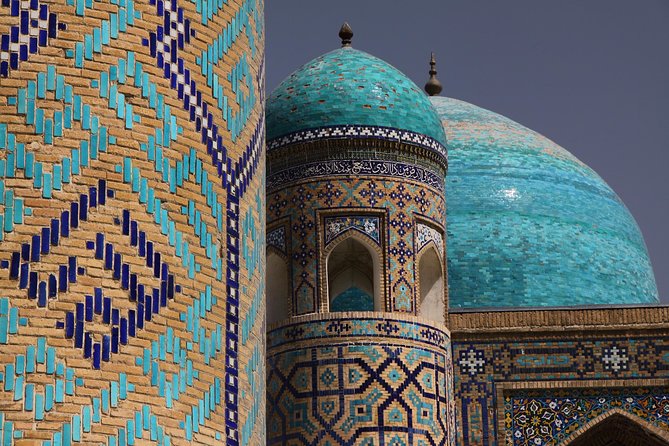
- Major sights are covered: The schedule includes Registan, Gur-i Amir, the Ark of Bukhara, Poi Kalyan, Shah-i-Zinda, and key Tashkent museums.
- Small groups are possible: The maximum group size is eight people, and some departures may operate with only you and a guide.
- Meals and admissions are included: Three breakfasts, three lunches, an air-conditioned vehicle, and entrance tickets are part of the price.
- The schedule demands stamina: You need a moderate level of physical fitness and should be ready for frequent walking and short visits.
What the $999 price really buys you
At $999 per person, this tour is not a budget sightseeing outing. Its value comes from the amount of coordination included in a very short time: train tickets, local transport, admission fees, guides, breakfasts, and lunches are bundled together.
That matters in Uzbekistan, where the cities are spread apart and the rail connections shape the whole trip. You are not simply paying to look at monuments. You are paying to have the route arranged so you can see the country’s main cultural centers without building the schedule yourself.
The price is easier to justify if you are visiting Uzbekistan for only a few days. A do-it-yourself trip may cost less, especially if you choose simple transport and handle every ticket personally. It will also demand more planning and leave you responsible for solving delays, station transfers, and changes in the daily plan.
I would not book this package expecting a relaxed luxury holiday. The provided details describe an air-conditioned vehicle and economy-class trains, not premium rail seating or a high-end private experience. The better comparison is a tightly arranged cultural overview.
A maximum of eight people is a useful middle ground. You get more structure than traveling alone, but you may still have a chance to ask questions and hear local context. Some previous arrangements included one guide with one visitor, while others involved a small group.
Other Tashkent trips travellers line up with this one:
- Best of Tashkent Mountains: Amirsoy, Chimgan & Charvak Trip
★ 4.8 · 567 reviews - Samarkand One Day Tour – Departure From Tashkent
★ 5.0 · 313 reviews - Tashkent City Tour
★ 5.0 · 121 reviews
Tashkent begins with Timur and twentieth-century memory
The first day gives you a broad introduction to Tashkent, Uzbekistan’s capital. The route moves between royal history, national identity, religious architecture, fine arts, and the city’s experience of war and earthquakes.
At the Amir Timur Museum, you have about 30 minutes to see portraits and artifacts linked to Timur, the fourteenth-century ruler also known as Tamerlane. The modern domed building gives the visit a formal opening, though half an hour is enough for a focused look rather than a careful museum study.
Nearby, Amir Temur Square places Timur at the center of a large urban setting. You have around 20 minutes for the equestrian monument and surrounding esplanades. It is mainly a photo and orientation stop, so you should not expect an extended historical presentation here.
Independence Square shifts the focus from medieval power to modern Uzbekistan. The central square, also called Mustakillik Square, is an important civic space in Tashkent. Memorial Square adds a more solemn note with its monument to soldiers who died in the Great World War.
The Courage Earthquake Memorial recalls a major event in Tashkent’s modern past. The stop lasts about 20 minutes, making it another brief visit, but it adds useful balance to a day otherwise filled with dynasties, monuments, and religious buildings.
The Minor Mosque provides a change of mood. Its white exterior and Islamic design make it one of the more visually graceful stops in the capital. You have about 30 minutes, enough to take in the architecture and surroundings without turning the visit into a long religious-site tour.
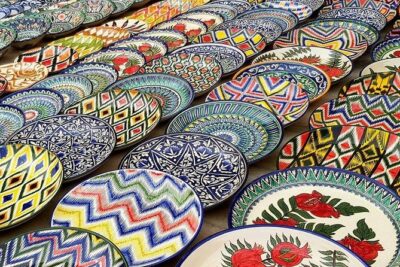
The day finishes at the Uzbekistan State Museum of Applied Art. This is one of the better stops for seeing local decorative traditions, and I would pay close attention here if you enjoy textiles, ceramics, woodwork, or ornamental design. The scheduled 30 minutes is short, so you may need to move quickly.
The main weakness of Day 1 is the number of separate stops. You see a lot, but the rhythm is closer to a city sampler than a slow exploration. I would keep your camera ready, wear comfortable shoes, and avoid carrying anything that slows you down.
Bukhara brings the strongest sense of old Central Asia
Day 2 is devoted to Bukhara, and it is likely to be the most satisfying day for anyone drawn to old streets, Islamic architecture, and concentrated historic centers. The itinerary gathers many important buildings within a relatively compact part of the city.
The visit begins around Lyabi House Hotel and the Lyabi-Khauz architectural ensemble. The group of buildings includes Kukeldash Madrasah, a khanaka, and the Nodir Devonbegi complex around a historic pool. You have 30 minutes here, which gives you time to understand the layout and see how religious and civic buildings were arranged around a shared public space.
Nodir Devonbegi Madrasah receives its own 20-minute stop. The building and nearby khanaka were commissioned by the vizier Nadir, and the complex is one of Bukhara’s most recognizable architectural settings. I would listen carefully to the guide here, since the short visit means the story helps bring the ornament and structure into focus.
The Kalyan Minaret is one of Bukhara’s essential sights. Its tall brick form dominates the city’s old center and belongs to the Poi Kalyan complex. Twenty minutes is enough to appreciate the minaret from the outside, but you should expect the schedule to prioritize views and explanation over extended exploration.
The Poi Kalyan Mosque follows, with another 20-minute visit. This fifteenth-century monument is one of Bukhara’s major religious buildings. The courtyard and scale are worth taking in slowly, but the tour’s timetable may limit how long you can linger in the details.
Ulugbek Madrasah and Mir-i-Arab Madrasa continue the architectural story. Ulugbek’s school dates to 1417, while Mir-i-Arab is considered one of the city’s most interesting monuments. Each stop lasts 20 or 30 minutes, so you will gain a clear overview, but anyone fascinated by inscriptions, tilework, and construction details may want extra time after the guided portion.
The Ark of Bukhara deserves the longest visit of the day, at one hour. This massive fortress gives you a better chance to slow down and understand Bukhara as a seat of power rather than simply a collection of beautiful façades. I would treat this as the day’s main historical visit.
Bolo Hauz Mosque, built in 1712, adds another architectural layer. Its history and setting make it a worthwhile stop, though the 30-minute allotment keeps the experience brisk.
The Ismail Samani Mausoleum closes the day’s sightseeing. This world-famous architectural masterpiece is one of the places where a short visit can still leave a strong impression. Its importance makes it a fitting final stop, even if you wish you had more time to study it.
Bukhara is also where the human side of the operation matters most. Good guide coordination can make a packed day feel clear rather than chaotic. Ibrohim and Izzatullo have been associated with careful arrangements, while Sevinc has been praised for warm, attentive guiding in Samarkand. Outilla has also been singled out for calm assistance in Tashkent. Since guide assignments can vary, treat these names as useful indications of the team’s strengths, not a guarantee of who will meet you.
Samarkand saves the grandest monuments for the final day
The third day turns to Samarkand, the Timurid city most visitors picture when they think of Uzbekistan. The route starts at the Amir Temur Mausoleum, also called the Gur-i Amir Complex.
Gur-i Amir is a masterpiece of medieval Islamic architecture and the burial place associated with Timur. The scheduled 30 minutes lets you see the main structure and hear the basic story, though the site rewards patience. If your group moves on quickly, make sure you have had a moment to look up at the dome and take in the interior details.
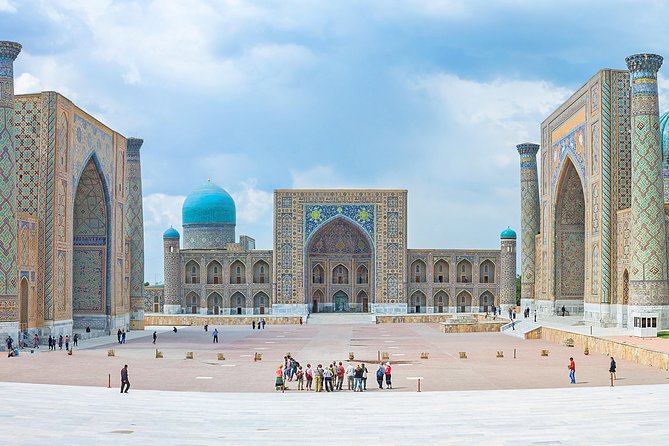
Then comes Registan, the heart of ancient Samarkand under the Timurid dynasty. This is the day’s visual centerpiece and one of the great squares of Central Asia. The itinerary lists 30 minutes, which is enough for a strong first impression and photographs, but not enough for an unhurried study of every façade.
The three madrasas around the square are treated separately. Sher-Dor Madrasah was built between 1619 and 1636. Ulugbek Madrasah dates from 1417 to 1420 and was ordered by Ulugbek, Timur’s grandson. Tillya Kori Madrasah, completed in 1660, is the final building in the Registan ensemble.
Each receives about 30 minutes. That arrangement is helpful because you can focus on the buildings one at a time, but the overall schedule still leaves little room for sitting quietly in the square. I would make Registan a priority and resist spending too long at earlier stops if your guide signals that the train or vehicle schedule is fixed.
Bibi Khanym Mosque follows. In the fifteenth century, it was among the largest and most magnificent mosques in the Islamic world. The scale is the main point here. You have 30 minutes to understand its size, admire the restored architecture, and take photographs.
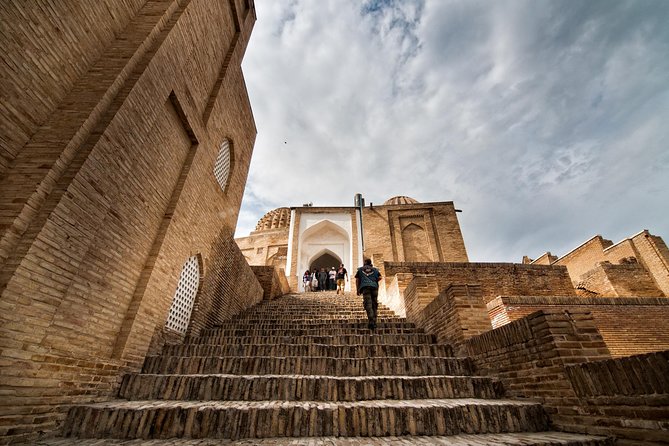
Shah-i-Zinda is another major highlight. This complex of mausoleums from the fourteenth and fifteenth centuries is known for its closely arranged structures and decorative surfaces. The visit involves walking, and the 30-minute slot means you should keep moving while still giving yourself time to notice the tile patterns.
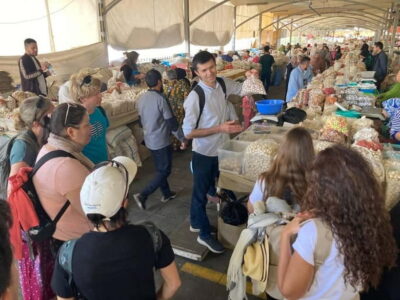
The final stop is Siyob Bozori, Samarkand’s largest traditional bazaar. This is a useful change from formal monuments. You can see a more everyday side of the city and possibly use the stop for local food shopping, though the tour details do not specify how much free time is available for purchases.
Same stretch of the Silk Road, a different sort of day:
- Shymkent Day Tour from Tashkent
★ 4.6 · 71 reviews - Highlights of Tashkent (old and new part)
★ 5.0 · 60 reviews - 2 Days Tour to Bukhara and Samarkand from Tashkent by train
★ 5.0 · 53 reviews - Tashkent Airport & Train Station Pick Up & Drop Off
★ 4.5 · 50 reviews
The train plan is the backbone of the trip
The included rail route covers Tashkent to Bukhara, Bukhara to Samarkand, and Samarkand back to Tashkent. That is the most practical way to connect the three cities in such a short period, and having economy-class tickets arranged removes a major planning task.
The exact departure times are not provided, so you should confirm the train schedule before booking or as soon as you receive confirmation. A train departure can shape the whole day, especially when the sightseeing schedule includes many short stops.
The air-conditioned vehicle is used for local movement and transfers. That is useful in a country where you may be walking between large sites and spending long periods outdoors. The tour also includes entrance tickets, so you should not need to budget separately for the listed attractions.
Three breakfasts and three lunches are included. Dinner, personal spending, travel insurance, and fees for trying traditional clothing for photographs are not included. Bring some room in your budget for those extras, particularly if you want souvenirs or paid photo opportunities.
Pace, group size, and what to pack
You should have a moderate level of physical fitness. The tour requires repeated walking, standing, moving through large squares, and visiting monumental complexes. No special athletic ability is required, but this is not a sit-in-the-vehicle sightseeing program.
The small group cap is one of the experience’s best practical features. A group of eight is easier to move through stations and city streets, and it gives you a better chance to ask for clarification. If the group is smaller, the days may feel more flexible, although the fixed train schedule will still set limits.
I would pack light, wear supportive shoes, and keep water close at hand. You will want easy access to your phone, since the tour provides a mobile ticket and includes many photo-worthy stops.
The operator offers pickup, and the tour is near public transportation. Confirmation is received at booking, which helps you organize the rest of your Uzbekistan plans. Free cancellation is available up to 24 hours before the start time, but changes made inside that window are not accepted. Poor weather or failure to reach the minimum group size can also lead to a different date, another experience, or a full refund.
Who will get the most from this Uzbekistan tour
I would recommend this tour to you if your time is short and your priority is seeing the major sights rather than building a slow, independent itinerary. It suits first-time visitors who want the key monuments explained, transport arranged, and admissions paid in advance.
It is also a good fit if you value organization. The strongest praise around this experience centers on drivers, vehicles, trains, guides, backup arrangements, and clear daily direction. That practical support can make a major difference on a three-day route.
I would hesitate if you want long museum visits, quiet meals, free evenings, or spontaneous detours. The schedule is designed to maximize coverage. You will see a great deal, but you will not have much spare time.
Should you book this three-day Uzbekistan itinerary?
Book it if coverage and convenience matter more than a relaxed pace. For $999, you receive a tightly connected route through Tashkent, Bukhara, and Samarkand, with trains, local transport, meals, guides, and admissions included.
Before paying, confirm the train departure times, pickup details, hotel arrangements, and the exact guide schedule. If those details suit you, this is an efficient way to get a first look at Uzbekistan’s finest historic cities. If you can spare more than three days, I would extend the trip and give Bukhara and Samarkand extra time.
FAQ
How long is the tour?
The experience lasts approximately three days.
Which cities are included?
The tour visits Tashkent, Bukhara, and Samarkand.
What transportation is included?
High-speed train tickets in economy class are included for Tashkent to Bukhara, Bukhara to Samarkand, and Samarkand to Tashkent. An air-conditioned vehicle is also included.
Are entrance tickets included?
Yes. Entrance tickets for the listed sightseeing stops are included.
Are meals included?
The tour includes three breakfasts and three lunches.
What is the maximum group size?
The maximum group size is eight people.
Is pickup available?
Yes. Pickup is offered, and the experience is also near public transportation.
Do I need a certain level of fitness?
You should have a moderate level of physical fitness because the itinerary includes many sightseeing stops and walking between major sites.
Can I cancel for a full refund?
Yes, if you cancel at least 24 hours before the experience start time. Cancellations made less than 24 hours in advance are not refundable.
Freshly added in Tashkent
- Uzbek Brews & Views: Tashkent Craft Beer Discovery Tour★ 5.0 · 2 reviews
- Uzbekistan Tour – 6 Days 5 Nights★ 5.0 · 4 reviews
- Tashkent International Airport (TAS) to Tashkent – Arrival Private Transfer★ 5.0 · 2 reviews
- 8-Day Private Tour in Uzbekistan with Pick Up★ 5.0 · 2 reviews
- Tashkent-Samarkand-Bukhara tour-3nights/4 days★ 5.0 · 5 reviews
- Tashkent Food and Metro Journey★ 5.0 · 4 reviews
- Private Intercity Transfer Tashkent – Samarkand – Tashkent★ 3.5 · 3 reviews
- Tashkent Mountain Tour Amirsoy with Transport★ 3.5 · 3 reviews
Tashkent Tours, compared.
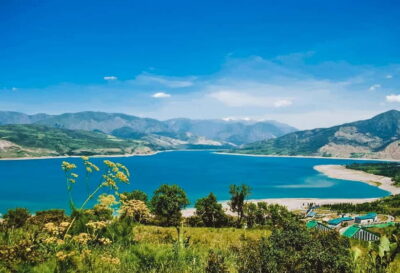
Best of Tashkent Mountains: Amirsoy, Chimgan & Charvak Trip
Read our review →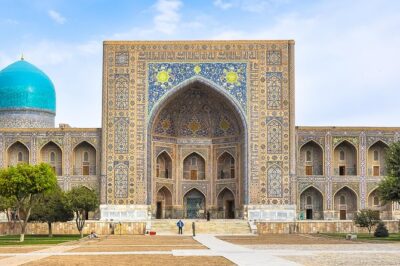
Samarkand One Day Tour – Departure From Tashkent
Read our review →
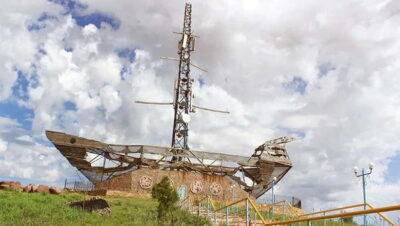
2 Days Tour to Bukhara and Samarkand from Tashkent by train
Read our review →
Browse the lists this tour appears in